
Two Operational Models for Chemical Delivery

Gathering system operators generally choose between two operational models for delivering H2S scavenger: batch treatment, where chemical is added periodically in discrete volumes, and continuous injection, where a metering pump delivers chemical steadily as gas or liquid flows through the system. Both models can achieve the same H2S reduction target, but they carry different labor, equipment, and consistency tradeoffs that make one or the other a better fit depending on the operation.

How Batch Treatment Works in Practice

Batch treatment typically involves periodically adding a measured volume of scavenger to a tank, well casing, or vessel, often on a daily or weekly schedule tied to field visits rather than continuous monitoring. This model requires minimal capital equipment, since no metering pump or injection skid is needed, and it fits naturally into existing field rounds where operators are already visiting a location for other tasks.

The tradeoff is treatment consistency. H2S generation and flow rate can vary between visits, which means a batch dose sized for average conditions may undertreat during periods of elevated H2S and overtreat during quieter periods, and there is inherently less real-time responsiveness compared with continuous injection.

How Continuous Injection Works in Practice

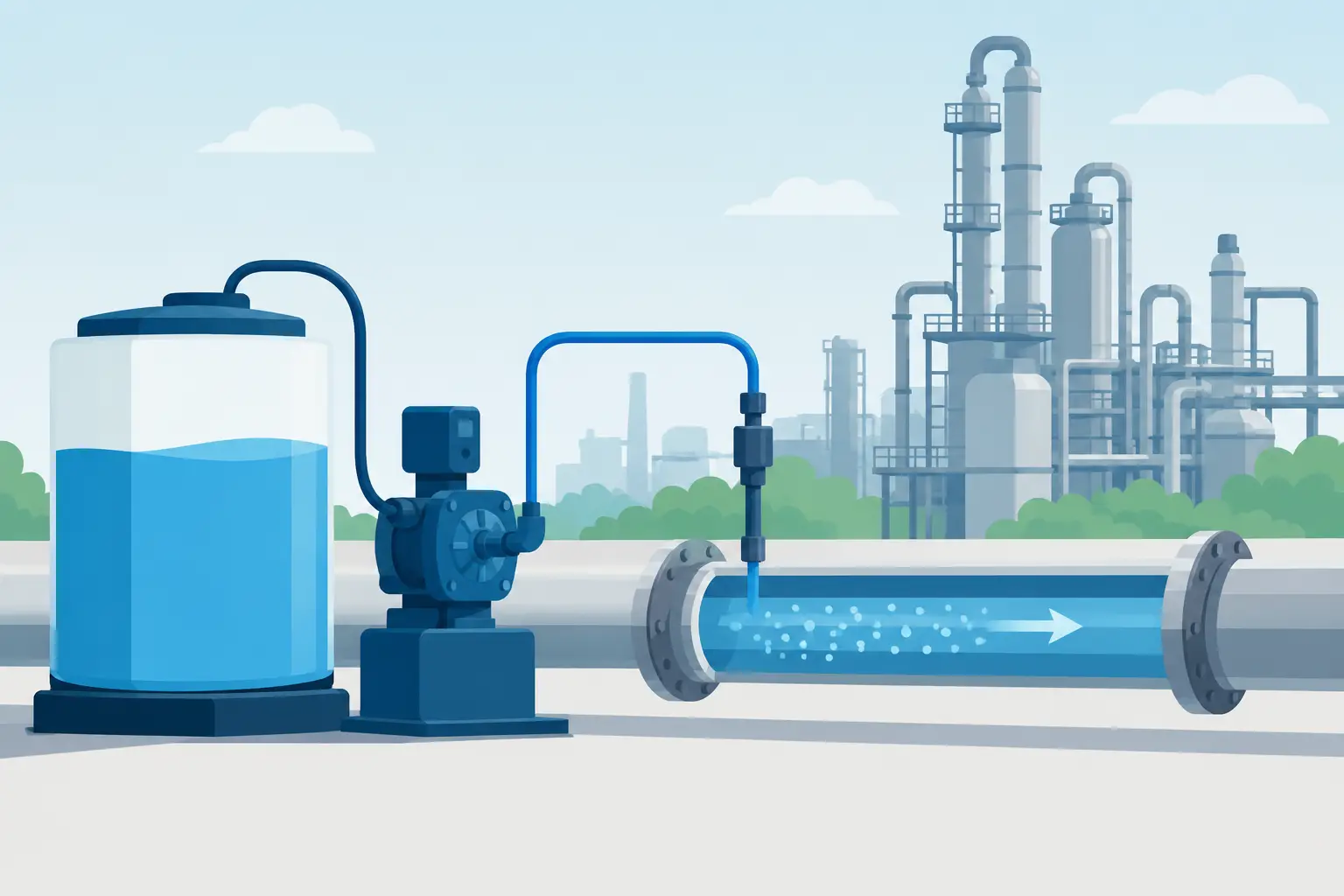
Continuous injection uses a chemical metering pump, typically set to a flow rate proportional to gas or liquid throughput, to deliver scavenger steadily rather than in discrete doses. This produces more consistent treatment and is generally the preferred approach for higher-volume locations or locations with variable H2S loading, since the injection rate can be adjusted in response to monitoring data without waiting for the next scheduled site visit.

The tradeoff is capital and maintenance cost. Metering pumps, chemical totes or storage tanks, and injection quills all require installation and ongoing upkeep, and remote locations without power availability may need solar or battery-powered pump skids, adding further cost and complexity compared with a batch program.

Matching the Model to the Location

Low-volume, low-H2S wells with infrequent but regular field visits are often well served by batch treatment, where the simplicity outweighs the consistency tradeoff. Higher-volume gathering points, locations with variable H2S loading, or facilities where a treatment lapse would create a significant compliance or safety issue tend to justify the added cost of continuous injection.

Some operators use a hybrid model, running continuous injection at key gathering points while relying on batch treatment for lower-priority individual wellheads feeding into that system, which allows capital to be concentrated where consistent treatment matters most.

Reviewing the Program Over Time

Neither treatment model should be treated as a permanent decision. As wells mature and H2S loading changes over the life of a field, a location that was well suited to batch treatment early on may eventually justify conversion to continuous injection, and periodically reassessing the treatment model against current field data helps avoid both undertreatment and unnecessary chemical spend.

Labor and Logistics Planning

Batch treatment programs are easy to underestimate from a labor-planning standpoint, since the chemical handling itself is simple but the cumulative time spent on repeated field visits across a large number of wells can add up to a significant operating cost once totaled across a gathering system. Continuous injection concentrates labor into less frequent but more involved maintenance visits, such as pump servicing and chemical tote changeouts, which some operations find easier to schedule and staff for even when the total labor hours are similar.

Chemical logistics also differ between the two models. Batch programs typically use smaller, more portable containers suited to being carried to a wellhead, while continuous injection systems are more often supplied by larger totes or bulk delivery, which can offer better per-gallon pricing but requires accessible delivery routes and adequate storage space at the injection site.

Data Collection Advantages of Continuous Systems

Many continuous injection skids now include flow monitoring and remote telemetry, giving operators a continuous record of chemical usage relative to gas or liquid throughput. This data can be valuable for identifying dosing drift, detecting pump failures quickly, and building a longer-term picture of how H2S loading is trending at a given location, advantages that are difficult to replicate with a batch treatment program relying on manual field logs.

Q2 Technologies supports Oklahoma operators across upstream and midstream operations with proprietary chemistries designed for sour gas treatment, corrosion control, and produced water management. The company’s decades of experience in the region help operators navigate the state’s varied producing conditions with confidence. Q2’s dependable logistics ensure treatment products are available where and when they are needed. Visit Q2Technologies.com to learn more about our Oklahoma operations.

Two Operational Models for Chemical Delivery

Gathering system operators generally choose between two operational models for delivering H2S scavenger: batch treatment, where chemical is added periodically in discrete volumes, and continuous injection, where a metering pump delivers chemical steadily as gas or liquid flows through the system. Both models can achieve the same H2S reduction target, but they carry different labor, equipment, and consistency tradeoffs that make one or the other a better fit depending on the operation.

How Batch Treatment Works in Practice

Batch treatment typically involves periodically adding a measured volume of scavenger to a tank, well casing, or vessel, often on a daily or weekly schedule tied to field visits rather than continuous monitoring. This model requires minimal capital equipment, since no metering pump or injection skid is needed, and it fits naturally into existing field rounds where operators are already visiting a location for other tasks.

The tradeoff is treatment consistency. H2S generation and flow rate can vary between visits, which means a batch dose sized for average conditions may undertreat during periods of elevated H2S and overtreat during quieter periods, and there is inherently less real-time responsiveness compared with continuous injection.

How Continuous Injection Works in Practice

Continuous injection uses a chemical metering pump, typically set to a flow rate proportional to gas or liquid throughput, to deliver scavenger steadily rather than in discrete doses. This produces more consistent treatment and is generally the preferred approach for higher-volume locations or locations with variable H2S loading, since the injection rate can be adjusted in response to monitoring data without waiting for the next scheduled site visit.

The tradeoff is capital and maintenance cost. Metering pumps, chemical totes or storage tanks, and injection quills all require installation and ongoing upkeep, and remote locations without power availability may need solar or battery-powered pump skids, adding further cost and complexity compared with a batch program.

Matching the Model to the Location

Low-volume, low-H2S wells with infrequent but regular field visits are often well served by batch treatment, where the simplicity outweighs the consistency tradeoff. Higher-volume gathering points, locations with variable H2S loading, or facilities where a treatment lapse would create a significant compliance or safety issue tend to justify the added cost of continuous injection.

Some operators use a hybrid model, running continuous injection at key gathering points while relying on batch treatment for lower-priority individual wellheads feeding into that system, which allows capital to be concentrated where consistent treatment matters most.

Reviewing the Program Over Time

Neither treatment model should be treated as a permanent decision. As wells mature and H2S loading changes over the life of a field, a location that was well suited to batch treatment early on may eventually justify conversion to continuous injection, and periodically reassessing the treatment model against current field data helps avoid both undertreatment and unnecessary chemical spend.

Labor and Logistics Planning

Batch treatment programs are easy to underestimate from a labor-planning standpoint, since the chemical handling itself is simple but the cumulative time spent on repeated field visits across a large number of wells can add up to a significant operating cost once totaled across a gathering system. Continuous injection concentrates labor into less frequent but more involved maintenance visits, such as pump servicing and chemical tote changeouts, which some operations find easier to schedule and staff for even when the total labor hours are similar.

Chemical logistics also differ between the two models. Batch programs typically use smaller, more portable containers suited to being carried to a wellhead, while continuous injection systems are more often supplied by larger totes or bulk delivery, which can offer better per-gallon pricing but requires accessible delivery routes and adequate storage space at the injection site.

Data Collection Advantages of Continuous Systems

Many continuous injection skids now include flow monitoring and remote telemetry, giving operators a continuous record of chemical usage relative to gas or liquid throughput. This data can be valuable for identifying dosing drift, detecting pump failures quickly, and building a longer-term picture of how H2S loading is trending at a given location, advantages that are difficult to replicate with a batch treatment program relying on manual field logs.

Q2 Technologies supports Oklahoma operators across upstream and midstream operations with proprietary chemistries designed for sour gas treatment, corrosion control, and produced water management. The company’s decades of experience in the region help operators navigate the state’s varied producing conditions with confidence. Q2’s dependable logistics ensure treatment products are available where and when they are needed. Visit Q2Technologies.com to learn more about our Oklahoma operations.
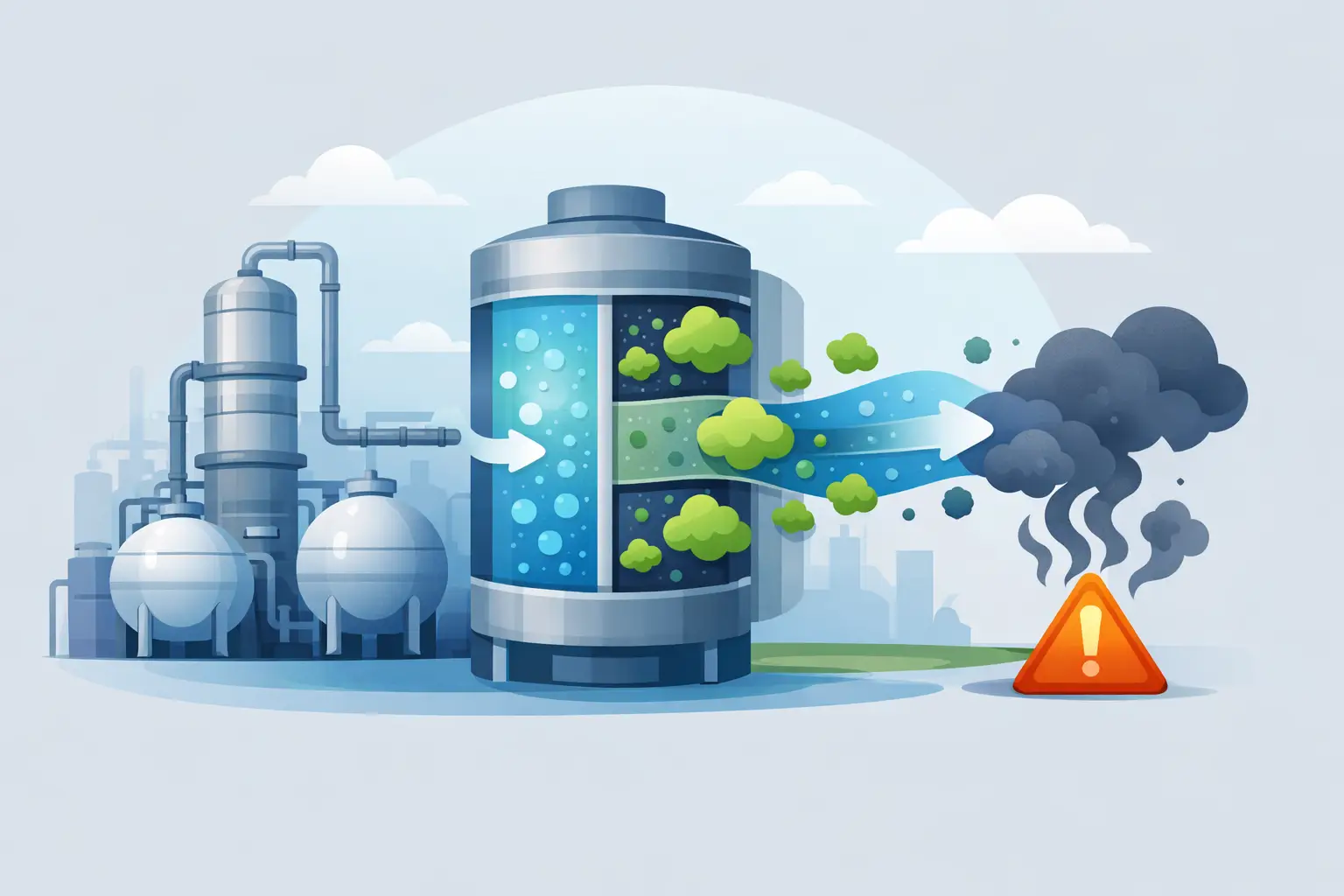
When introduced into a stream afflicted with H2S, the hemiformal decomposes to release formaldehyde, which then reacts with hydrogen sulfide to form stable, non-volatile byproducts such as thiomethylene glycol.  The reaction is typically fast and efficient, particularly in aqueous or mixed-phase environments. Unlike some traditional scavengers, hemiformal can maintain activity across a broad pH range and is less likely to generate problematic solids. When considering if hemiformal is the right product, certain operating conditions are reviewed, such as pH and temperature.

Heading 1

When introduced into a stream afflicted with H2S, the hemiformal decomposes to release formaldehyde, which then reacts with hydrogen sulfide to form stable, non-volatile byproducts such as thiomethylene glycol.  The reaction is typically fast and efficient, particularly in aqueous or mixed-phase environments. Unlike some traditional scavengers, hemiformal can maintain activity across a broad pH range and is less likely to generate problematic solids. When considering if hemiformal is the right product, certain operating conditions are reviewed, such as pH and temperature.

Heading 2

When introduced into a stream afflicted with H2S, the hemiformal decomposes to release formaldehyde, which then reacts with hydrogen sulfide to form stable, non-volatile byproducts such as thiomethylene glycol.  The reaction is typically fast and efficient, particularly in aqueous or mixed-phase environments. Unlike some traditional scavengers, hemiformal can maintain activity across a broad pH range and is less likely to generate problematic solids. When considering if hemiformal is the right product, certain operating conditions are reviewed, such as pH and temperature.

Heading 3

Heading 4

When introduced into a stream afflicted with H2S, the hemiformal decomposes to release formaldehyde, which then reacts with hydrogen sulfide to form stable, non-volatile byproducts such as thiomethylene glycol.  The reaction is typically fast and efficient, particularly in aqueous or mixed-phase environments. Unlike some traditional scavengers, hemiformal can maintain activity across a broad pH range and is less likely to generate problematic solids. When considering if hemiformal is the right product, certain operating conditions are reviewed, such as pH and temperature. 

Key Benefits:

  • Controlled formaldehyde release 
  • Lower vapor pressure and improved safety profile 
  • Broad applicability across liquid and gas-phase systems 
  • Reduced scaling in sour water stripping and other high-temp operations 
  • Hemiformal can make the scavenger safe for transport as it is a very stable compound 

Heading 5

Hemiformal is used in a variety of upstream and midstream applications, including: 

  • Gas sweetening systems 
  • Produced water treatment 
  • Crude oil storage and transport 
  • Sour water stripper overheads 
  • Temporary H2S mitigation during maintenance or turnaround

Its adaptability makes it especially useful in operations where system conditions fluctuate or where traditional triazine-based products may underperform. 

Heading 6

While hemiformal offers many advantages, it is not a one-size-fits-all solution. The rate of formaldehyde release can vary depending on formulation and environmental conditions. Additionally, while safer than raw formaldehyde, hemiformal must still be handled with care and appropriate PPE. 

For optimal results, formulation expertise and application-specific customization are key—something we at Q2 Technologies excel at delivering. 

Related Blogs

Choosing Between Batch and Continuous H2S Scavenger Injection for Gathering Systems

Gathering system operators generally choose between batch treatment, where chemical is added periodically, and continuous injection, where a metering pump delivers scavenger steadily. Batch treatment requires minimal capital and fits naturally into existing field rounds, but it offers less treatment consistency between visits. Continuous injection produces more consistent treatment and better data collection through flow monitoring, though it requires more capital for pumps, storage, and maintenance. Matching the model to well volume, H2S variability, and compliance risk, and periodically reassessing that choice as a field matures, helps operators avoid both undertreatment and unnecessary chemical spend.

FAQs

  1. What is the main difference between batch treatment and continuous injection for H2S scavenger programs?

    Batch treatment adds chemical periodically in discrete volumes, often tied to field visits, while continuous injection uses a metering pump to deliver scavenger steadily as gas or liquid flows through the system.

  2. When is batch treatment a better fit than continuous injection?

    Low volume, low H2S wells with infrequent but regular field visits are often well served by batch treatment, where the simplicity of the approach outweighs the consistency tradeoff.

  3. What are the main downsides of continuous injection systems?

    Continuous injection requires more capital and ongoing maintenance for metering pumps, chemical totes, and injection quills, and remote locations without power may need solar or battery powered pump skids.

  4. Can operators use both batch treatment and continuous injection in the same gathering system?

    Yes. A hybrid model that runs continuous injection at key gathering points while relying on batch treatment for lower priority wellheads allows capital to be concentrated where consistent treatment matters most.

Related Articles