
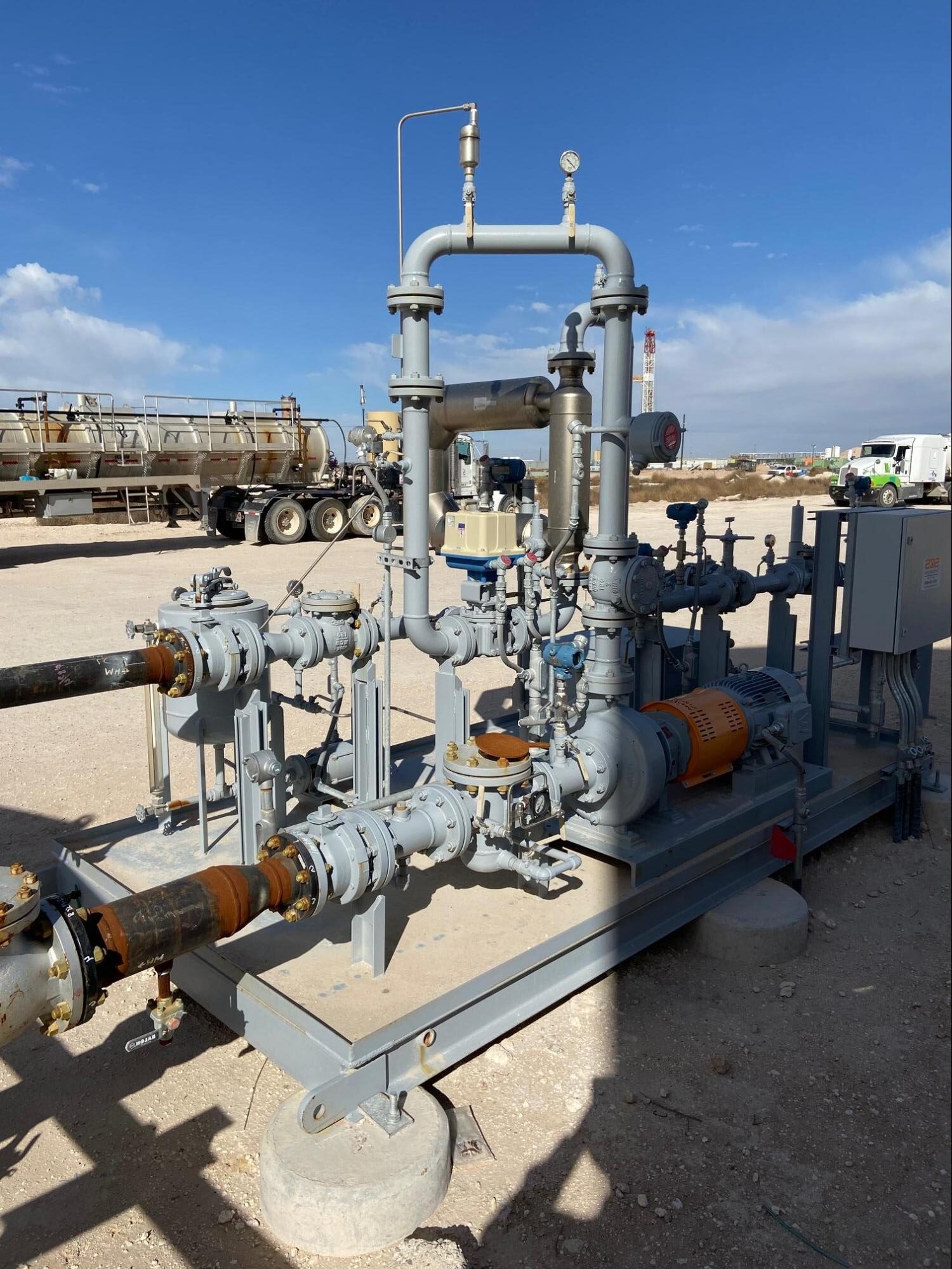
Automatic crude oil sampler used for custody transfer sulfur measurement

Custody Transfer Disputes Over Sulfur Specification: How Measurement Variability Affects Commercial Outcomes

Sulfur and H2S custody transfer disputes usually come from sampling variability and mismatched test methods (vapor-phase ppm v/v for H2S vs. liquid-phase ppm w for sulfur and mercaptans), and because pipeline quality banks convert measured quality directly into shipper credits and debits, small measurement differences can carry real financial weight.

Why Sulfur and H2S Sit at the Center of Custody Transfer Disputes

Every custody transfer of crude oil or liquid hydrocarbons hinges on two questions: how much product changed hands, and what quality was it. Sulfur content, along with API gravity and H2S, sits on the short list of crude quality characteristics that carriers track and report at custody transfer points, and because both quantity and quality determine what a shipment is actually worth, a dispute over a sulfur or H2S reading is a dispute over real money, not just a paperwork disagreement.

Where Measurement Variability Actually Comes From

A sulfur or H2S reading is only as good as the sample it was measured from, and representative sampling of a moving, sometimes stratified hydrocarbon stream is genuinely difficult. Automatic composite samplers built to API MPMS, ASTM D4177, and ISO 3171 standards exist specifically to reduce this variability, but even a properly functioning system can produce results that differ meaningfully from a second sample pulled minutes later, especially in a stream where water cut, temperature, or blend ratio is fluctuating.

How Test Method Differences Compound the Problem

H2S in a liquid hydrocarbon is typically measured in the vapor phase by a method like ASTM D5705, reported in ppm by volume, while total sulfur and mercaptan sulfur are typically measured in the liquid phase by weight-based methods, which means two labs testing the same batch with different methods, or even the same method with different headspace ratios or sample handling, can report numbers that do not match. A shipper and receiver each running their own lab can end up with defensible but different results without either side having made an actual error.

How Pipeline Quality Banks Turn Measurement Into Money

Many common-stream pipelines operate a gravity and sulfur quality bank, crediting or debiting each shipper based on how their crude’s measured quality compares to the blended common stream they draw from, which means a sulfur measurement is not just a specification check, it is a direct input into a shipper’s netback. A sulfur reading that is off by even a small margin, multiplied across a large volume over a billing period, can shift real dollars between shippers through the quality bank calculation, which is part of why sulfur measurement disputes get contentious quickly.

Referee Samples and Third-Party Resolution

Most crude oil sales contracts and pipeline tariffs anticipate measurement disagreement and build in a referee or umpire lab process, where a retained sample is sent to an independent, mutually agreed laboratory to produce a binding result when the shipper’s and receiver’s numbers fall outside an agreed tolerance. Retaining a properly preserved sample, and having clear contract language on which standard method governs the referee analysis, is what makes this process actually resolve a dispute rather than just add a third number to argue about.

Reducing Dispute Risk Before the Sample Is Ever Pulled

The most effective way to avoid a costly sulfur or H2S dispute is to reduce measurement variability before it becomes a commercial issue, through well-maintained automatic sampling equipment, documented sampling procedures, and a treatment program that keeps H2S and mercaptan levels reliably below specification with margin rather than hovering right at the line. A stream treated to sit comfortably under a pipeline’s H2S or sulfur limit is far less likely to become the subject of a dispute than one that depends on every measurement landing favorably to stay in spec.

Q2 Technologies has spent more than 20 years helping producers, gatherers, and marketers keep crude oil and liquid hydrocarbon streams reliably within H2S and mercaptan specification, which is the most effective way to avoid ending up on the wrong side of a quality bank calculation in the first place. With non-triazine Pro3 and ProM chemistries built specifically for liquid hydrocarbon service, along with hands-on technical support in the field, Q2 Technologies works to give shippers a treatment program they can defend with confidence. Learn more about our approach at q2technologies.com, browse additional technical breakdowns on our blog at q2technologies.com/blogs, or check our FAQ page at q2technologies.com/faqs for quick answers to common H2S and mercaptan questions.

Custody transfer specifications for crude oil often include strict limits on H2S and mercaptan content, and Q2 Technologies helps producers meet those requirements consistently through proprietary, field-tested treatment chemistries. Missing a custody transfer specification can result in costly deductions or rejected shipments, making reliable treatment essential. Q2’s experience helps producers avoid these risks while maintaining strong relationships with midstream partners. New to custody transfer terminology? Visit our glossary page for clear definitions.

Why Sulfur and H2S Sit at the Center of Custody Transfer Disputes

Every custody transfer of crude oil or liquid hydrocarbons hinges on two questions: how much product changed hands, and what quality was it. Sulfur content, along with API gravity and H2S, sits on the short list of crude quality characteristics that carriers track and report at custody transfer points, and because both quantity and quality determine what a shipment is actually worth, a dispute over a sulfur or H2S reading is a dispute over real money, not just a paperwork disagreement.

Where Measurement Variability Actually Comes From

A sulfur or H2S reading is only as good as the sample it was measured from, and representative sampling of a moving, sometimes stratified hydrocarbon stream is genuinely difficult. Automatic composite samplers built to API MPMS, ASTM D4177, and ISO 3171 standards exist specifically to reduce this variability, but even a properly functioning system can produce results that differ meaningfully from a second sample pulled minutes later, especially in a stream where water cut, temperature, or blend ratio is fluctuating.

How Test Method Differences Compound the Problem

H2S in a liquid hydrocarbon is typically measured in the vapor phase by a method like ASTM D5705, reported in ppm by volume, while total sulfur and mercaptan sulfur are typically measured in the liquid phase by weight-based methods, which means two labs testing the same batch with different methods, or even the same method with different headspace ratios or sample handling, can report numbers that do not match. A shipper and receiver each running their own lab can end up with defensible but different results without either side having made an actual error.

How Pipeline Quality Banks Turn Measurement Into Money

Many common-stream pipelines operate a gravity and sulfur quality bank, crediting or debiting each shipper based on how their crude’s measured quality compares to the blended common stream they draw from, which means a sulfur measurement is not just a specification check, it is a direct input into a shipper’s netback. A sulfur reading that is off by even a small margin, multiplied across a large volume over a billing period, can shift real dollars between shippers through the quality bank calculation, which is part of why sulfur measurement disputes get contentious quickly.

Referee Samples and Third-Party Resolution

Most crude oil sales contracts and pipeline tariffs anticipate measurement disagreement and build in a referee or umpire lab process, where a retained sample is sent to an independent, mutually agreed laboratory to produce a binding result when the shipper’s and receiver’s numbers fall outside an agreed tolerance. Retaining a properly preserved sample, and having clear contract language on which standard method governs the referee analysis, is what makes this process actually resolve a dispute rather than just add a third number to argue about.

Reducing Dispute Risk Before the Sample Is Ever Pulled

The most effective way to avoid a costly sulfur or H2S dispute is to reduce measurement variability before it becomes a commercial issue, through well-maintained automatic sampling equipment, documented sampling procedures, and a treatment program that keeps H2S and mercaptan levels reliably below specification with margin rather than hovering right at the line. A stream treated to sit comfortably under a pipeline’s H2S or sulfur limit is far less likely to become the subject of a dispute than one that depends on every measurement landing favorably to stay in spec.

Q2 Technologies has spent more than 20 years helping producers, gatherers, and marketers keep crude oil and liquid hydrocarbon streams reliably within H2S and mercaptan specification, which is the most effective way to avoid ending up on the wrong side of a quality bank calculation in the first place. With non-triazine Pro3 and ProM chemistries built specifically for liquid hydrocarbon service, along with hands-on technical support in the field, Q2 Technologies works to give shippers a treatment program they can defend with confidence. Learn more about our approach at q2technologies.com, browse additional technical breakdowns on our blog at q2technologies.com/blogs, or check our FAQ page at q2technologies.com/faqs for quick answers to common H2S and mercaptan questions.

Custody transfer specifications for crude oil often include strict limits on H2S and mercaptan content, and Q2 Technologies helps producers meet those requirements consistently through proprietary, field-tested treatment chemistries. Missing a custody transfer specification can result in costly deductions or rejected shipments, making reliable treatment essential. Q2’s experience helps producers avoid these risks while maintaining strong relationships with midstream partners. New to custody transfer terminology? Visit our glossary page for clear definitions.
When introduced into a stream afflicted with H2S, the hemiformal decomposes to release formaldehyde, which then reacts with hydrogen sulfide to form stable, non-volatile byproducts such as thiomethylene glycol.  The reaction is typically fast and efficient, particularly in aqueous or mixed-phase environments. Unlike some traditional scavengers, hemiformal can maintain activity across a broad pH range and is less likely to generate problematic solids. When considering if hemiformal is the right product, certain operating conditions are reviewed, such as pH and temperature.

Heading 1

When introduced into a stream afflicted with H2S, the hemiformal decomposes to release formaldehyde, which then reacts with hydrogen sulfide to form stable, non-volatile byproducts such as thiomethylene glycol.  The reaction is typically fast and efficient, particularly in aqueous or mixed-phase environments. Unlike some traditional scavengers, hemiformal can maintain activity across a broad pH range and is less likely to generate problematic solids. When considering if hemiformal is the right product, certain operating conditions are reviewed, such as pH and temperature.

Heading 2

When introduced into a stream afflicted with H2S, the hemiformal decomposes to release formaldehyde, which then reacts with hydrogen sulfide to form stable, non-volatile byproducts such as thiomethylene glycol.  The reaction is typically fast and efficient, particularly in aqueous or mixed-phase environments. Unlike some traditional scavengers, hemiformal can maintain activity across a broad pH range and is less likely to generate problematic solids. When considering if hemiformal is the right product, certain operating conditions are reviewed, such as pH and temperature.

Heading 3

Heading 4

When introduced into a stream afflicted with H2S, the hemiformal decomposes to release formaldehyde, which then reacts with hydrogen sulfide to form stable, non-volatile byproducts such as thiomethylene glycol.  The reaction is typically fast and efficient, particularly in aqueous or mixed-phase environments. Unlike some traditional scavengers, hemiformal can maintain activity across a broad pH range and is less likely to generate problematic solids. When considering if hemiformal is the right product, certain operating conditions are reviewed, such as pH and temperature. 

Key Benefits:

  • Controlled formaldehyde release 
  • Lower vapor pressure and improved safety profile 
  • Broad applicability across liquid and gas-phase systems 
  • Reduced scaling in sour water stripping and other high-temp operations 
  • Hemiformal can make the scavenger safe for transport as it is a very stable compound 

Heading 5

Hemiformal is used in a variety of upstream and midstream applications, including: 

  • Gas sweetening systems 
  • Produced water treatment 
  • Crude oil storage and transport 
  • Sour water stripper overheads 
  • Temporary H2S mitigation during maintenance or turnaround

Its adaptability makes it especially useful in operations where system conditions fluctuate or where traditional triazine-based products may underperform. 

Heading 6

While hemiformal offers many advantages, it is not a one-size-fits-all solution. The rate of formaldehyde release can vary depending on formulation and environmental conditions. Additionally, while safer than raw formaldehyde, hemiformal must still be handled with care and appropriate PPE. 

For optimal results, formulation expertise and application-specific customization are key—something we at Q2 Technologies excel at delivering. 

Related Blogs

How a Sulfur Measurement Turns Into a Custody Transfer Dispute

Sulfur, API gravity, and H2S are among the crude quality characteristics tracked at custody transfer points, and because both quantity and quality determine a shipment's value, a disputed reading is a dispute over real money. Measurement variability comes from sampling challenges, and from the fact that H2S is typically measured in the vapor phase by volume while sulfur and mercaptans are measured in the liquid phase by weight, so different labs or methods can produce defensible but different results. Many common-stream pipelines run a gravity and sulfur quality bank that converts measured quality differences directly into shipper credits and debits, which is why small measurement differences can carry real financial weight. Referee sample provisions in contracts and tariffs

FAQs

  1. Why do H2S and sulfur measurements sometimes differ between two labs testing the same crude batch?

    H2S is typically measured in the vapor phase by volume using a method like ASTM D5705, while sulfur and mercaptans are typically measured in the liquid phase by weight, so different test methods, sample handling, or headspace ratios can produce defensible but different results from the same batch.

  2. What is a pipeline quality bank and how does it relate to sulfur disputes?

    A quality bank credits or debits each shipper on a common-stream pipeline based on how their crude’s measured gravity and sulfur content compares to the blended common stream, which turns a sulfur measurement directly into a financial adjustment rather than just a specification check.

  3. What happens when a shipper and receiver disagree on a sulfur or H2S result?

    Most crude oil contracts and pipeline tariffs include a referee or umpire lab provision, sending a properly retained sample to an independent, mutually agreed laboratory to produce a binding result when the two parties’ numbers fall outside an agreed tolerance.

  4. Why does representative sampling matter so much for avoiding custody transfer disputes?

    A sulfur or H2S reading is only as reliable as the sample it came from, and automatic composite samplers built to API MPMS, ASTM D4177, and ISO 3171 standards exist specifically to reduce the variability that comes from sampling a moving, sometimes stratified hydrocarbon stream.

  5. What is the most effective way to reduce sulfur and H2S dispute risk?

    Treating crude with a reliable scavenger program that keeps H2S and mercaptan levels comfortably under specification, rather than hovering near the limit, reduces the chance that normal measurement variability alone pushes a shipment out of spec.

Related Articles