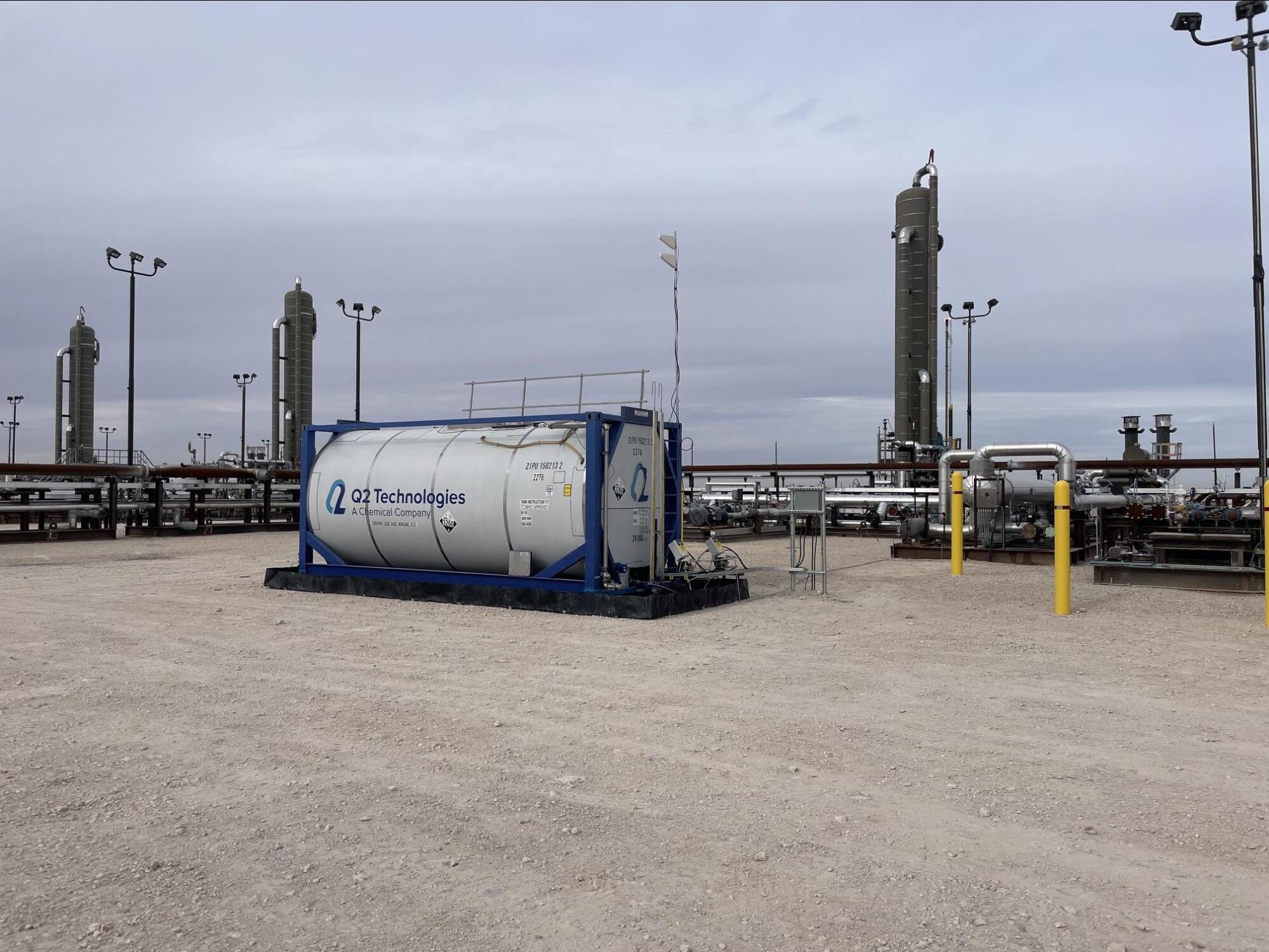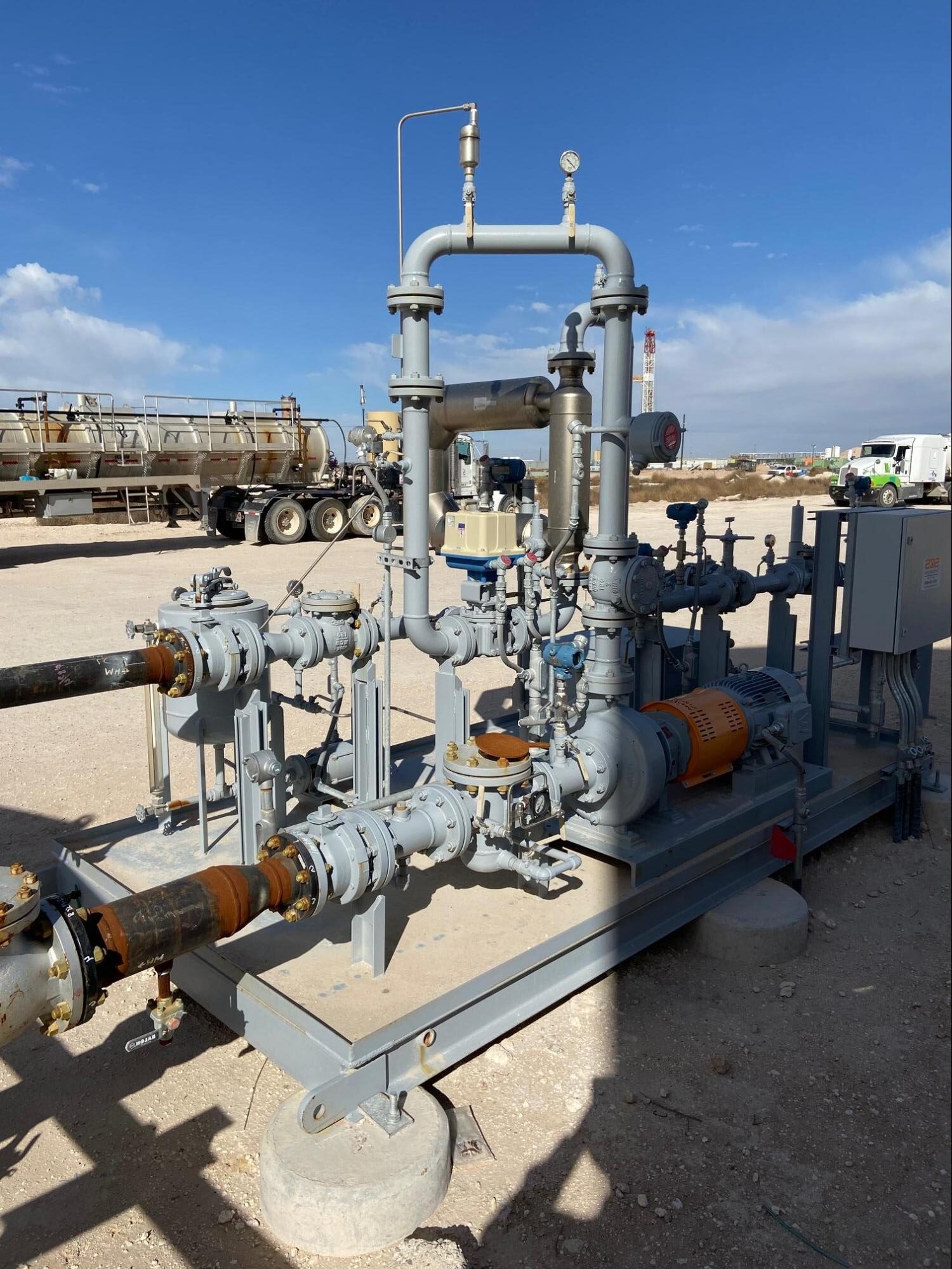
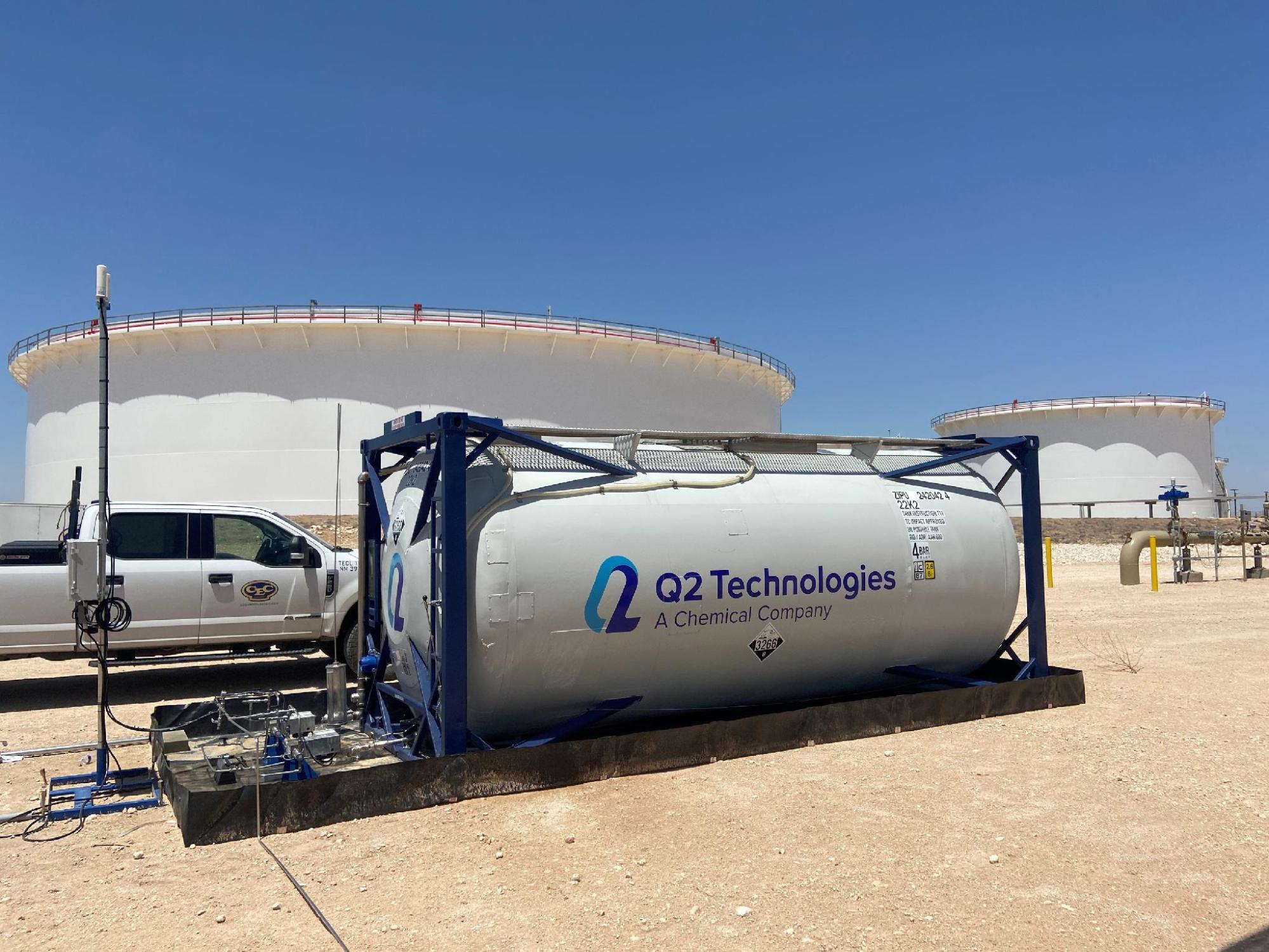


Why Scale Changes the Treatment Equation
A single wellhead or small gathering point treats a modest, often inconsistent volume of fluid, but a midstream terminal aggregates crude from dozens or hundreds of wells into one continuous stream, and that concentration of volume changes what a treatment program can practically achieve. Chemistry, equipment, and monitoring investments that would be hard to justify at a single wellhead become straightforward to justify once they are protecting throughput across an entire terminal’s volume.
Built-In Agitation Improves Chemical Contact
Crude moving through a terminal’s pumps, manifolds, and piping network experiences far more turbulence and mixing energy than fluid sitting in a low-flow gathering line, and that agitation is not incidental, it is one of the biggest practical advantages a terminal has for chemical treatment. Better mixing means injected scavenger chemistry contacts a higher share of the H2S and mercaptans actually present in the stream, which improves treatment efficiency without necessarily requiring a higher chemical dose.
Continuous Treatment Replaces Batch Guesswork
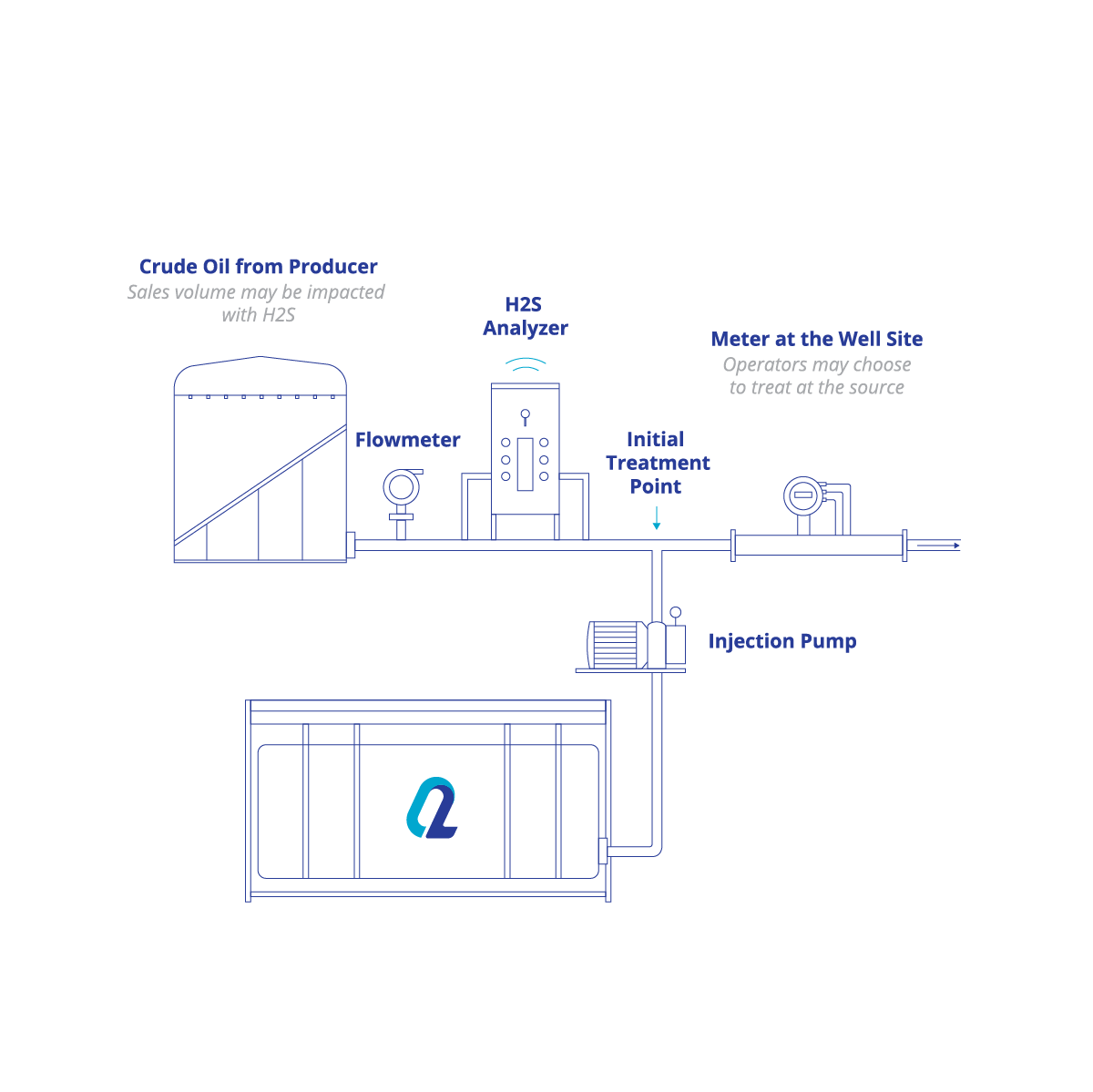
Because a terminal handles a large, relatively steady volume around the clock, continuous injection becomes the natural treatment model rather than periodic batch dosing, and continuous injection paired with steady flow produces far more consistent, verifiable treatment results than dosing decisions made on a rough estimate of incoming volume. This consistency matters directly to a terminal’s commercial position, since pipeline and vessel specifications for H2S and mercaptan content have to be met on every batch, not just on average.
Justifying Inline Analyzers at Terminal Scale
A continuous, real-time H2S or mercaptan analyzer is a meaningful capital and maintenance investment, and that investment is far easier to justify when it is protecting the throughput of an entire terminal rather than a single wellhead’s modest volume. At terminal scale, the cost of an inline analyzer is small compared to the cost of a single quality deduct, demurrage charge, or shut-in caused by an undetected H2S or mercaptan excursion, which is why terminals are typically where operators first invest in continuous analytical monitoring rather than periodic manual sampling.
Tighter Dosing Control and Lower Chemical Cost Per Barrel
Continuous analyzer data feeding directly into a chemical injection control loop allows a terminal to dose closer to the actual treatment requirement rather than padding the dose to cover uncertainty. Because that dosing decision is being made across a much larger volume, small efficiency gains in ppm of chemical per barrel translate into real cost savings at terminal scale that would be negligible at a single wellhead.
Commercial and Safety Benefits That Compound at Scale
A terminal that consistently meets H2S and mercaptan specification protects its throughput agreements, avoids pipeline and vessel quality deducts, and reduces the safety risk to every worker who handles crude at every downstream touchpoint from the terminal onward. Because a terminal sits at a concentration point in the supply chain, an H2S or mercaptan problem caught and corrected there prevents the same problem from propagating to every downstream shipper, refiner, or vessel operator relying on that terminal’s product meeting spec.
Crude oil storage tanks present unique challenges for H2S management, including vapor space accumulation that can pose safety risks to personnel and communities near tank batteries. Q2 Technologies offers proprietary vapor-phase and liquid-phase scavenger chemistries designed to address both concerns. This comprehensive approach reflects the company’s leadership in sour crude oil safety and treatment. Visit Q2Technologies.com to learn more about our tank battery H2S treatment solutions.