

Why Continuous H2S Monitoring Matters in Sour Crude
Spot-checking H2S concentration in crude oil with field test kits gives a snapshot at a single point in time, but H2S levels in produced fluid can shift quickly as scavenger dosing, well conditions, or blending change. Continuous inline analysis gives operators a real-time view of H2S concentration, which supports tighter scavenger dosing control, faster detection of treatment upsets, and the documentation many pipeline and refinery specifications require before accepting a crude shipment.
Getting a Clean Sample Out of a Liquid Stream
Measuring H2S dissolved in a liquid like crude oil or condensate first requires separating the H2S from the liquid phase so it can be measured in a clean, dry gas sample. There a few companies that are focused in this space and they have developed ways to for the liquid analyzers to use a membrane-based sample transfer system to strip H2S out of the liquid stream without relying on a complex headspace column, delivering a consistent gas sample to the detector regardless of variation in the crude itself.
Lead Acetate Tape: The Core Detection Method
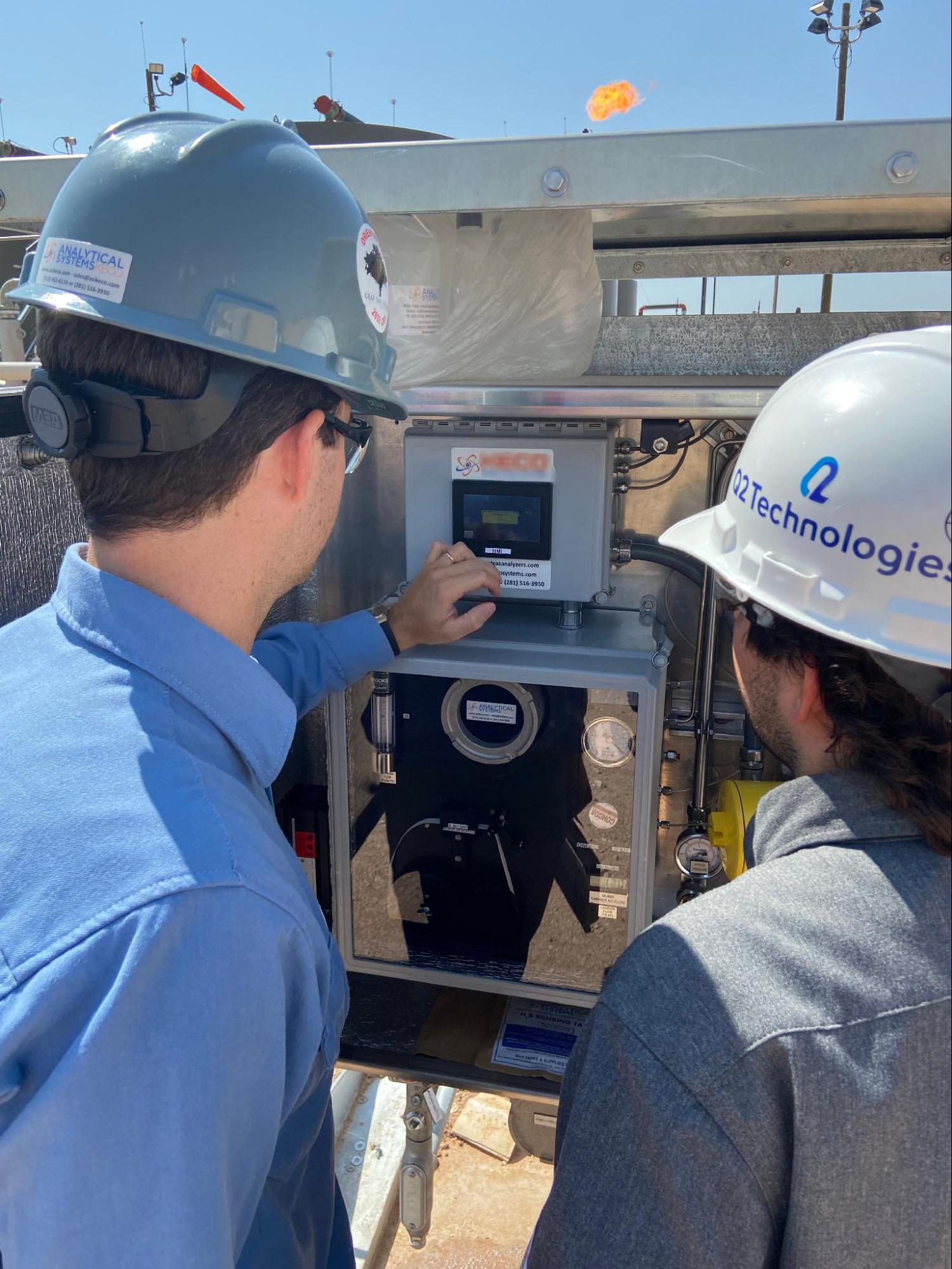
Once the gas sample reaches the detector, it passes across a paper tape that has been impregnated with lead acetate. H2S in the sample reacts with the lead acetate to form lead sulfide, which darkens the tape in proportion to how much H2S is present. A photodiode and LED optical system continuously measures that darkening rate, and a microprocessor converts the signal into a real-time H2S concentration, typically output as a standard 4 to 20 milliamp signal that can feed directly into a control system or historian.
Why This Method Resists False Positives
Because the tape reaction is chemically specific to H2S rather than sulfur compounds in general, this rateometric-colorimetric approach is less prone to the cross-interference that affects some other H2S detection methods, which can register a false positive when other sulfur species or contaminants are present in the sample. The tape also self-zeros with each fresh section that advances through the optical reader, which means the analyzer does not require a separate zero-gas calibration step to maintain accuracy over time.
Putting Analyzer Data to Work in a Treatment Program
Continuous H2S readings are most valuable when they feed directly into a scavenger dosing decision rather than sitting in a log that only gets reviewed after a problem occurs. Trending analyzer output against scavenger injection rate makes it possible to spot dosing drift, catch a failing injection pump quickly, and adjust treatment before an H2S excursion becomes a compliance or gas quality issue.
Maintenance and Field Considerations
Lead acetate tape analyzers require periodic tape replacement and proper disposal of the used tape, along with routine checks of sample flow and humidification to keep the reaction consistent, but the tape-based approach has a long field track record and does not require the more frequent recalibration some alternative technologies need. For outdoor and remote well sites, analyzers rated for hazardous area classification and equipped with heat tracing or internal heaters help keep the system operating reliably through temperature extremes.
Q2 Technologies applies decades of hands-on experience with the Tutwiler test and other H2S measurement methods to help crude oil producers accurately monitor treatment performance in the field. Reliable testing supports better dosing decisions and helps prevent costly off-spec crude shipments. Q2’s commitment to field-level technical support extends well beyond simply supplying chemistry. New to H2S testing terminology? Visit our glossary page for clear definitions.