

Local Presence Where the Problem Actually Is

H2S treatment problems are local by nature, tied to a specific well, gathering system, or terminal, which means a chemical supplier’s physical proximity to that problem matters as much as the chemistry itself. Q2 Technologies manufactures in Odessa, putting production directly in the Permian Basin, with established, direct supply routes to Corpus Christi and the Eagle Ford, so chemistry and technical support can reach a customer’s location quickly rather than routing through a distant plant or regional distribution hub.

People on the Ground, Not Just on the Phone

A trusted H2S treatment partner keeps staff on location or works through vetted, premier service providers, rather than relying entirely on remote monitoring and phone support when a field issue comes up. Having people who can physically reach a wellhead, gathering point, or terminal on short notice changes how quickly a treatment upset gets diagnosed and corrected, compared to waiting on a callback or a shipment from a distant supplier.

Equipment Built for Redundancy, Not Just Function

Reliable H2S treatment depends on injection and monitoring equipment that keeps working when something goes wrong, which is why a trusted partner typically runs top-of-line equipment with duplicate systems built in for redundancy. A single point of failure in an injection pump or analyzer can mean an unnoticed treatment lapse, so designing for redundancy from the start protects a customer’s specification compliance even when one component needs maintenance or fails unexpectedly.

Technical Depth in the Field and at the Office

Diagnosing an H2S or mercaptan problem well enough to solve it, rather than just treating the symptom, requires technical staff who understand both the chemistry and the specific operating conditions of a customer’s system. A trusted partner keeps that expertise in both places: skilled field personnel who can troubleshoot on site, and technical staff at the office who can dig into water chemistry data, gas composition, and treatment history to identify what a field visit alone might miss.

Meeting the Client Where the Need Actually Is

Understanding an H2S or mercaptan problem well enough to solve it usually means showing up, whether that is a field visit to see the actual operating conditions firsthand or time spent at a client’s office reviewing data and treatment history together. A trusted partner makes a point of being physically present where the problem is being discovered and discussed, rather than trying to diagnose a field issue entirely from a spreadsheet or a phone call.

A Track Record That Predates the Relationship

Twenty-five-plus years of dedicated service to treating H2S is not just a marketing point, it means a partner has already worked through the range of problems a new customer is likely to encounter, from unusual water chemistry to challenging well conditions to the logistics of scaling a treatment program as a field matures. That accumulated experience shortens the learning curve on a new account and gives a customer confidence that a proposed treatment approach is grounded in what has actually worked in the field, not just what should work in theory.

In the Texas Delaware Basin, Q2 Technologies combines proprietary manufacturing with strong regional service partnerships to deliver dependable treatment chemistry to operators. This local presence supports fast response times and consistent product availability. Producers across the basin count on Q2’s field-proven formulations to manage sour gas and produced water challenges. Follow Q2 Technologies, LLC on LinkedIn (@Q2Technologies, LLC) for Permian Basin updates.
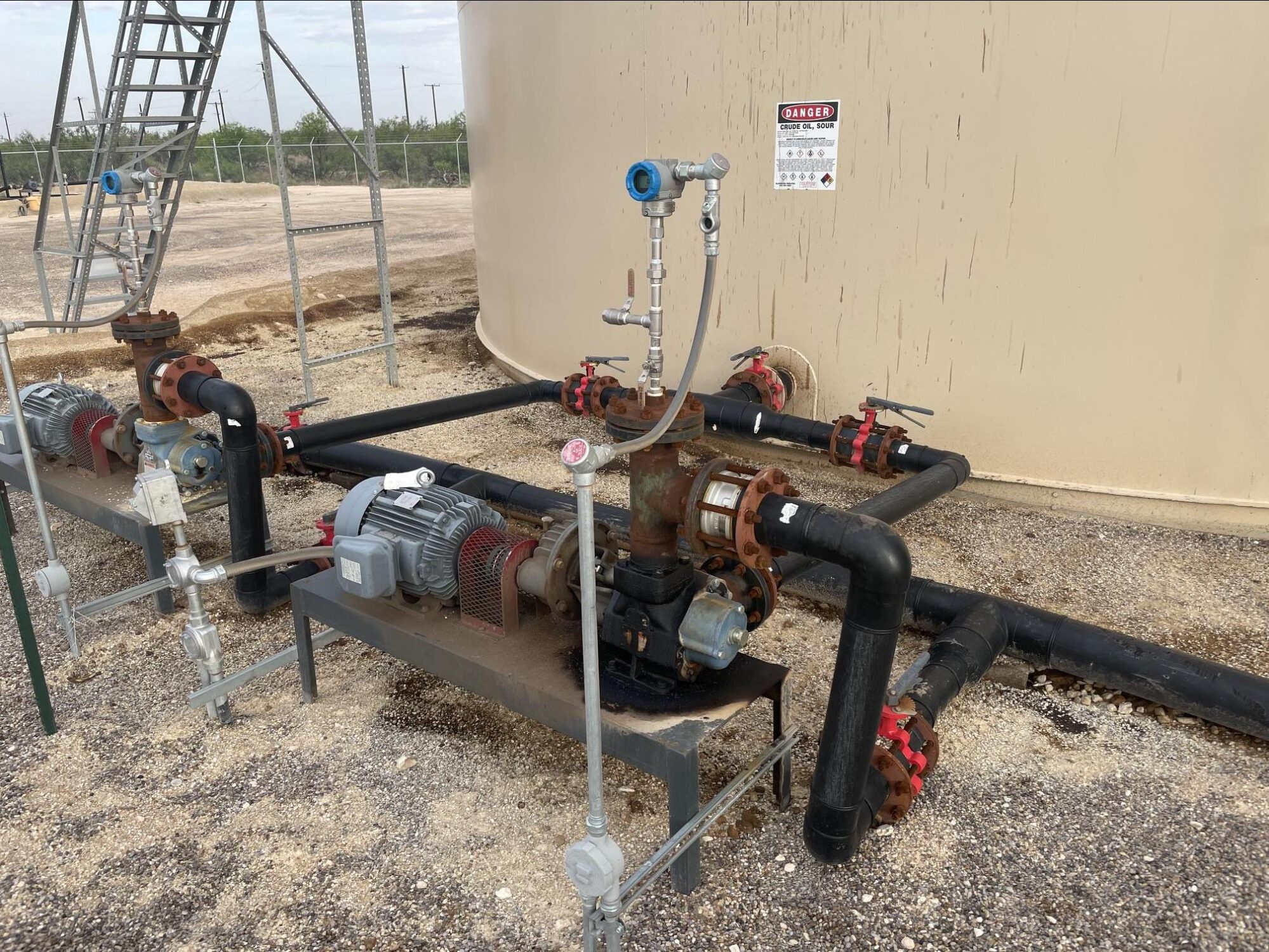

Local Presence Where the Problem Actually Is

H2S treatment problems are local by nature, tied to a specific well, gathering system, or terminal, which means a chemical supplier’s physical proximity to that problem matters as much as the chemistry itself. Q2 Technologies manufactures in Odessa, putting production directly in the Permian Basin, with established, direct supply routes to Corpus Christi and the Eagle Ford, so chemistry and technical support can reach a customer’s location quickly rather than routing through a distant plant or regional distribution hub.

People on the Ground, Not Just on the Phone

A trusted H2S treatment partner keeps staff on location or works through vetted, premier service providers, rather than relying entirely on remote monitoring and phone support when a field issue comes up. Having people who can physically reach a wellhead, gathering point, or terminal on short notice changes how quickly a treatment upset gets diagnosed and corrected, compared to waiting on a callback or a shipment from a distant supplier.

Equipment Built for Redundancy, Not Just Function

Reliable H2S treatment depends on injection and monitoring equipment that keeps working when something goes wrong, which is why a trusted partner typically runs top-of-line equipment with duplicate systems built in for redundancy. A single point of failure in an injection pump or analyzer can mean an unnoticed treatment lapse, so designing for redundancy from the start protects a customer’s specification compliance even when one component needs maintenance or fails unexpectedly.

Technical Depth in the Field and at the Office

Diagnosing an H2S or mercaptan problem well enough to solve it, rather than just treating the symptom, requires technical staff who understand both the chemistry and the specific operating conditions of a customer’s system. A trusted partner keeps that expertise in both places: skilled field personnel who can troubleshoot on site, and technical staff at the office who can dig into water chemistry data, gas composition, and treatment history to identify what a field visit alone might miss.

Meeting the Client Where the Need Actually Is

Understanding an H2S or mercaptan problem well enough to solve it usually means showing up, whether that is a field visit to see the actual operating conditions firsthand or time spent at a client’s office reviewing data and treatment history together. A trusted partner makes a point of being physically present where the problem is being discovered and discussed, rather than trying to diagnose a field issue entirely from a spreadsheet or a phone call.

A Track Record That Predates the Relationship

Twenty-five-plus years of dedicated service to treating H2S is not just a marketing point, it means a partner has already worked through the range of problems a new customer is likely to encounter, from unusual water chemistry to challenging well conditions to the logistics of scaling a treatment program as a field matures. That accumulated experience shortens the learning curve on a new account and gives a customer confidence that a proposed treatment approach is grounded in what has actually worked in the field, not just what should work in theory.

In the Texas Delaware Basin, Q2 Technologies combines proprietary manufacturing with strong regional service partnerships to deliver dependable treatment chemistry to operators. This local presence supports fast response times and consistent product availability. Producers across the basin count on Q2’s field-proven formulations to manage sour gas and produced water challenges. Follow Q2 Technologies, LLC on LinkedIn (@Q2Technologies, LLC) for Permian Basin updates.
When introduced into a stream afflicted with H2S, the hemiformal decomposes to release formaldehyde, which then reacts with hydrogen sulfide to form stable, non-volatile byproducts such as thiomethylene glycol.  The reaction is typically fast and efficient, particularly in aqueous or mixed-phase environments. Unlike some traditional scavengers, hemiformal can maintain activity across a broad pH range and is less likely to generate problematic solids. When considering if hemiformal is the right product, certain operating conditions are reviewed, such as pH and temperature.

Heading 1

When introduced into a stream afflicted with H2S, the hemiformal decomposes to release formaldehyde, which then reacts with hydrogen sulfide to form stable, non-volatile byproducts such as thiomethylene glycol.  The reaction is typically fast and efficient, particularly in aqueous or mixed-phase environments. Unlike some traditional scavengers, hemiformal can maintain activity across a broad pH range and is less likely to generate problematic solids. When considering if hemiformal is the right product, certain operating conditions are reviewed, such as pH and temperature.

Heading 2

When introduced into a stream afflicted with H2S, the hemiformal decomposes to release formaldehyde, which then reacts with hydrogen sulfide to form stable, non-volatile byproducts such as thiomethylene glycol.  The reaction is typically fast and efficient, particularly in aqueous or mixed-phase environments. Unlike some traditional scavengers, hemiformal can maintain activity across a broad pH range and is less likely to generate problematic solids. When considering if hemiformal is the right product, certain operating conditions are reviewed, such as pH and temperature.

Heading 3

Heading 4

When introduced into a stream afflicted with H2S, the hemiformal decomposes to release formaldehyde, which then reacts with hydrogen sulfide to form stable, non-volatile byproducts such as thiomethylene glycol.  The reaction is typically fast and efficient, particularly in aqueous or mixed-phase environments. Unlike some traditional scavengers, hemiformal can maintain activity across a broad pH range and is less likely to generate problematic solids. When considering if hemiformal is the right product, certain operating conditions are reviewed, such as pH and temperature. 

Key Benefits:

  • Controlled formaldehyde release 
  • Lower vapor pressure and improved safety profile 
  • Broad applicability across liquid and gas-phase systems 
  • Reduced scaling in sour water stripping and other high-temp operations 
  • Hemiformal can make the scavenger safe for transport as it is a very stable compound 

Heading 5

Hemiformal is used in a variety of upstream and midstream applications, including: 

  • Gas sweetening systems 
  • Produced water treatment 
  • Crude oil storage and transport 
  • Sour water stripper overheads 
  • Temporary H2S mitigation during maintenance or turnaround

Its adaptability makes it especially useful in operations where system conditions fluctuate or where traditional triazine-based products may underperform. 

Heading 6

While hemiformal offers many advantages, it is not a one-size-fits-all solution. The rate of formaldehyde release can vary depending on formulation and environmental conditions. Additionally, while safer than raw formaldehyde, hemiformal must still be handled with care and appropriate PPE. 

For optimal results, formulation expertise and application-specific customization are key—something we at Q2 Technologies excel at delivering. 

Related Blogs

Local Presence, Redundant Equipment, Real Experience: What Trust Looks Like in H2S Treatment

A trusted H2S treatment partner starts with local presence, manufacturing in Odessa to serve the Permian with direct routes to Corpus Christi and the Eagle Ford, so chemistry and support can reach a customer quickly. That trust also depends on people, staff on location or through vetted premier service providers, and equipment built with duplicate systems for redundancy so a single failure doesn't become an unnoticed treatment lapse. Technical depth in both the field and the office allows a partner to diagnose an H2S or mercaptan problem rather than just treat the symptom, and meeting the client where the need actually is keeps that diagnosis grounded in real operating conditions. Twenty-five-plus years of dedicated service to treating H2S rounds out that trust with a track record that shortens the learning curve on every new account.

FAQs

  1. Why does local manufacturing matter for an H2S treatment partner?

    H2S treatment problems are tied to a specific location, so a supplier manufacturing close by, such as in Odessa for the Permian Basin, can get chemistry and technical support to a customer faster than a supplier routing through a distant plant.

  2. Why is on-location staff important for H2S treatment?

    Having people who can physically reach a wellhead, gathering point, or terminal on short notice, whether direct staff or a vetted premier service provider, changes how quickly a treatment upset gets diagnosed and corrected compared to relying only on remote monitoring or phone support.

  3. Why do trusted H2S treatment partners run duplicate equipment systems?

    A single point of failure in an injection pump or analyzer can mean an unnoticed treatment lapse, so building in redundancy protects a customer’s specification compliance even when one component needs maintenance or fails unexpectedly.

  4. Why does a partner need technical staff in both the field and the office?

    Diagnosing an H2S or mercaptan problem well enough to solve it requires both field personnel who can troubleshoot on site and office-based technical staff who can review water chemistry, gas composition, and treatment history to identify what a field visit alone might miss.

  5. Why does years of experience matter when choosing an H2S treatment partner?

    A partner with decades of dedicated H2S treatment experience has already worked through the range of problems a new customer is likely to encounter, which shortens the learning curve and grounds a proposed treatment approach in what has actually worked in the field.

Related Articles