
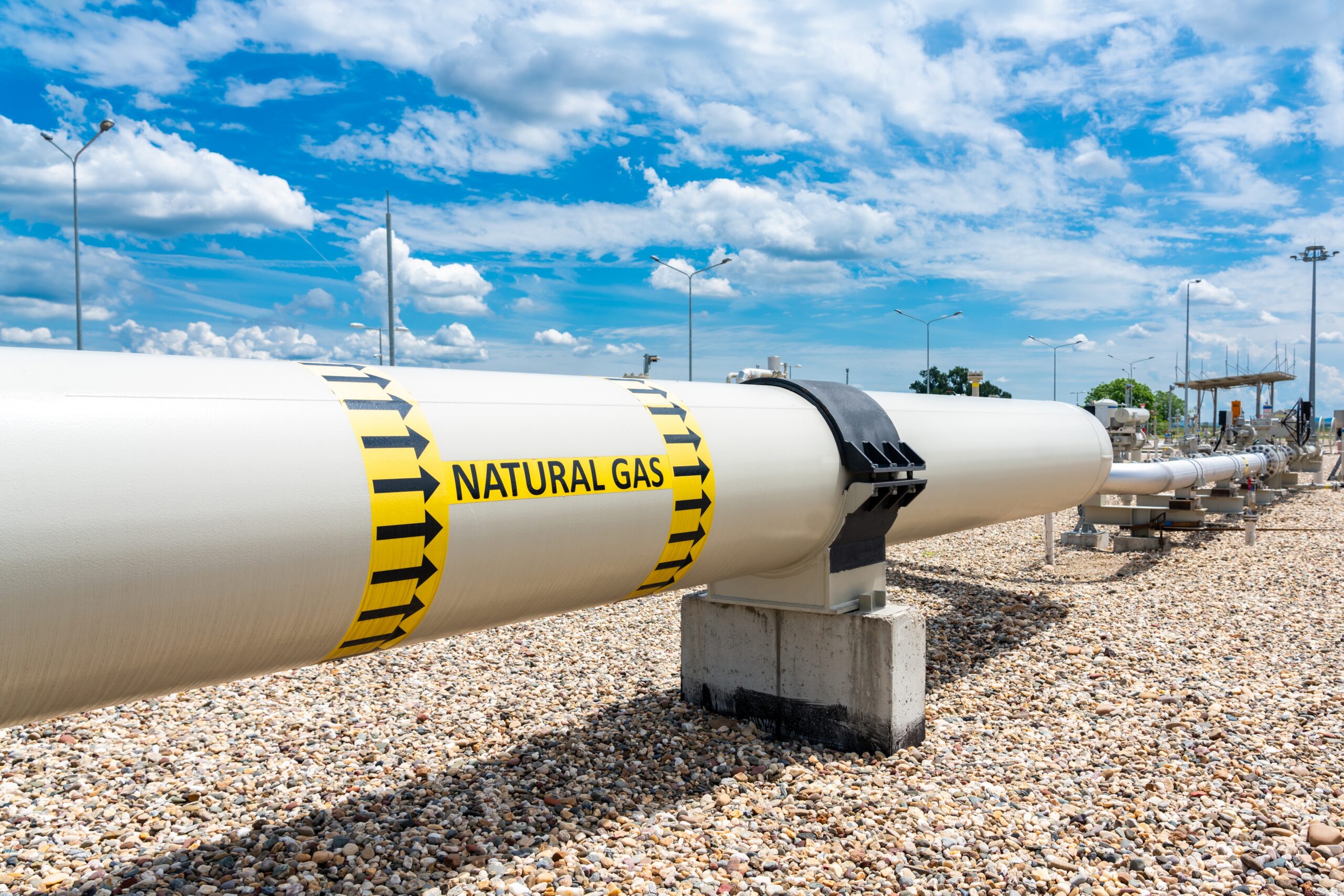
Triazine remains a foundational H2S scavenger in natural gas treatment. Its effectiveness is well established, but performance is not determined by chemistry alone. Concentration, formulation, and injection strategy all influence outcomes. When these variables are not aligned with operating conditions, even proven chemistries underperform.

Triazine: An Effective Solution for Steady-State Applications

Many treatment programs rely on standardized triazine products. While suitable for simple, steady-state systems, these formulations often fall short in real-world environments where gas composition, temperature, and flow conditions vary. The result is familiar: inconsistent sulfur removal, increased chemical consumption, and difficulty maintaining pipeline specifications.

H2S removal efficiency in natural gas systems is governed by several key factors:

  • Contact time between gas and chemical phase
  • Injection location relative to flow regime and pressure conditions
  • Mixing energy available for dispersion and reaction
  • Inlet H2S concentration and variability over time

When these elements are not optimized, operators compensate by increasing injection rates. This approach reduces immediate risk but introduces inefficiency. Overfeeding becomes routine, driving up cost while failing to address the root cause of performance limitations.

Injection Strategies Need to be Understood

Execution, however, extends beyond formulation. Injection strategy must be aligned with system hydraulics. Injection points must be selected to maximize contact time and mixing. In some cases, multiple injection locations are required to manage changing conditions across a system. Analytical monitoring must support these decisions with reliable, real-time data.

Q2 Technologies approaches triazine treatment as an engineered solution rather than a commodity product. At its Odessa, Texas manufacturing facility, multiple triazine concentrations are produced with the flexibility to incorporate application-specific additive packages. These blends are designed to match the chemical and physical characteristics of the gas stream, not a generic specification.

Field application is supported by injection modeling and system evaluation. This ensures that chemistry, placement, and dosage are aligned with actual operating conditions. The objective is consistent sulfur removal without excess chemical usage.

When the Challenge Becomes More Complex, Get Creative

Customized triazine blending addresses this gap. By adjusting concentration and incorporating targeted additives, treatment programs can be tailored to specific gas system challenges. This is particularly important in systems with elevated mercaptans, temperature fluctuations, or sensitivity to byproduct formation and solids.

A properly engineered triazine blend can deliver measurable improvements:

  • Enhanced reaction kinetics under varying operating conditions
  • Improved dispersion and contact efficiency in the gas stream
  • Reduced formation of polymeric byproducts and solids
  • Greater stability across temperature and pressure ranges

These enhancements translate directly into operational benefits:

  • Reduced overfeed and more controlled chemical consumption
  • Improved consistency in meeting sulfur specifications
  • Lower total cost of treatment over time
  • Increased confidence in system performance during fluctuations

Hear it from an Operator

Operators managing natural gas systems require more than bulk supply. They require treatment programs that respond to variability, maintain compliance, and control cost. Triazine remains a critical tool, but its performance depends on how it is applied.

As one operator stated:

“We had been using standard triazine for years and assumed the performance was fixed. After switching to a customized blend and adjusting our injection points, we reduced chemical usage and tightened our outlet H2S. It was a measurable improvement.”

Effective H2S removal is not a fixed formula. It is a system that must be tuned to the application. When formulation and field execution are aligned, triazine delivers reliable and efficient sulfur control across natural gas operations.

Let's Start a Conversation...

If you want to learn more about H2S removal or other innovative H2S removal solutions from a variety of streams including crude oil, natural gas, other hydrocarbon liquids, or produced water, we would welcome the opportunity to speak to you about your asset or application. Click here to reach out to us.


Ready to fix your H2S problem?

We would welcome an opportunity to connect.

Triazine remains a foundational H2S scavenger in natural gas treatment. Its effectiveness is well established, but performance is not determined by chemistry alone. Concentration, formulation, and injection strategy all influence outcomes. When these variables are not aligned with operating conditions, even proven chemistries underperform.

Triazine: An Effective Solution for Steady-State Applications

Many treatment programs rely on standardized triazine products. While suitable for simple, steady-state systems, these formulations often fall short in real-world environments where gas composition, temperature, and flow conditions vary. The result is familiar: inconsistent sulfur removal, increased chemical consumption, and difficulty maintaining pipeline specifications.

H2S removal efficiency in natural gas systems is governed by several key factors:

  • Contact time between gas and chemical phase
  • Injection location relative to flow regime and pressure conditions
  • Mixing energy available for dispersion and reaction
  • Inlet H2S concentration and variability over time

When these elements are not optimized, operators compensate by increasing injection rates. This approach reduces immediate risk but introduces inefficiency. Overfeeding becomes routine, driving up cost while failing to address the root cause of performance limitations.

Injection Strategies Need to be Understood

Execution, however, extends beyond formulation. Injection strategy must be aligned with system hydraulics. Injection points must be selected to maximize contact time and mixing. In some cases, multiple injection locations are required to manage changing conditions across a system. Analytical monitoring must support these decisions with reliable, real-time data.

Q2 Technologies approaches triazine treatment as an engineered solution rather than a commodity product. At its Odessa, Texas manufacturing facility, multiple triazine concentrations are produced with the flexibility to incorporate application-specific additive packages. These blends are designed to match the chemical and physical characteristics of the gas stream, not a generic specification.

Field application is supported by injection modeling and system evaluation. This ensures that chemistry, placement, and dosage are aligned with actual operating conditions. The objective is consistent sulfur removal without excess chemical usage.

When the Challenge Becomes More Complex, Get Creative

Customized triazine blending addresses this gap. By adjusting concentration and incorporating targeted additives, treatment programs can be tailored to specific gas system challenges. This is particularly important in systems with elevated mercaptans, temperature fluctuations, or sensitivity to byproduct formation and solids.

A properly engineered triazine blend can deliver measurable improvements:

  • Enhanced reaction kinetics under varying operating conditions
  • Improved dispersion and contact efficiency in the gas stream
  • Reduced formation of polymeric byproducts and solids
  • Greater stability across temperature and pressure ranges

These enhancements translate directly into operational benefits:

  • Reduced overfeed and more controlled chemical consumption
  • Improved consistency in meeting sulfur specifications
  • Lower total cost of treatment over time
  • Increased confidence in system performance during fluctuations

Hear it from an Operator

Operators managing natural gas systems require more than bulk supply. They require treatment programs that respond to variability, maintain compliance, and control cost. Triazine remains a critical tool, but its performance depends on how it is applied.

As one operator stated:

“We had been using standard triazine for years and assumed the performance was fixed. After switching to a customized blend and adjusting our injection points, we reduced chemical usage and tightened our outlet H2S. It was a measurable improvement.”

Effective H2S removal is not a fixed formula. It is a system that must be tuned to the application. When formulation and field execution are aligned, triazine delivers reliable and efficient sulfur control across natural gas operations.

Let's Start a Conversation...

If you want to learn more about H2S removal or other innovative H2S removal solutions from a variety of streams including crude oil, natural gas, other hydrocarbon liquids, or produced water, we would welcome the opportunity to speak to you about your asset or application. Click here to reach out to us.

Ready to fix your H2S problem?

We would welcome an opportunity to connect.

When introduced into a stream afflicted with H2S, the hemiformal decomposes to release formaldehyde, which then reacts with hydrogen sulfide to form stable, non-volatile byproducts such as thiomethylene glycol.  The reaction is typically fast and efficient, particularly in aqueous or mixed-phase environments. Unlike some traditional scavengers, hemiformal can maintain activity across a broad pH range and is less likely to generate problematic solids. When considering if hemiformal is the right product, certain operating conditions are reviewed, such as pH and temperature.

Heading 1

When introduced into a stream afflicted with H2S, the hemiformal decomposes to release formaldehyde, which then reacts with hydrogen sulfide to form stable, non-volatile byproducts such as thiomethylene glycol.  The reaction is typically fast and efficient, particularly in aqueous or mixed-phase environments. Unlike some traditional scavengers, hemiformal can maintain activity across a broad pH range and is less likely to generate problematic solids. When considering if hemiformal is the right product, certain operating conditions are reviewed, such as pH and temperature.

Heading 2

When introduced into a stream afflicted with H2S, the hemiformal decomposes to release formaldehyde, which then reacts with hydrogen sulfide to form stable, non-volatile byproducts such as thiomethylene glycol.  The reaction is typically fast and efficient, particularly in aqueous or mixed-phase environments. Unlike some traditional scavengers, hemiformal can maintain activity across a broad pH range and is less likely to generate problematic solids. When considering if hemiformal is the right product, certain operating conditions are reviewed, such as pH and temperature.

Heading 3

Heading 4

When introduced into a stream afflicted with H2S, the hemiformal decomposes to release formaldehyde, which then reacts with hydrogen sulfide to form stable, non-volatile byproducts such as thiomethylene glycol.  The reaction is typically fast and efficient, particularly in aqueous or mixed-phase environments. Unlike some traditional scavengers, hemiformal can maintain activity across a broad pH range and is less likely to generate problematic solids. When considering if hemiformal is the right product, certain operating conditions are reviewed, such as pH and temperature. 

Key Benefits:

  • Controlled formaldehyde release 
  • Lower vapor pressure and improved safety profile 
  • Broad applicability across liquid and gas-phase systems 
  • Reduced scaling in sour water stripping and other high-temp operations 
  • Hemiformal can make the scavenger safe for transport as it is a very stable compound 

Heading 5

Hemiformal is used in a variety of upstream and midstream applications, including: 

  • Gas sweetening systems 
  • Produced water treatment 
  • Crude oil storage and transport 
  • Sour water stripper overheads 
  • Temporary H2S mitigation during maintenance or turnaround

Its adaptability makes it especially useful in operations where system conditions fluctuate or where traditional triazine-based products may underperform. 

Heading 6

While hemiformal offers many advantages, it is not a one-size-fits-all solution. The rate of formaldehyde release can vary depending on formulation and environmental conditions. Additionally, while safer than raw formaldehyde, hemiformal must still be handled with care and appropriate PPE. 

For optimal results, formulation expertise and application-specific customization are key—something we at Q2 Technologies excel at delivering. 

Related Blogs

A Dialed-In Recipe: Triazine Blending and Customization for Natural Gas Treatment

FAQs

  1. Why do standard triazine products often underperform in natural gas treatment systems?

    Standard triazine formulations are typically designed for steady-state operating conditions. In real-world gas systems, variations in H2S concentration, temperature, pressure, flow regime, and mercaptan content can reduce treatment efficiency. Without optimization of concentration, additives, and injection strategy, operators often experience inconsistent sulfur removal, higher chemical consumption, and difficulty maintaining pipeline specifications.

  2. What are the benefits of customized triazine blending for H2S scavenging?

    Customized triazine blends are engineered to match the specific chemical and physical conditions of a gas stream. By adjusting concentration and incorporating targeted additive packages, operators can improve reaction kinetics, increase contact efficiency, reduce solids and polymeric byproduct formation, and maintain more stable performance across changing operating conditions. These improvements often reduce overfeed rates and lower total treatment costs.

  3. How does injection strategy impact triazine performance in natural gas systems?

    Injection strategy is critical to treatment efficiency. Factors such as injection location, contact time, mixing energy, pressure conditions, and flow regime directly influence how effectively triazine reacts with H2S. Poor injection placement can limit dispersion and reaction time, forcing operators to overfeed chemical. Proper injection modeling and system evaluation help optimize dosage, placement, and overall sulfur removal performance.

  4. How does Q2 Technologies customize triazine treatment programs?

    Q2 Technologies manufactures multiple triazine concentrations at its Odessa, Texas facility and customizes formulations with application-specific additive packages. The company combines tailored chemistry with injection modeling, system evaluation, and field support to align treatment programs with actual operating conditions. This engineered approach helps operators improve sulfur removal consistency, reduce chemical waste, and maintain compliance more efficiently.

Related Articles