


A sour-water sample that reads high for hydrogen sulfide is not automatically a scavenger application. The answer to which chemical treats sour water starts with where the water came from, what it contains beyond H2S, and where it must go next. A refinery sour-water stripper feed, produced water headed to disposal, and a wastewater equalization basin with intermittent sulfide release can all require different treatment strategies.
The wrong chemistry can create excess solids, drive chemical spend upward, interfere with downstream biological treatment, or leave operators with a recurring odor and exposure problem. Effective treatment is a process decision, not simply a drum-delivery decision.
What makes water “sour”?
Sour water generally contains dissolved hydrogen sulfide, often alongside ammonia, mercaptans, carbon dioxide, hydrocarbons, suspended solids, and other process contaminants. Hydrogen sulfide is the primary operational concern because it is toxic, corrosive, odorous, and volatile. At lower pH, more sulfide exists as dissolved H2S, which can readily come out of solution and enter the vapor space.
That behavior matters at tanks, pits, separators, equalization basins, water-transfer systems, and wastewater treatment plants. A water stream can appear manageable in a closed line, then generate a serious H2S concern when pressure drops, temperature rises, or agitation increases.
In refinery service, sour water commonly refers to condensate generated by process units and containing H2S and ammonia. These streams are often routed to a sour-water stripper, where stripping rather than direct chemical neutralization is the core treatment process. In upstream, midstream, landfill, biogas, and industrial wastewater applications, the phrase may describe a broader range of H2S-bearing water streams where chemical treatment can play a more direct role.
Which chemical treats sour water? It depends on the treatment objective
There is no universal chemical for sour water. The preferred approach depends on whether the objective is to reduce dissolved sulfide, control H2S vapor, manage odor, protect equipment, prepare water for biological treatment, or meet a discharge or reuse specification.
H2S scavengers for contained liquid systems
Liquid H2S scavengers are often used where a water stream requires fast, targeted sulfide reduction and where a full stripping or oxidation system is not practical. Triazine-based chemistries are widely used in oil and gas and industrial liquid applications because they react with H2S to form stable reaction products.
Performance depends on more than the laboratory reaction rate. Residence time, mixing energy, temperature, pH, H2S concentration, water cut, and competing contaminants all affect field results. In applications with significant oil carryover or solids, poor distribution can make a capable scavenger appear ineffective.
Triazine chemistry can be an appropriate solution for produced water, tank bottoms, transfer water, and certain wastewater side streams. However, operators must account for spent scavenger byproducts, solids handling, compatibility with downstream disposal or treatment, and the risk of overtreatment. A lower unit price does not offset excessive dosage, plugged equipment, or disposal complications.
Oxidizing chemistries for wastewater sulfide control
Oxidizing agents can convert sulfide into less volatile sulfur species and are commonly considered in industrial wastewater and odor-control applications. Depending on the process and operating conditions, options may include hydrogen peroxide, chlorine-based oxidants, permanganate, or other purpose-designed oxidation programs.
Oxidation can be highly effective, but it requires control. Chemical demand changes with sulfide loading, organics, reduced metals, ammonia, and other oxygen-demanding compounds. An oxidant program that is well tuned during normal operation may underperform during a slug load or during a shift in influent pH.
The downstream impact also matters. Chlorine-based programs may introduce residual management and byproduct concerns. Hydrogen peroxide can be a useful option where residual chlorides are undesirable, but uncontrolled decomposition or poor injection can waste chemical. Oxidation is typically best applied with reliable monitoring, adequate mixing, and a clear endpoint for residual control.
Caustic for pH adjustment and H2S containment
Caustic soda does not destroy sulfide. It raises pH, shifting dissolved H2S toward the hydrosulfide ion form and reducing the tendency for H2S to volatilize. This makes caustic valuable for vapor suppression, temporary stabilization, and certain treatment trains.
That distinction is critical. A pH increase can reduce immediate H2S release while leaving total sulfide in the water. If the water is later acidified, mixed with lower-pH water, or sent to an uncontrolled environment, H2S can be released again. Caustic is therefore often a supporting chemical rather than the complete answer to sulfide removal.
Iron-based products for sulfide precipitation
Iron salts can react with sulfide to form insoluble iron sulfide solids. They are frequently used in wastewater systems, collection networks, and treatment processes where sulfide control and odor reduction are needed. Ferric chloride, ferrous salts, and specialized iron-based formulations may be selected based on pH, alkalinity, solids-management capacity, and phosphorus-control objectives.
The trade-off is sludge. Precipitation transfers sulfur from the liquid phase into solids that must be managed, and the resulting solids can affect clarifiers, dewatering, and disposal costs. Iron treatment can be a strong fit when a facility already has solids-handling infrastructure and needs a controllable approach to sulfide in aqueous systems.
When stripping is the right answer
For refinery sour water with substantial H2S and ammonia, a sour-water stripper is generally the primary treatment technology. Steam stripping separates volatile contaminants from water so the treated water can proceed to downstream handling and the acid gas can be managed through the appropriate sulfur-recovery or disposal system.
Chemicals still have a role around a stripper. They may be used for upset control, corrosion management, odor control, or treatment of side streams and storage systems. But attempting to replace a properly designed stripper with bulk scavenger chemistry in a high-volume refinery sour-water service can be technically and economically unsound.
The same principle applies beyond refineries. When sulfide loading is continuous and high, treatment should be evaluated as an integrated process. Chemical injection may be the correct answer, but it should be tested against alternatives such as air or oxygen oxidation, biological treatment, stripping, covered storage, or a combination of these methods.
Start with the water chemistry, not the product name
A defensible treatment recommendation begins with representative samples and operating data. Total sulfide and dissolved H2S should be distinguished where possible, since vapor risk is driven strongly by pH and equilibrium conditions. Operators should also evaluate ammonia, chemical oxygen demand, alkalinity, hydrocarbons, chlorides, metals, suspended solids, temperature, flow variability, and the downstream destination.
Sampling itself requires care. H2S can be lost from an improperly collected or delayed sample, producing results that understate the real exposure and treatment demand. Field vapor readings, liquid-phase testing, and process history should be reviewed together rather than treated as separate data sets.
Bench testing can identify candidate chemistries, but field validation remains essential. The actual injection point, mixing conditions, contact time, and flow regime determine whether the chemical reaches the sulfide before it reaches an operator, vent, pump seal, or downstream process.
Injection and monitoring determine treatment performance
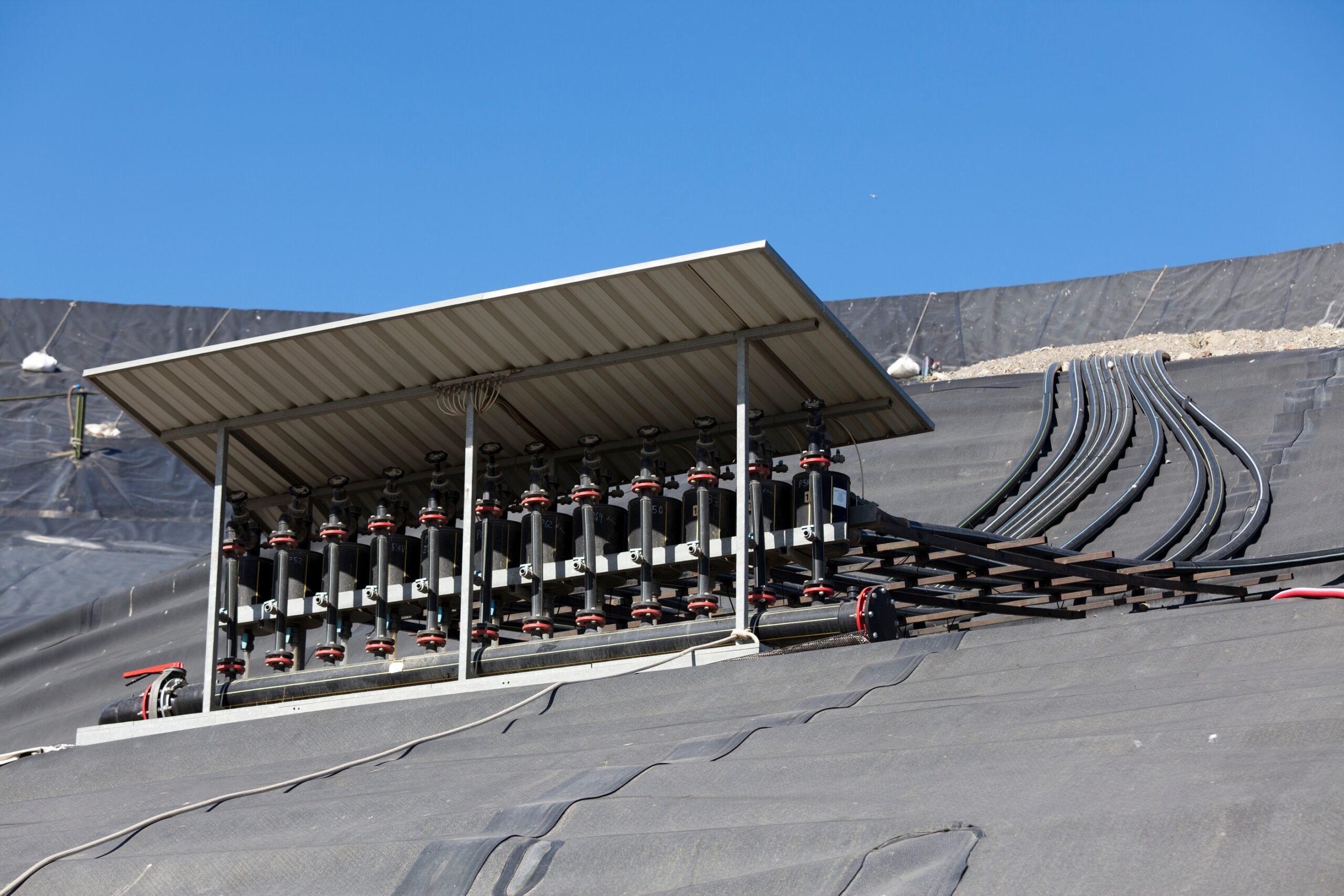
Many sour-water treatment problems are distribution problems. Injecting a chemical immediately before a tank inlet may provide good turbulence and contact. Injecting into a stagnant line or directly into an oil-rich layer may not. A treatment program should account for phase behavior, line velocity, recirculation, static mixers where needed, and the locations where H2S is most likely to evolve.
Monitoring should be tied to the actual risk. That can include liquid sulfide testing, headspace H2S measurements, pH, oxidation-reduction potential, residual oxidant, flow, and chemical injection rate. Automated monitoring and dosage adjustment can reduce both underfeed events and unnecessary chemical consumption when loadings fluctuate.
Q2 Technologies approaches these applications as field treatment systems, pairing application-specific sulfur chemistry with injection optimization, monitoring, and dependable delivery support. That integrated approach is particularly valuable where water quality and operating conditions change faster than a fixed feed rate can respond.
Selecting the practical treatment path
The best chemical program balances safety, treatment performance, downstream compatibility, and total operating cost. A scavenger may be appropriate for intermittent H2S spikes or contained liquid systems. An oxidant may fit wastewater applications with sufficient mixing and residual control. Iron treatment may be preferred where solids management is available. Caustic can suppress vapor release but should not be mistaken for permanent sulfide destruction. High-volume refinery sour water usually points toward stripping as the fundamental process solution.
Before selecting a product, define the performance target in operational terms: acceptable H2S in the headspace, dissolved sulfide at discharge, odor threshold at the property boundary, corrosion-risk reduction, or protection of a downstream biological unit. Then validate the chemistry against the real stream and the real injection environment.
A sour-water treatment program earns its value when it keeps H2S controlled through changing loads, protects the people working around the system, and avoids moving today’s sulfur problem to the next tank, line, or treatment step.