AI data center server room with rows of illuminated server racks and blue cabling in a cooled facility AI Power Hyperscale Cooling Natural Gas Produced Water

How AI Data Centers Will Be Powered and Cooled

Many next-generation AI data centers will be powered by natural gas and cooled using a combination of freshwater, recycled wastewater, and treated produced water. Regions such as the Permian Basin, Appalachia, and the Gulf Coast are attracting development because they offer abundant energy resources, available land, and water reuse opportunities. However, hydrogen sulfide (H₂S) present in both natural gas and produced water must be removed before either resource can be safely used, making treatment infrastructure a critical part of the AI buildout.

Powering the AI Boom: How Data Centers will be Powered & Cooled

The artificial intelligence buildout has turned data centers into one of the fastest growing sources of electricity demand in the United States. After roughly fifteen years of flat consumption, data center electricity use has climbed sharply. The U.S. Department of Energy’s Lawrence Berkeley National Laboratory found that data centers consumed about 4.4 percent of total U.S. electricity in 2023 and projected that share could reach between 6.7 and 12 percent by 2028. To put it bluntly, taking directly from The International Energy Agency – there is no AI without energy; at the same time, AI has the potential to transform the energy sector. The IEA estimates global data center electricity demand could more than double by 2030 to roughly 945 terawatt hours, an amount comparable to the entire electricity consumption of Japan today.


That demand must be met by something, and increasingly the answer is natural gas. The grid cannot add renewable capacity and transmission fast enough to satisfy hyperscale operators who want firm, around the clock power. As a result, developers are turning to on site gas turbines and new combined cycle plants located next to the campuses themselves.

Where the Gas Will Come From

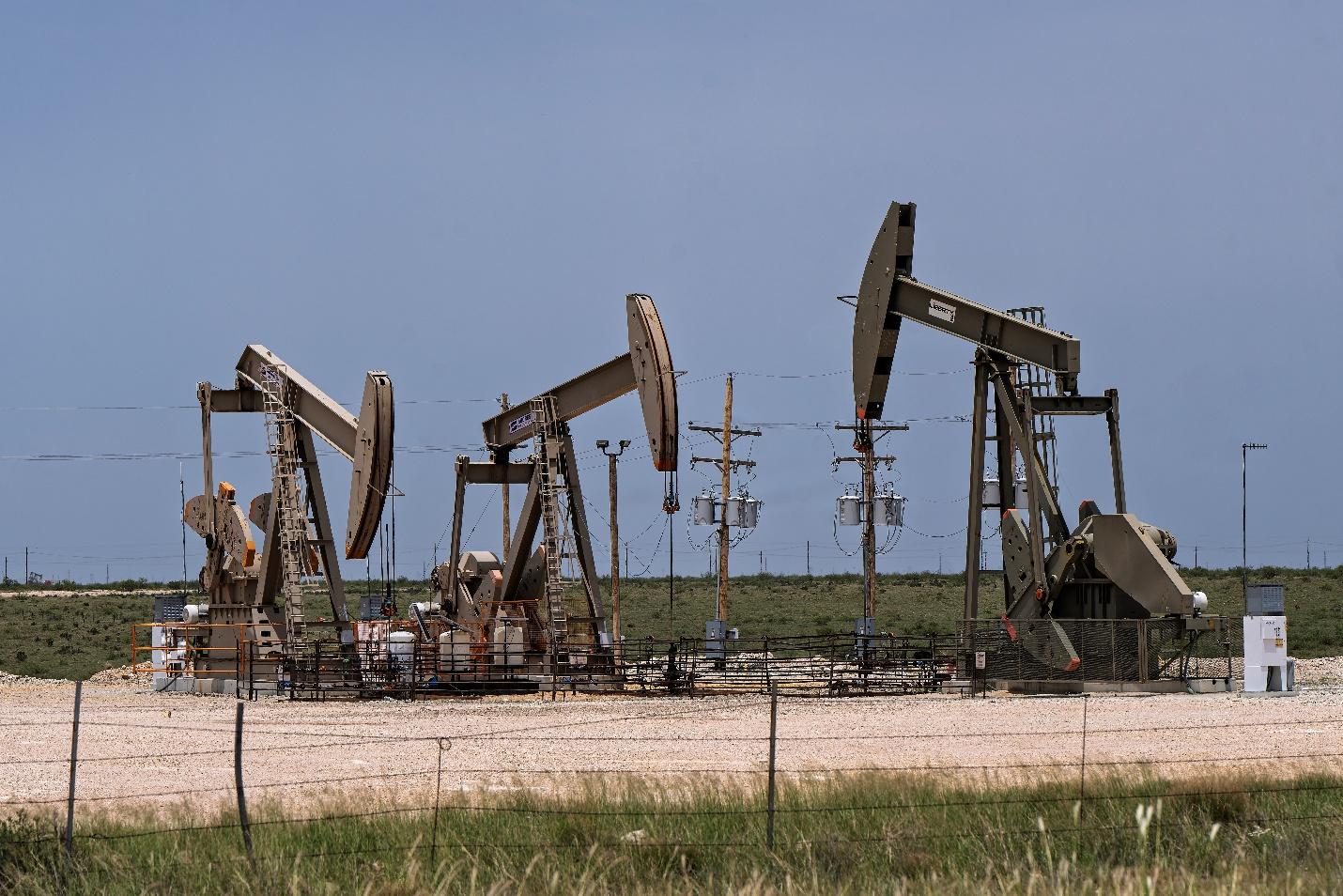
The most likely supply basins are the ones already producing the cheapest associated and dry gas. The Appalachian Basin, primarily the Marcellus and Utica shales across Pennsylvania, West Virginia, and Ohio, remains the largest gas producing region in the country, accounting for roughly a third of U.S. dry gas production. The Permian Basin in West Texas and southeastern New Mexico produces enormous volumes of associated gas alongside its oil, and the Haynesville shale in Louisiana and East Texas sits close to both Gulf Coast demand and existing pipeline infrastructure.


This proximity is shaping where the data centers themselves are landing. Northern Virginia’s “Data Center Alley” in Loudoun County remains the largest concentration in the world, but new growth is moving toward gas. Developers have announced massive campuses in West Texas, including projects tied directly to Permian gas, and in 2025 a wave of announcements targeted Louisiana, Texas, and the Appalachian region precisely because gas and land are abundant there. Meta’s roughly 4 gigawatt Louisiana campus and various Texas “behind the meter” gas projects illustrate the pattern of siting compute next to the fuel.

The H2S Problem in the Gas Stream

Raw natural gas is rarely pipeline ready or turbine ready as it comes out of the ground. Many producing zones, particularly portions of the Permian and certain carbonate formations, yield “sour” gas containing hydrogen sulfide (H2S). Hydrogen sulfide is highly toxic, corrosive to steel and turbine components, and regulated. Pipeline tariffs typically limit H2S to about roughly 4 parts per million across the board.

Before that gas can fuel a turbine, it must be sweetened. There are a variety of methods to treat sour natural gas, be it amine, triazine, non-triazine chemicals, or other catalysts. For a data center relying on local gas, this treatment is not optional. It is a prerequisite, and it adds cost, footprint, and an emissions and sulfur handling consideration to any “gas first” siting decision.

Cooling: The Water Question

Power is only half the resource story. Data centers also consume water, both directly for cooling and indirectly through thermoelectric power generation. Lawrence Berkeley’s 2024 report estimated that U.S. data centers directly consumed on the order of 17 billion gallons of water in 2023, a figure that could roughly double by 2028, before counting the water embedded in the electricity they buy. A single large facility using evaporative cooling can consume hundreds of thousands to millions of gallons per day.


Where does that water come from? Traditionally from municipal supplies and groundwater, which has sparked friction in drought stressed regions of Arizona, Texas, and elsewhere. To reduce that strain, operators are increasingly pursuing alternative sources, including recycled municipal wastewater and, notably in oil and gas country, treated produced water.

Produced Water and a Second H2S Concern

Produced water is the brine that comes up alongside oil and gas. The industry generates enormous volumes of it. Estimates put U.S. production well above 20 billion barrels per year, with the Permian Basin alone generating several times more water than oil by volume. Using this otherwise waste stream to cool data centers is attractive because it avoids drawing on freshwater, and Texas in particular has moved to encourage produced water reuse through legislation and a dedicated research consortium.

But produced water carries the same villain that appears in the gas stream. Sour formations produce sour water, and dissolved hydrogen sulfide is common in produced water from H2S bearing reservoirs. That presents corrosion risks to cooling equipment, worker safety hazards, and odor and air emission concerns. As a result, produced water destined for cooling must be treated, and H2S removal is part of that treatment, typically through aeration or air stripping, chemical oxidation, or biological and chemical scavenging, on top of the desalination and solids removal needed to make hypersaline brine usable. In other words, H2S appears twice in this story: once in the fuel and once in the cooling water, and both must be addressed before a data center can run.

The Takeaway

The future of AI will be determined as much by energy and water as by chips and software. The regions attracting the next wave of data center investment – the Permian, Appalachia, and the Gulf Coast – offer abundant natural gas, available land, and growing opportunities for water reuse. Those advantages are powerful, but they are not free.


Hydrogen sulfide sits at the center of both resource streams. It must be removed from the gas before it can fuel turbines and from the water before it can cool servers. The same molecule appears twice in the data center supply chain, creating treatment, infrastructure, and operating costs that cannot be ignored.


The AI boom may be digital, but its foundation is physical. Behind every data center are molecules, pipelines, treatment systems, and power plants. As AI scales, the winners will not simply be those who build the most computing capacity, it will be those who most effectively secure and manage the energy and water that make it possible.

For more on these thoughts with meaningful solutions, contact Q2 Technologies today.

Works Cited

International Energy Agency. “Energy and AI.” IEA, April 2025. https://www.iea.org/reports/energy-and-ai


U.S. Energy Information Administration. “Natural Gas Explained” and “Drilling Productivity Report.” EIA. https://www.eia.gov/petroleum/drilling/


S&P Global Commodity Insights. “US data center power demand and the natural gas response.” S&P Global, 2025. https://www.spglobal.com/commodityinsights/en/market-insights/latest-news/natural-gas


Kohl, A. and Nielsen, R. “Gas Purification,” 5th ed., Gulf Publishing; and U.S. EIA, “Natural Gas Processing.” See also pipeline quality H2S specifications summarized at https://www.eia.gov/energyexplained/natural-gas/


Texas Produced Water Consortium / Texas Water Development Board. “Produced Water in Texas” reports; and Scanlon, B.R., et al. “Will water issues constrain oil and gas production?” Environmental Science & Technology. https://www.depts.ttu.edu/research/tx-water-consortium/


“Energy, water use and pollution of AI and data centers rival most countries.” AP, 2026. https://www.yahoo.com/news/science/articles/un-calculates-nation-sized-environmental-140011529.html

Powering the AI Boom: How Data Centers will be Powered & Cooled

The artificial intelligence buildout has turned data centers into one of the fastest growing sources of electricity demand in the United States. After roughly fifteen years of flat consumption, data center electricity use has climbed sharply. The U.S. Department of Energy’s Lawrence Berkeley National Laboratory found that data centers consumed about 4.4 percent of total U.S. electricity in 2023 and projected that share could reach between 6.7 and 12 percent by 2028. To put it bluntly, taking directly from The International Energy Agency – there is no AI without energy; at the same time, AI has the potential to transform the energy sector. The IEA estimates global data center electricity demand could more than double by 2030 to roughly 945 terawatt hours, an amount comparable to the entire electricity consumption of Japan today.


That demand must be met by something, and increasingly the answer is natural gas. The grid cannot add renewable capacity and transmission fast enough to satisfy hyperscale operators who want firm, around the clock power. As a result, developers are turning to on site gas turbines and new combined cycle plants located next to the campuses themselves.

Where the Gas Will Come From

The most likely supply basins are the ones already producing the cheapest associated and dry gas. The Appalachian Basin, primarily the Marcellus and Utica shales across Pennsylvania, West Virginia, and Ohio, remains the largest gas producing region in the country, accounting for roughly a third of U.S. dry gas production. The Permian Basin in West Texas and southeastern New Mexico produces enormous volumes of associated gas alongside its oil, and the Haynesville shale in Louisiana and East Texas sits close to both Gulf Coast demand and existing pipeline infrastructure.


This proximity is shaping where the data centers themselves are landing. Northern Virginia’s “Data Center Alley” in Loudoun County remains the largest concentration in the world, but new growth is moving toward gas. Developers have announced massive campuses in West Texas, including projects tied directly to Permian gas, and in 2025 a wave of announcements targeted Louisiana, Texas, and the Appalachian region precisely because gas and land are abundant there. Meta’s roughly 4 gigawatt Louisiana campus and various Texas “behind the meter” gas projects illustrate the pattern of siting compute next to the fuel.

The H2S Problem in the Gas Stream

Raw natural gas is rarely pipeline ready or turbine ready as it comes out of the ground. Many producing zones, particularly portions of the Permian and certain carbonate formations, yield “sour” gas containing hydrogen sulfide (H2S). Hydrogen sulfide is highly toxic, corrosive to steel and turbine components, and regulated. Pipeline tariffs typically limit H2S to about roughly 4 parts per million across the board.

Before that gas can fuel a turbine, it must be sweetened. There are a variety of methods to treat sour natural gas, be it amine, triazine, non-triazine chemicals, or other catalysts. For a data center relying on local gas, this treatment is not optional. It is a prerequisite, and it adds cost, footprint, and an emissions and sulfur handling consideration to any “gas first” siting decision.

Cooling: The Water Question

Power is only half the resource story. Data centers also consume water, both directly for cooling and indirectly through thermoelectric power generation. Lawrence Berkeley’s 2024 report estimated that U.S. data centers directly consumed on the order of 17 billion gallons of water in 2023, a figure that could roughly double by 2028, before counting the water embedded in the electricity they buy. A single large facility using evaporative cooling can consume hundreds of thousands to millions of gallons per day.


Where does that water come from? Traditionally from municipal supplies and groundwater, which has sparked friction in drought stressed regions of Arizona, Texas, and elsewhere. To reduce that strain, operators are increasingly pursuing alternative sources, including recycled municipal wastewater and, notably in oil and gas country, treated produced water.

Produced Water and a Second H2S Concern

Produced water is the brine that comes up alongside oil and gas. The industry generates enormous volumes of it. Estimates put U.S. production well above 20 billion barrels per year, with the Permian Basin alone generating several times more water than oil by volume. Using this otherwise waste stream to cool data centers is attractive because it avoids drawing on freshwater, and Texas in particular has moved to encourage produced water reuse through legislation and a dedicated research consortium.

But produced water carries the same villain that appears in the gas stream. Sour formations produce sour water, and dissolved hydrogen sulfide is common in produced water from H2S bearing reservoirs. That presents corrosion risks to cooling equipment, worker safety hazards, and odor and air emission concerns. As a result, produced water destined for cooling must be treated, and H2S removal is part of that treatment, typically through aeration or air stripping, chemical oxidation, or biological and chemical scavenging, on top of the desalination and solids removal needed to make hypersaline brine usable. In other words, H2S appears twice in this story: once in the fuel and once in the cooling water, and both must be addressed before a data center can run.

The Takeaway

The future of AI will be determined as much by energy and water as by chips and software. The regions attracting the next wave of data center investment – the Permian, Appalachia, and the Gulf Coast – offer abundant natural gas, available land, and growing opportunities for water reuse. Those advantages are powerful, but they are not free.


Hydrogen sulfide sits at the center of both resource streams. It must be removed from the gas before it can fuel turbines and from the water before it can cool servers. The same molecule appears twice in the data center supply chain, creating treatment, infrastructure, and operating costs that cannot be ignored.


The AI boom may be digital, but its foundation is physical. Behind every data center are molecules, pipelines, treatment systems, and power plants. As AI scales, the winners will not simply be those who build the most computing capacity, it will be those who most effectively secure and manage the energy and water that make it possible.

For more on these thoughts with meaningful solutions, contact Q2 Technologies today.

Works Cited

International Energy Agency. “Energy and AI.” IEA, April 2025. https://www.iea.org/reports/energy-and-ai


U.S. Energy Information Administration. “Natural Gas Explained” and “Drilling Productivity Report.” EIA. https://www.eia.gov/petroleum/drilling/


S&P Global Commodity Insights. “US data center power demand and the natural gas response.” S&P Global, 2025. https://www.spglobal.com/commodityinsights/en/market-insights/latest-news/natural-gas


Kohl, A. and Nielsen, R. “Gas Purification,” 5th ed., Gulf Publishing; and U.S. EIA, “Natural Gas Processing.” See also pipeline quality H2S specifications summarized at https://www.eia.gov/energyexplained/natural-gas/


Texas Produced Water Consortium / Texas Water Development Board. “Produced Water in Texas” reports; and Scanlon, B.R., et al. “Will water issues constrain oil and gas production?” Environmental Science & Technology. https://www.depts.ttu.edu/research/tx-water-consortium/


“Energy, water use and pollution of AI and data centers rival most countries.” AP, 2026. https://www.yahoo.com/news/science/articles/un-calculates-nation-sized-environmental-140011529.html

When introduced into a stream afflicted with H2S, the hemiformal decomposes to release formaldehyde, which then reacts with hydrogen sulfide to form stable, non-volatile byproducts such as thiomethylene glycol.  The reaction is typically fast and efficient, particularly in aqueous or mixed-phase environments. Unlike some traditional scavengers, hemiformal can maintain activity across a broad pH range and is less likely to generate problematic solids. When considering if hemiformal is the right product, certain operating conditions are reviewed, such as pH and temperature.

Heading 1

When introduced into a stream afflicted with H2S, the hemiformal decomposes to release formaldehyde, which then reacts with hydrogen sulfide to form stable, non-volatile byproducts such as thiomethylene glycol.  The reaction is typically fast and efficient, particularly in aqueous or mixed-phase environments. Unlike some traditional scavengers, hemiformal can maintain activity across a broad pH range and is less likely to generate problematic solids. When considering if hemiformal is the right product, certain operating conditions are reviewed, such as pH and temperature.

Heading 2

When introduced into a stream afflicted with H2S, the hemiformal decomposes to release formaldehyde, which then reacts with hydrogen sulfide to form stable, non-volatile byproducts such as thiomethylene glycol.  The reaction is typically fast and efficient, particularly in aqueous or mixed-phase environments. Unlike some traditional scavengers, hemiformal can maintain activity across a broad pH range and is less likely to generate problematic solids. When considering if hemiformal is the right product, certain operating conditions are reviewed, such as pH and temperature.

Heading 3

Heading 4

When introduced into a stream afflicted with H2S, the hemiformal decomposes to release formaldehyde, which then reacts with hydrogen sulfide to form stable, non-volatile byproducts such as thiomethylene glycol.  The reaction is typically fast and efficient, particularly in aqueous or mixed-phase environments. Unlike some traditional scavengers, hemiformal can maintain activity across a broad pH range and is less likely to generate problematic solids. When considering if hemiformal is the right product, certain operating conditions are reviewed, such as pH and temperature. 

Key Benefits:

  • Controlled formaldehyde release 
  • Lower vapor pressure and improved safety profile 
  • Broad applicability across liquid and gas-phase systems 
  • Reduced scaling in sour water stripping and other high-temp operations 
  • Hemiformal can make the scavenger safe for transport as it is a very stable compound 

Heading 5

Hemiformal is used in a variety of upstream and midstream applications, including: 

  • Gas sweetening systems 
  • Produced water treatment 
  • Crude oil storage and transport 
  • Sour water stripper overheads 
  • Temporary H2S mitigation during maintenance or turnaround

Its adaptability makes it especially useful in operations where system conditions fluctuate or where traditional triazine-based products may underperform. 

Heading 6

While hemiformal offers many advantages, it is not a one-size-fits-all solution. The rate of formaldehyde release can vary depending on formulation and environmental conditions. Additionally, while safer than raw formaldehyde, hemiformal must still be handled with care and appropriate PPE. 

For optimal results, formulation expertise and application-specific customization are key—something we at Q2 Technologies excel at delivering. 

Related Blogs

How AI Data Centers Will Be Powered and Cooled in the Future

Many next-generation AI data centers will be powered by natural gas and cooled using a combination of freshwater, recycled wastewater, and treated produced water. Regions such as the Permian Basin, Appalachia, and the Gulf Coast are attracting development because they offer abundant energy resources, available land, and water reuse opportunities. However, hydrogen sulfide (H₂S) present in both natural gas and produced water must be removed before either resource can be safely used, making treatment infrastructure a critical part of the AI buildout.

FAQs

  1. Why are AI data centers increasingly using natural gas for power?

    AI data centers require large amounts of reliable, 24/7 electricity. In many regions, grid upgrades and renewable additions are not keeping pace with demand, leading developers to deploy on-site gas turbines and combined-cycle power plants.

  2. What role does hydrogen sulfide (H2S) play in powering AI data centers?

    Many natural gas supplies contain hydrogen sulfide, a toxic and corrosive contaminant. Before the gas can be used in turbines or pipelines, H₂S must be removed through gas sweetening processes such as amine treatment.

  3. Can produced water from oil and gas operations be used to cool data centers?

    Yes. Treated produced water is emerging as a potential alternative to freshwater for data center cooling, particularly in regions such as Texas where water scarcity and rapid data center growth are occurring simultaneously.

  4. Why is H2S a concern in both natural gas and produced water?

    Hydrogen sulfide (H2) can be present in both sour natural gas and produced water from oil and gas reservoirs. In each case, it creates corrosion, safety, and environmental risks that require treatment before the resource can be used for power generation or cooling.

Related Articles