

Mercaptan levels in Permian crude are rising because Delaware Basin producers are drilling sourer horizons, and the Gulf Coast export market now prices that problem in dollars per barrel. It’s been a year since Plains All American began charging a $0.50/bbl surcharge on crude entering its Gulf Coast system above its mercaptan specification (Reuters via Oil & Gas 360; RBN Energy). And they are not alone, others have been contemplating this kind of move too.
The gap is upstream. Most producers know their H2S limit at the central tank battery (CTB). Far fewer know what mercaptan level their barrels carry at the wellhead at any given moment That is because mercaptans are tested like H2S. To test H2S, a modified version of ASTM 5705 is easily performed in the field, the titration test, UOP 163, for mercaptans must be performed at a lab with specialized equipment. That’s just the tip of the iceberg with mercaptans. Where H2S is a simple, flat molecule, mercaptans have a variety of speciations, branched forms and are very complex. This post will explain where the mercaptans come from, where the specs sit, why export buyers in Europe and Asia drive those specs, and how operators can measure and treat before a penalty lands.
What Are Mercaptans in Crude Oil?
Mercaptans, also called thiols, are organic sulfur compounds with an R-SH functional group. The lightest ones, methyl mercaptan (methanethiol) and ethyl mercaptan, are volatile, foul smelling at very low concentrations, and corrosive. Together with H2S, they are responsible for much of the characteristic odor of sour crude (Metrohm AN-PAN-1026).
Mercaptans matter for four practical reasons:
- Safety and odor. Light mercaptans flash off in tanks, trucks, and ship holds, creating odor complaints and exposure concerns at terminals and on vessels.
- Corrosion. Mercaptans and their reaction products attack carbon steel and contribute to sulfur-related fouling in storage and refinery equipment.
- Refinery constraints. Mercaptans report to light naphtha and LPG cuts. Refiners without enough sweetening or hydrotreating capacity cannot absorb them without off-spec products.
- Commercial value. A mercaptan-heavy barrel can be discounted, surcharged, or rejected, even when its total sulfur still looks sweet.
That last point is critical. Total sulfur and mercaptan sulfur are different measurements. A light, sweet WTI barrel can pass a 0.2 wt% sulfur limit and still fail a mercaptan limit. RBN Energy notes that most pipeline-quality sweet crudes carry mercaptan sulfur below roughly 20 to 40 ppm, while several pipelines set a 75 ppm ceiling (RBN Energy).
Why Delaware Basin Crude Is Getting Sourer
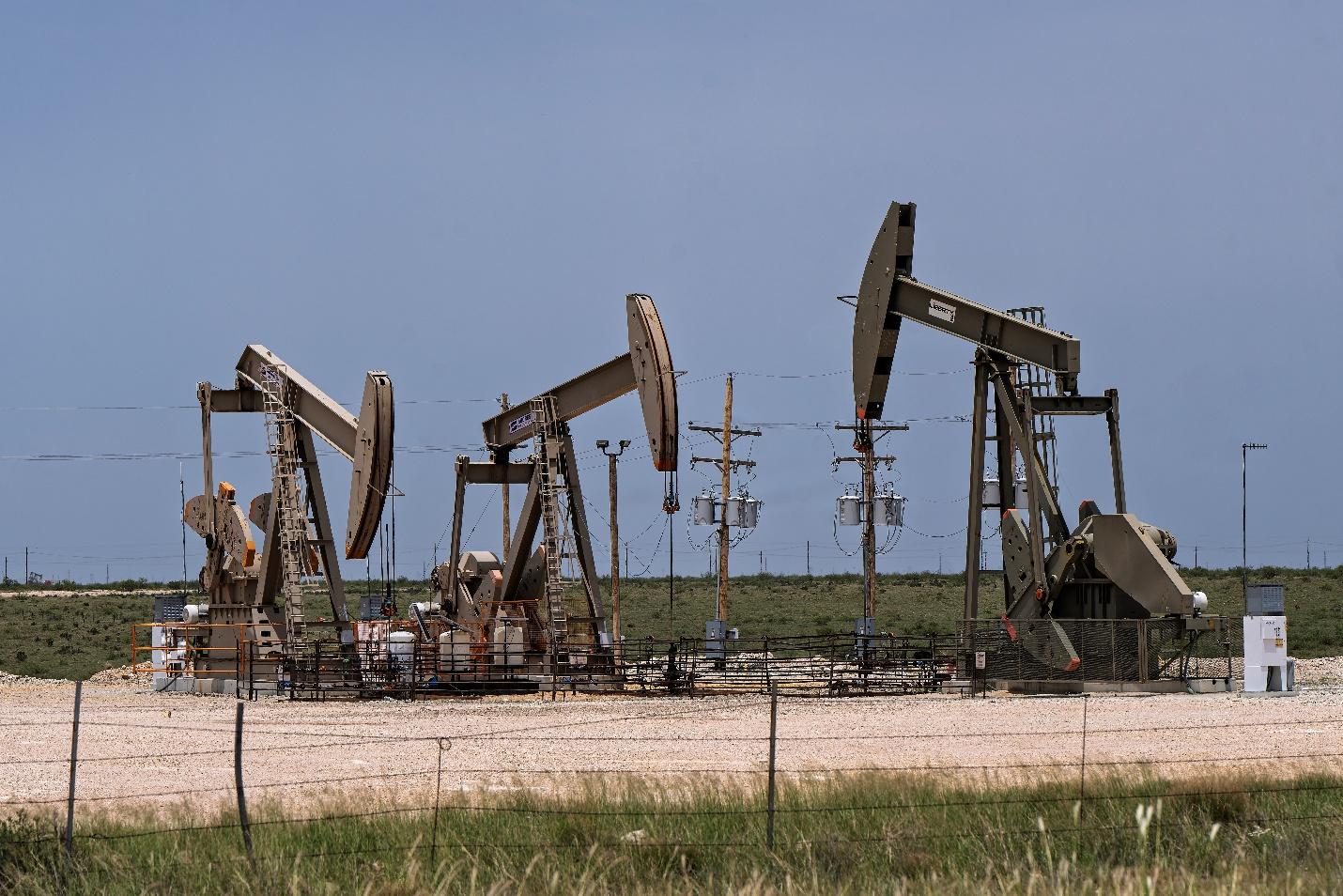
The best sweet benches in the Delaware Basin have been heavily developed, so producers are stepping into horizons with more H2S and mercaptans. Writing in the American Oil & Gas Reporter (September 2024), Paul Stephens explains that many of the most promising remaining Delaware Basin targets sit in formations with relatively high sour gas concentrations. He adds that operators prioritize sweet formations when everything else is equal, but sour formations hold so much oil that they now compete for capital. One geologist he cites estimates that more than half of the basin’s future wells will produce sour gas.
The northern Delaware Basin in Lea and Eddy Counties, New Mexico, shows the trend most clearly. RBN Energy describes a race to drill Lea County, where crude initial production rates are very high but associated gas carries elevated H2S and CO2. RBN also reports that Eddy and Lea counties have accounted for a striking share of U.S. crude production growth. Midstream companies such as Targa, Enterprise, and MPLX have built amine treating and acid gas injection (AGI) capacity specifically to handle that gas.
Sourness in oil usually comes from sour gas dissolved in it (AOGR). As gas sourness rises, the liquid hydrocarbons that leave the separator carry more H2S, more light-end mercaptans, and more of the sulfur species that can convert between the two in storage.
The Spec Gap: H2S Is Defined at the CTB, Mercaptans Often Are Not
At the lease and CTB level, H2S is the spec everyone watches. Gathering agreements in the Permian commonly cap H2S in the crude vapor space, typically under 100 ppm by vapor. That limit is driven by worker safety, truck and LACT unit handling, and pipeline corrosion programs. AOGR notes pipeline operators are tightening H2S standards as they reassess corrosion risk under PHMSA’s Pipeline Safety Mega Rule (AOGR, September 2024).
Mercaptan limits are much less consistent upstream. While tariff specs hold 75 ppm at the coast, many gathering systems carry no mercaptan specification as far upstream as CTB. However, some gathering systems do apply a limit and it is at their discretion to check and assess a fee.
The challenge now is what happen when volume consistently stays north of 75 ppm and there is not enough blend stock (sweet crude) in West Texas to achieve at or below 75 ppm at Corpus? This is where we find the industry today.
That creates three problems for producers:
- Treatment targets H2S only. Scavenger programs at the CTB are often dosed to an H2S vapor reading. That’s a good start, but does not solve the mercaptan issue… yet. For example, Q2 Technologies can target H2S with 100% effectiveness with our Pro3 O product and target 20-30% of the light-end mercaptans. More on treating mercaptans in a minute.
- Quality issues surface far from the source. Off-spec mercaptans may only be detected after commingling, at a downstream terminal or a buyer’s lab. Taking a sample from a CTB to the lab, especially in West Texas can be a multiple hour trip. And then the sample must be cooled for the UOP 163 test. Was the sample collected in a clean jar? Filled to the top to minimize off-gassing in the head space? Was the sample placed in a container that limited agitation? Likely no on the bumpy lease roads from far West Texas or Southeastern New Mexico to labs in Odessa or Midland.
- Penalties are assigned after the fact. When a surcharge is assessed, the shipper often has little data to show which leases caused the problem.
The problem remains: The shift to drill economic, albeit sour wells in the Delaware Basin is driving the higher volumes of H2S and mercaptans seen at CTBs, inland terminals, and ultimately at the Gulf Coast. Blending historically has allowed volumes to be at or below 75 ppm. That is now in the rearview and effect chemical treatment is the solution.
Gulf Coast Export Specs: 75 ppm by Weight at Corpus Christi and Houston
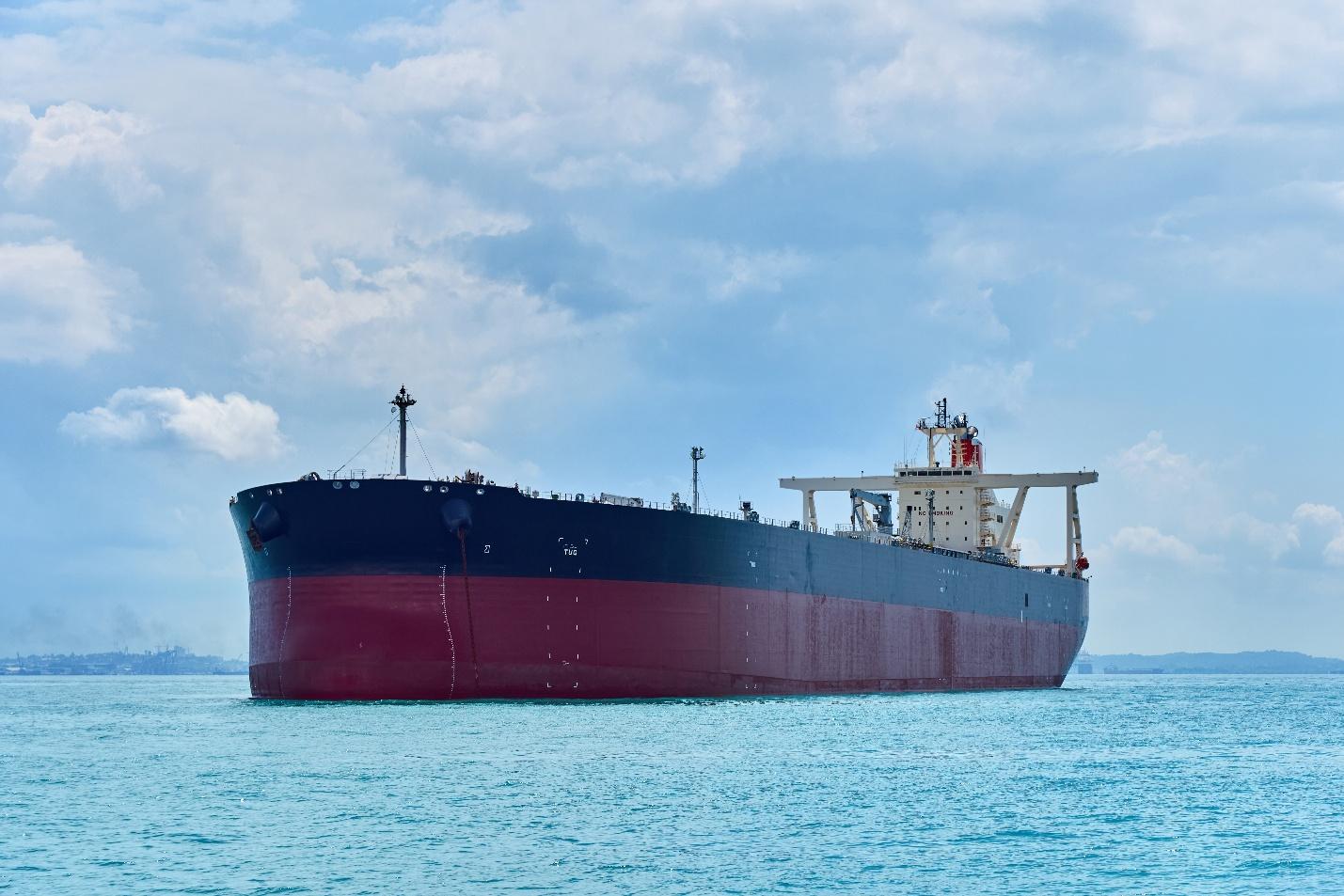
The mercaptan spec becomes firm close to the coast. When Magellan opened its East Houston (MEH) terminal to third-party WTI in October 2020, it required deliveries into the WTI pool to meet 41.0 to 43.5°API, less than 0.2% sulfur, and a maximum of 75 ppm mercaptans (Argus Media). Plains and several other pipelines use the same 75 ppm limit (RBN Energy). Argus also reported that midstream firms tightened quality parameters after concerns over mercaptans and high iron in Corpus Christi WTI cargoes, a report that cited Q2 Technologies’ treatment solutions.
| Point in the chain | Typical sulfur spec watched | Mercaptan spec |
|---|---|---|
| Wellhead and CTB | H2S in vapor, commonly under 100 ppm | Often none stated |
| Some long-haul pipelines (per Argus) | Total sulfur, H2S | Not listed in some tariffs |
| Plains West Texas gathering, MEH WTI pool | Total sulfur under 0.2 wt% | 75 ppm maximum |
| Export cargo to Europe and Asia | Buyer contract and benchmark specs | Enforced by buyer testing |
Why the end users set the bar
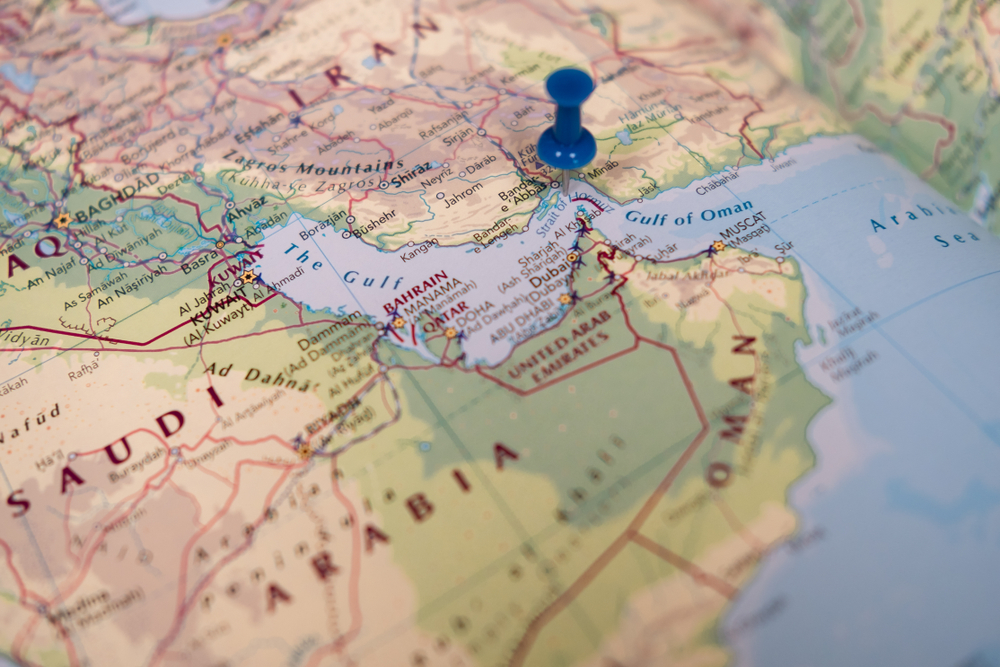
The 75 ppm limit exists largely because of who buys the barrels. Corpus Christi alone exports more than 2 million b/d of crude (Reuters via Oil & Gas 360).
- United Kingdom and Europe. S&P Global Platts added WTI Midland to the Dated Brent basket in 2023 and set a quality standard for the grade (Reuters via Hydrocarbon Processing). Platts publishes per-cargo quality data that includes mercaptan ppm alongside API, sulfur, and iron (S&P Global). Many European refineries have simpler configurations with less capacity to handle contaminants. Argus reported that European buyers said they received off-spec WTI cargoes from the Seabrook terminal.
- South Korea. Korean refiners including SK Innovation, Hyundai Oilbank, and Hanwha Total imported a record 168.43 million barrels of U.S. crude in 2024, valuing WTI Midland for its light, sweet yield profile (S&P Global via Hellenic Shipping News). Korean refiners have also turned back U.S. cargoes over quality issues before (Hart Energy).
These buyers pay for a light sweet barrel. A WTI cargo with high mercaptans undermines that value and the grade’s reputation, which is why the spec pressure flows back up the pipe toward the Permian.
How Producers Can Get Ahead of Mercaptan Specs
The best defense is to measure mercaptans where the barrels originate, then treat for mercaptans specifically rather than assuming an H2S program covers them.
Measure at the wellhead and CTB
UOP 163 determines H2S and mercaptan sulfur in liquid hydrocarbons by potentiometric titration, with a lower quantitation limit of 0.2 mass-ppm mercaptan sulfur (ASTM UOP163 via GlobalSpec). Crude analyzers and labs commonly use a two-endpoint argentometric titration based on ASTM D3227 and UOP 163 to report H2S and mercaptans separately (Metrohm). Because light mercaptans are volatile, sample handling matters. Use sealed, properly filled containers and short hold times, or results will read low.
Practical steps:
- Baseline mercaptans by well and by bench, especially on new step-out horizons.
- Report results in ppm by weight so they compare directly to the 75 ppmw downstream spec.
- Re-test after commingling at the CTB, since blending can mask or concentrate problem streams.
- Track H2S and mercaptans on the same sample so treatment can be tuned to both.
Treat mercaptans, not just H2S
Conventional MEA-triazine scavengers are highly effective on H2S but are not designed as mercaptan treatments. Mercaptan reduction typically requires purpose-built mercaptan scavenger chemistry, along with adequate contact time and mixing at the injection point. Patent literature shows the range of results possible. One U.S. patent on mercaptan remediation chemistry reports 77% to 91% mercaptan reduction after about two days in treated crude, measured by UOP 163 and ASTM D5623 (USPTO patent 12269995).
When selecting a program, operators should confirm three things: the chemistry targets mercaptans as well as H2S, it is compatible with downstream refining and avoids adding problem byproducts, and its performance is verified on the operator’s own crude by an independent method.
Q2 Technologies’ Approach: Pairing Pro3 O with MX-18 to Cut Mercaptans
Q2 Technologies is pairing its existing H2S solution, Pro3 O, with a different type of catalyst, MX-18, to reduce mercaptans in crude oil by 80% to 90%. Pro3 O already handles H2S. Adding MX-18 extends that same treatment program to the mercaptans that conventional H2S scavengers leave behind.
The results are significant. In one case, the Pro3 O and MX-18 combination dropped mercaptans from 1,300 ppm to 96 ppm in 24 hours, a reduction of roughly 93%. That takes a barrel sitting more than 17 times above the 75 ppm Gulf Coast limit to within close range of it in a single day.
This technology is the culmination of five years of research and development. For the last several years, Q2 Technologies has worked directly with Rice University, a leading technical university in Houston, Texas, to develop and validate the chemistry. The technology is patent pending.
Next, Q2 Technologies will run field trials of the patent pending Pro3 O and MX-18 program. Delaware Basin operators facing rising mercaptans at the wellhead or CTB can contact Q2 Technologies to learn more about participating.
Conclusion
H2S can be readily solved at the wellhead or CTB. Mercaptans are becoming a wellhead problem with a Gulf Coast price tag. As Delaware Basin development moves into sourer horizons, producers who measure mercaptans by bench, report in ppmw, and treat for mercaptans as well as H2S will protect their barrels from surcharges and rejections.
Thankfully, Q2 Technologies is pairing a tried and true method to solve both H2S and get ever closer to meeting mercaptan spec at the Gulf Coast. Reach out to us if you would like to learn more or potentially work with us in a trial format as we finalize our patent-pending mercaptan treatment technology.
Sources
- Plains All American’s Permian pipelines facing quality issues (Reuters via Oil & Gas 360, July 30, 2026)
- Return O Captain: Mercaptan smelly problem hits crude markets again (RBN Energy)
- WTI quality issues cause concern (Argus Media)
- H2S Treatment Continues To Improve (American Oil & Gas Reporter, September 2024)
- Targa’s, Enterprise’s and MPLX’s sour-gas-related assets in the Northern Delaware (RBN Energy)
- Direct detection of H2S from cuttings in the Delaware Basin (New Mexico Geological Society)
- Texas crude quality checks rise after excess metal found in oil export (Reuters via Hydrocarbon Processing, November 2023)
- WTI Midland into Dated Brent performance (S&P Global, April 2024)
- South Korea US crude imports reach record high in 2024 (S&P Global via Hellenic Shipping News)
- S. Korean refiners reject US oil cargoes (Hart Energy)
- ASTM UOP163: H2S and mercaptan sulfur by potentiometric titration (GlobalSpec)
- Online analysis of mercaptans and H2S in crude oil, AN-PAN-1026 (Metrohm)
- U.S. Patent 12269995: Mercaptan remediation compositions (USPTO)