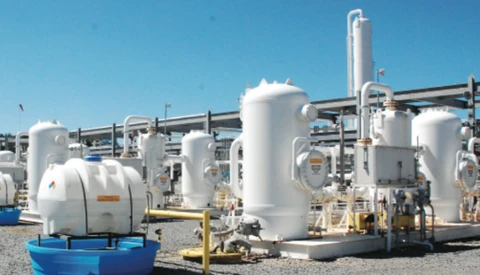
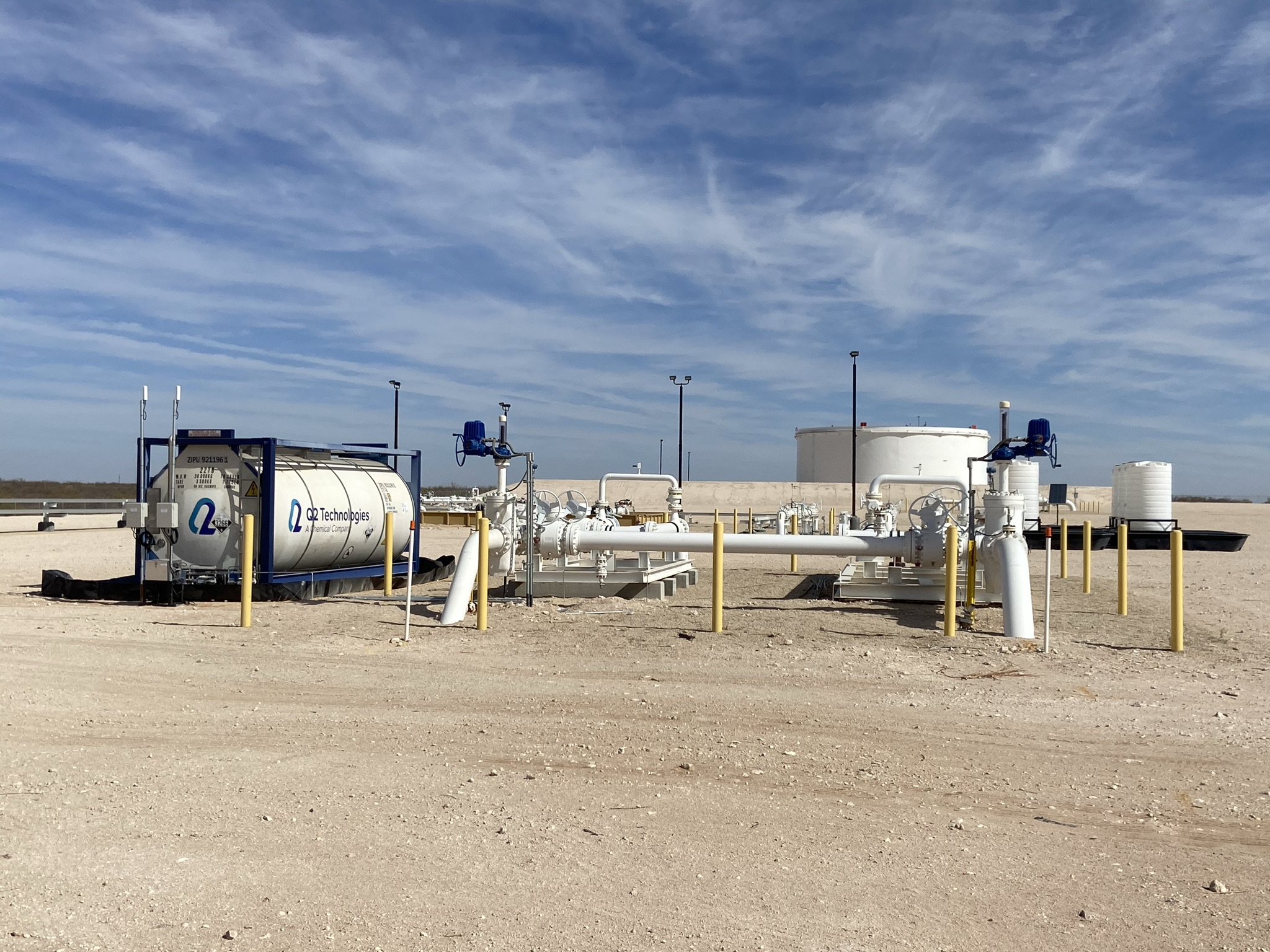
ENVIRO-SOLVE PRO3 is a non-fouling, water-soluble, oil-dispersible hydrogen sulphide scavenger.
Non-amine/non-aldehyde chemistry
Fast reacting and more effective than MEA triazine
Resistant to temperatures up to 100ºC/212ºF.
Non-fouling
It is highly engineered for the treatment of hydrocarbon streams that will be processed in refineries.
ENVIRO-SOLVETM PRO3 will convert HS into a non-toxic, stable, irreversible sulphate salt and water.
ENVIRO-SOLVE PRO3 is a non-fouling, water-soluble, oil-dispersible hydrogen sulphide scavenger.
Non-amine/non-aldehyde chemistry
Fast reacting and more effective than MEA triazine
Resistant to temperatures up to 100ºC/212ºF.
Non-fouling
It is highly engineered for the treatment of hydrocarbon streams that will be processed in refineries.
ENVIRO-SOLVETM PRO3 will convert HS into a non-toxic, stable, irreversible sulphate salt and water.
When introduced into a stream afflicted with H2S, the hemiformal decomposes to release formaldehyde, which then reacts with hydrogen sulfide to form stable, non-volatile byproducts such as thiomethylene glycol. The reaction is typically fast and efficient, particularly in aqueous or mixed-phase environments. Unlike some traditional scavengers, hemiformal can maintain activity across a broad pH range and is less likely to generate problematic solids. When considering if hemiformal is the right product, certain operating conditions are reviewed, such as pH and temperature.
Heading 1
When introduced into a stream afflicted with H2S, the hemiformal decomposes to release formaldehyde, which then reacts with hydrogen sulfide to form stable, non-volatile byproducts such as thiomethylene glycol. The reaction is typically fast and efficient, particularly in aqueous or mixed-phase environments. Unlike some traditional scavengers, hemiformal can maintain activity across a broad pH range and is less likely to generate problematic solids. When considering if hemiformal is the right product, certain operating conditions are reviewed, such as pH and temperature.
Heading 2
When introduced into a stream afflicted with H2S, the hemiformal decomposes to release formaldehyde, which then reacts with hydrogen sulfide to form stable, non-volatile byproducts such as thiomethylene glycol. The reaction is typically fast and efficient, particularly in aqueous or mixed-phase environments. Unlike some traditional scavengers, hemiformal can maintain activity across a broad pH range and is less likely to generate problematic solids. When considering if hemiformal is the right product, certain operating conditions are reviewed, such as pH and temperature.
Heading 3
Heading 4
When introduced into a stream afflicted with H2S, the hemiformal decomposes to release formaldehyde, which then reacts with hydrogen sulfide to form stable, non-volatile byproducts such as thiomethylene glycol. The reaction is typically fast and efficient, particularly in aqueous or mixed-phase environments. Unlike some traditional scavengers, hemiformal can maintain activity across a broad pH range and is less likely to generate problematic solids. When considering if hemiformal is the right product, certain operating conditions are reviewed, such as pH and temperature.
Key Benefits:
Controlled formaldehyde release
Lower vapor pressure and improved safety profile
Broad applicability across liquid and gas-phase systems
Reduced scaling in sour water stripping and other high-temp operations
Hemiformal can make the scavenger safe for transport as it is a very stable compound
Heading 5
Hemiformal is used in a variety of upstream and midstream applications, including:
Gas sweetening systems
Produced water treatment
Crude oil storage and transport
Sour water stripper overheads
Temporary H2S mitigation during maintenance or turnaround
Its adaptability makes it especially useful in operations where system conditions fluctuate or where traditional triazine-based products may underperform.
Heading 6
While hemiformal offers many advantages, it is not a one-size-fits-all solution. The rate of formaldehyde release can vary depending on formulation and environmental conditions. Additionally, while safer than raw formaldehyde, hemiformal must still be handled with care and appropriate PPE.
For optimal results, formulation expertise and application-specific customization are key—something we at Q2 Technologies excel at delivering.
In this Blog
Related Blogs
Crude oil and liquid hydrocarbons
H2S in Crude Oil: From Hazard to Control
Crude oil and liquid hydrocarbons
The Science of H2S Removal: Our Oilfield Chemical Solutions
Crude oil and liquid hydrocarbons
Removing Mercaptans While Keeping Costs in Line
FAQs
What industries can benefit from using PRO3?
Enviro-Solve Pro3 is designed for refineries, gas plants, and upstream production facilities dealing with hydrogen sulfide challenges. Its non-amine formulation makes it especially useful in applications where solids, fouling, or amine reactivity are concerns, offering broader compatibility and cleaner performance.
Is Enviro-Solve Pro3 safe for refinery equipment?
Yes. Pro3 is specifically engineered to be non-corrosive and non-solid forming, which helps protect heat exchangers, compressors, and other sensitive refinery equipment. It reduces the risk of buildup and unplanned downtime, making it a safe and efficient choice for refinery environments.
Can PRO3 be used in high-temperature environments?
Absolutely. We have variations of Pro3, such as Pro3HT that perform well in high-temperature and high-pressure conditions, making it ideal for harsh processing environments. It maintains its H2S scavenging effectiveness even where traditional scavengers may degrade or lose efficiency.
Related Articles
Crude oil and liquid hydrocarbons
H2S in Crude Oil: From Hazard to Control
Crude oil and liquid hydrocarbons
The Science of H2S Removal: Our Oilfield Chemical Solutions