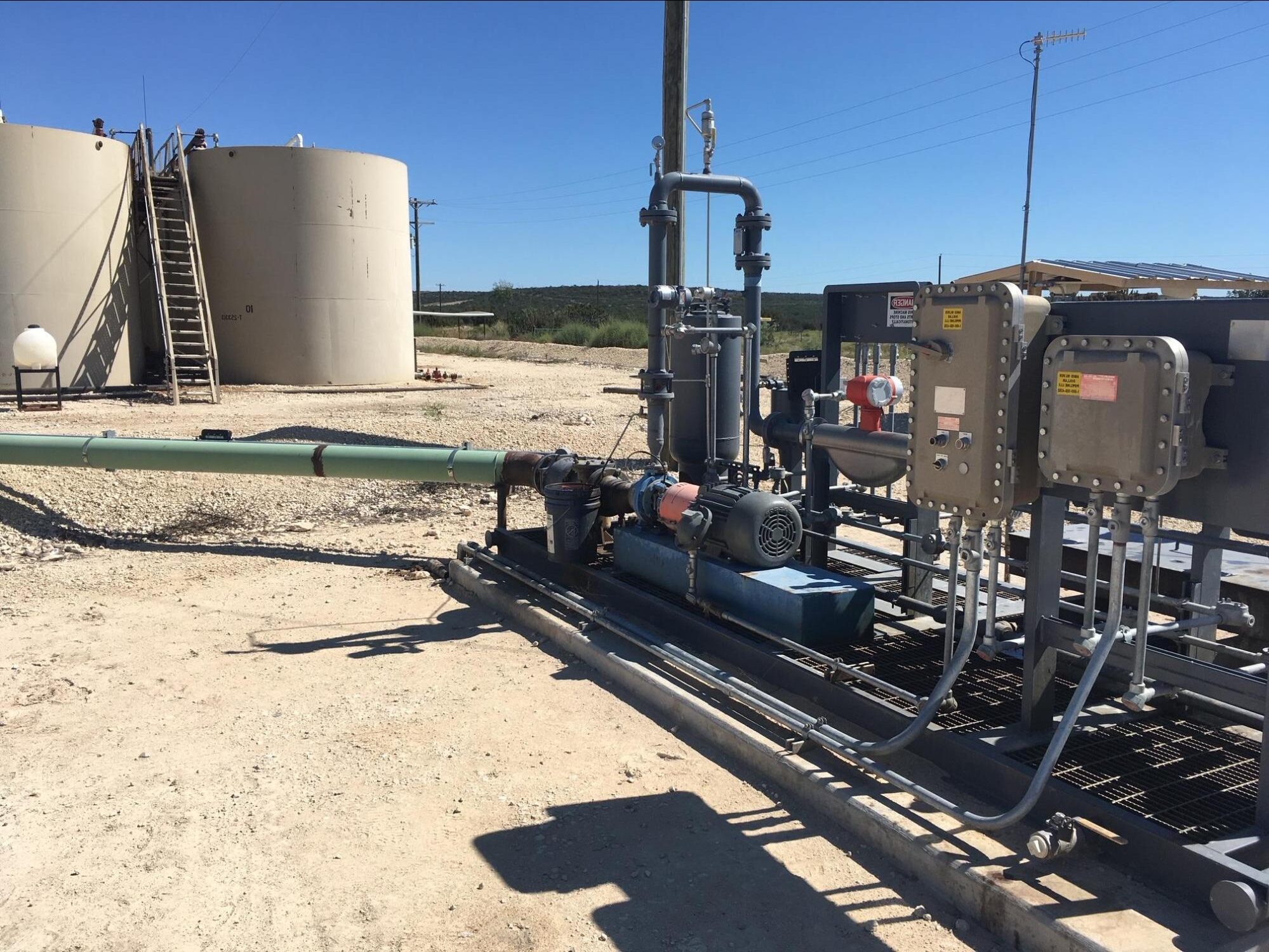


A complaint at the property line, a sudden increase in headspace H2S, or a persistent sulfur odor near a process unit is rarely solved by adding more chemical. An effective odor control chemical program starts with identifying what is generating the odor, where it is released, and how process conditions change over time. The objective is not to mask a nuisance. It is to control sulfur compounds and other odor-causing contaminants at the source while protecting people, equipment, compliance status, and operating cost.
For wastewater facilities, biogas operations, landfill gas sites, terminals, and industrial processing plants, odor control is a continuous operating discipline. Chemistry matters, but so do dose location, contact time, monitoring, storage, delivery reliability, and field response. A program that treats these elements as separate issues can leave operators with recurring odors, excess chemical use, and limited visibility into why treatment performance shifts.
Start With the Odor Source, Not the Product
Hydrogen sulfide is a frequent driver of industrial odor complaints because it can be detected at very low concentrations. Mercaptans, sulfides, volatile organic compounds, ammonia, and process-specific organic compounds may also contribute. Their odor thresholds, reaction behavior, solubility, and treatment requirements differ substantially.
That distinction matters. A chemical that performs well on dissolved sulfide in a wastewater collection system may not be the right solution for gas-phase H2S in a covered basin, a landfill gas stream, or a crude handling operation. Similarly, a treatment point that reduces odor near one vent may simply move the problem downstream if it does not address the source or the release pathway.
A useful assessment considers the process conditions behind the odor event. Operators should establish whether the issue is continuous or intermittent, whether it correlates with flow, temperature, pH, retention time, loading, agitation, or weather, and whether odor is entering the atmosphere through vents, open surfaces, equipment seals, or treatment upsets. Sampling plans should distinguish between liquid-phase contamination and gas-phase emissions rather than assuming one measurement describes the entire system.
What an Odor Control Chemical Program Must Deliver
The best program is designed around measurable operating outcomes. That may include reducing H2S at a vent, maintaining lower dissolved sulfide through a collection system, controlling odor at a receiving station, or limiting corrosive sulfur exposure in gas-handling equipment.
An odor control chemical program should also account for secondary effects. Some approaches can increase sludge volume, change pH, create deposits, affect downstream biology, or introduce handling constraints. The lowest price per gallon is not the lowest cost if treatment requires repeated overfeeding, causes fouling, or fails during peak loading conditions.
Performance criteria should be agreed upon before a full deployment. Depending on the application, these criteria can include inlet and outlet H2S concentrations, odor observations, chemical consumption per unit of flow or contaminant load, residual treatment capacity, corrosion indicators, and the frequency of odor-related calls or corrective actions. A defined baseline makes it possible to tell whether an improvement is caused by the treatment program or by a temporary shift in process conditions.
Match Chemistry to the Contaminant and Process
Odor control chemistries typically work through scavenging, oxidation, precipitation, adsorption, pH adjustment, or biological support. Each mechanism has practical strengths and limitations.
Scavengers can provide targeted removal of H2S and certain sulfur compounds in liquid or gas applications, particularly when a system requires fast reaction kinetics and predictable treatment. However, performance depends on contact time, mixing, contaminant concentration, competing reactions, and the chemistry’s ability to reach the active treatment zone.
Oxidizing chemistries may be effective where reduced sulfur compounds are present, but they require careful control. Demand from other constituents in the stream can consume active chemistry before it reaches the odor-causing contaminant. Excess oxidation potential can also create compatibility concerns for equipment, operators, or downstream treatment processes.
Metal salt programs may precipitate dissolved sulfide in some wastewater applications. They can be practical for specific systems, yet the operational evaluation must include solids production, sludge handling, potential scaling, and the impact of iron or other metals on downstream equipment and treatment objectives. Adsorbents and media can be appropriate for low-flow vents or polishing service, but they have finite capacity and need a planned changeout strategy.
There is no universal best chemistry. The appropriate selection depends on the contaminant profile, phase, flow range, process chemistry, discharge requirements, safety controls, and total cost of treatment. Q2 Technologies approaches this decision as an application engineering problem, combining sulfur-treatment chemistry with the field conditions that determine whether it will perform consistently.
Dose Where the Chemistry Can Work
A sound treatment chemistry can underperform when it is injected at the wrong location. The injection point must provide enough dispersion and residence time for the reaction to occur before the contaminant reaches an odor release point. In a force main, that may mean selecting a point with sufficient travel time and mixing. In a gas stream, it may require confirming distribution, temperature, pressure, and available contact time.
Dose rate should be tied to contaminant loading whenever possible, not only to flow. Flow-based dosing is often a useful starting point, but it can miss changes in sulfide concentration caused by upstream loading, detention time, temperature, or biological activity. A fixed dose may control odor during average conditions while failing during high-strength batches, startup events, or low-flow periods.
Automated pumps, level or flow signals, H2S analyzers, and remote monitoring can improve control when the application justifies the investment. The goal is not to add instrumentation for its own sake. It is to give operators enough data to adjust treatment before odor reaches a fence line, worker area, or critical piece of equipment.
Treat Monitoring as Part of the Chemical Program
Odor is subjective, but the underlying process can be measured. Routine field testing, fixed gas detection, grab samples, and laboratory analysis each have a place. The right mix depends on the risk profile and how quickly the process changes.
Programs should track results over time rather than relying on a single favorable sample. A trend showing gradual growth in chemical consumption, declining residual performance, or increasing H2S at the same dose can point to a changing influent, pump issue, fouling injector, depleted inventory, or a treatment point that no longer matches operating conditions.
Field observations are equally valuable. Notes about foaming, settling, chemical appearance, injection quill condition, odor location, weather, and process changes often explain data that appears inconsistent at first. The strongest treatment programs create a feedback loop between operators, technical service personnel, and procurement teams so that a supply decision does not become separated from treatment performance.
Build for Reliability Beyond the Tank
Odor control can fail even when the selected chemistry is correct. Empty totes, frozen lines, incompatible storage materials, poor secondary containment, missed deliveries, and uncalibrated pumps can all interrupt treatment. For facilities with continuous odor exposure risk, these are operational risks, not minor logistics issues.
A practical program defines storage capacity, reorder points, delivery lead times, and contingency inventory based on actual consumption and site criticality. It also includes equipment inspections, pump calibration, injection-line maintenance, and documented procedures for startup, upset response, and safe chemical handling.
Before expanding a program sitewide, conduct a controlled field trial with a clear baseline, treatment target, sampling schedule, and review period. Use the trial to validate chemistry selection and dose response under real operating conditions, including expected process variability. If the trial works only under ideal conditions, it is not yet a dependable operating solution.
The most useful odor-control plan gives the operator a clear next action when conditions change: verify the source, confirm dose delivery, review current data, and adjust based on measured loading rather than assumptions. That discipline turns odor control from a recurring emergency into a managed part of plant performance.