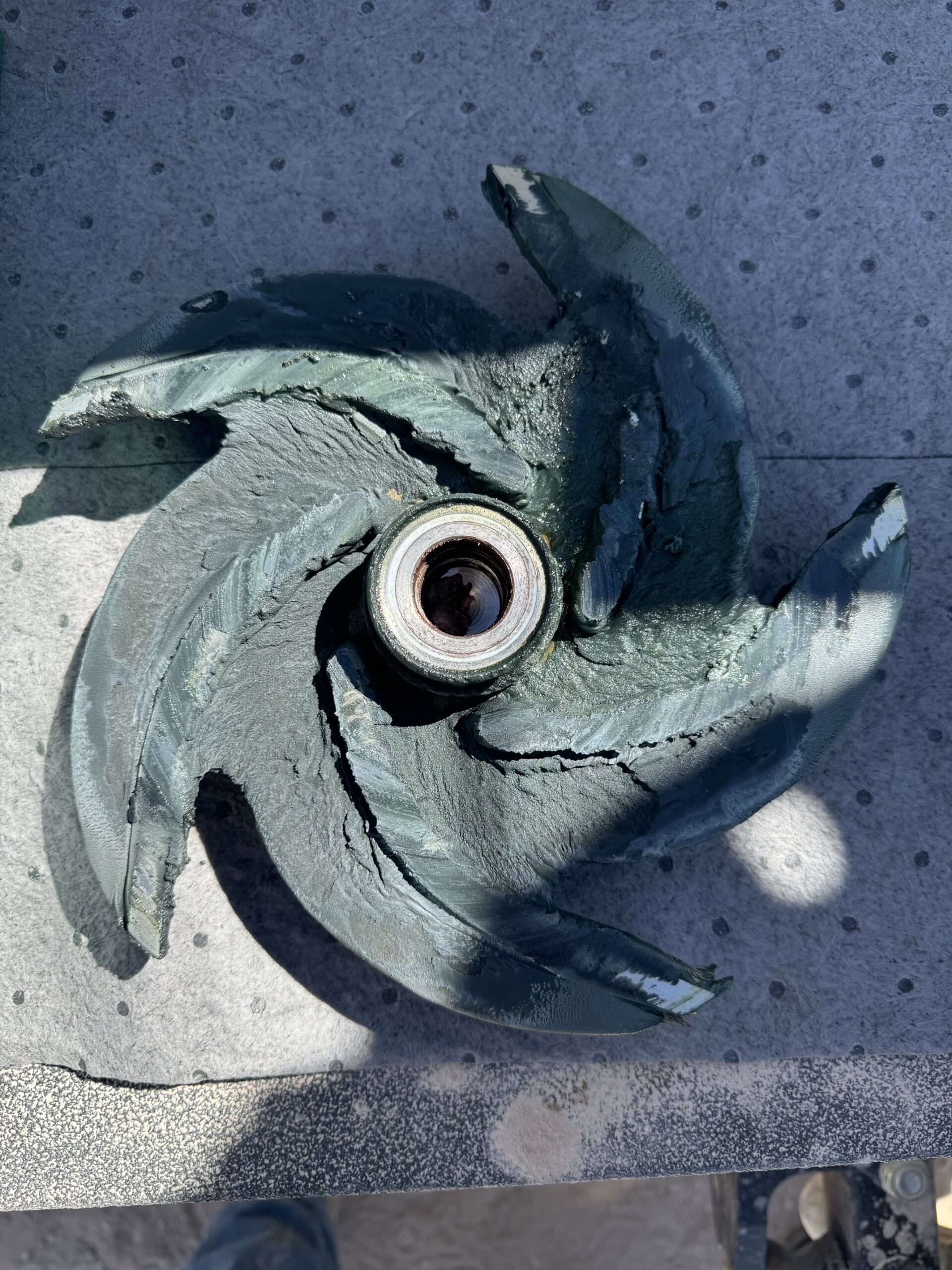
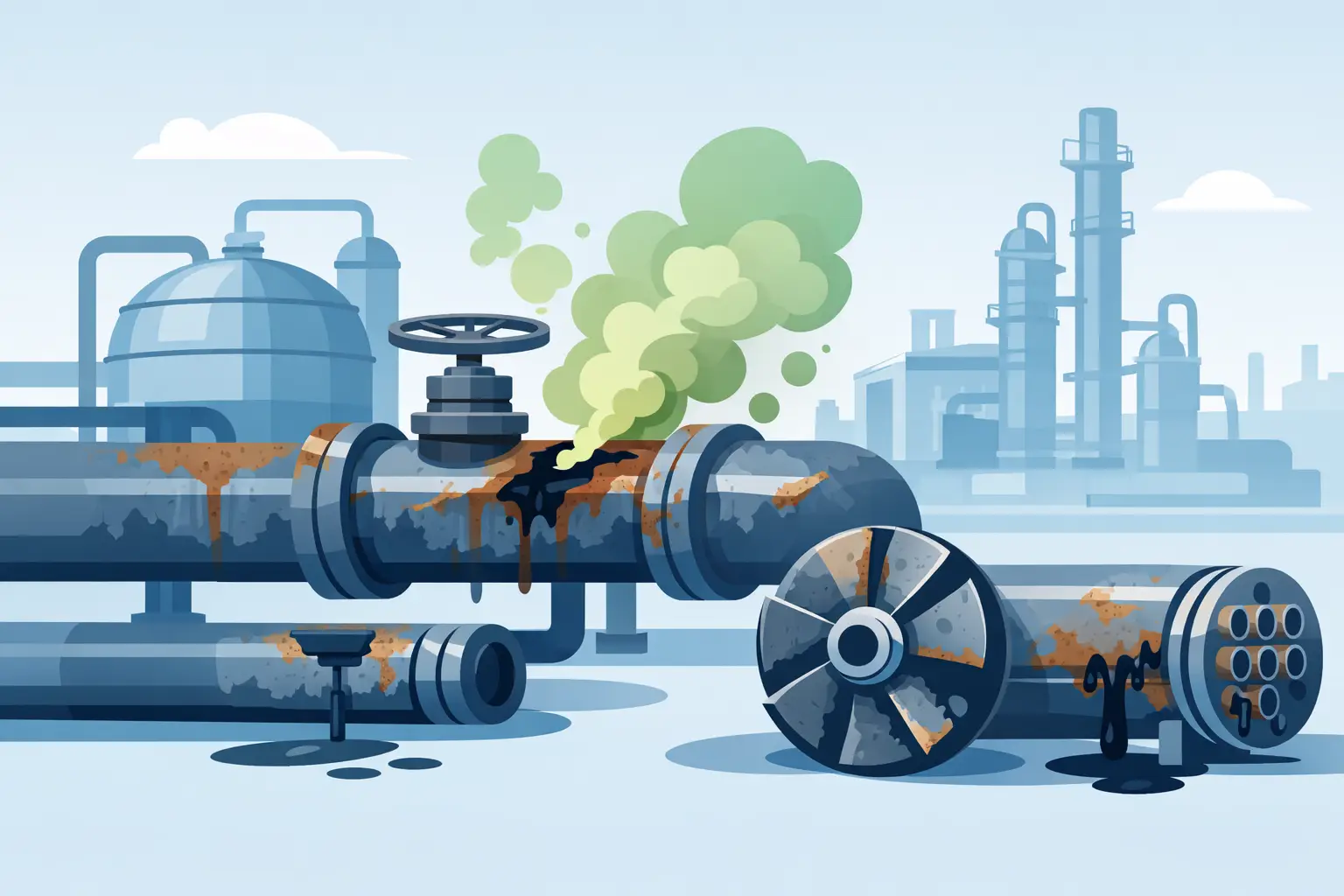


A separator can remain online, meet production targets, and still be accumulating damage beneath a wet, sour boundary layer. That is why the question, can H2S damage process equipment, requires more than a simple yes. Hydrogen sulfide can cause serious degradation in process assets, but the failure mechanism, rate, and remedy depend on the full operating environment.
For operators handling sour gas, crude, produced water, biogas, landfill gas, or wastewater, H2S is both a personnel hazard and an asset-integrity variable. Effective control is not limited to reducing a gas reading at one point in the process. It requires understanding where H2S is present, whether water is available, how process conditions change, and which metallurgy is exposed.
Can H2S Damage Process Equipment? Yes, Under Sour Conditions
H2S becomes especially damaging when it dissolves in water. In an aqueous phase, it contributes to corrosion of carbon steel and can introduce atomic hydrogen into the metal. That hydrogen can move through the steel, collect at internal discontinuities, and reduce the material’s resistance to cracking.
The result is not one universal form of corrosion. Depending on metallurgy and conditions, sour service can contribute to general metal loss, localized attack, sulfide stress cracking, hydrogen-induced cracking, stress-oriented hydrogen-induced cracking, and hydrogen blistering. Some of these mechanisms can progress with limited external evidence until inspection reveals cracking, laminations, or wall loss.
Dry H2S by itself is generally less corrosive to carbon steel than wet H2S. The distinction matters operationally. A system may appear low-risk during dry operation, then become far more aggressive after water dropout, condensation, a change in temperature, or an upset that alters phase behavior. Low points, dead legs, poorly drained piping, condensate boots, and vessel bottoms often deserve particular attention.
Why H2S Damage Is a Process Problem, Not Just a Materials Problem
Material selection is essential, but it does not eliminate the need for treatment and process control. Sour-service materials are selected against expected exposure conditions, not every possible upset, water chemistry change, or concentration excursion over the equipment life.
The severity of H2S-related damage is affected by several operating variables working together:
- H2S partial pressure and concentration in the gas or liquid phase
- Free water, condensate formation, water cut, and water chemistry
- pH, temperature, pressure, chloride content, and dissolved oxygen
- Steel composition, hardness, weld quality, residual stress, and heat treatment
- Flow regime, solids deposition, stagnant zones, and under-deposit conditions
- Changes in feed composition, production rate, chemical injection, or operating temperature
This is why two systems with similar H2S readings may experience very different corrosion outcomes. A dry gas line with controlled dew point is not equivalent to a water-wet separator bottom. Likewise, a low bulk-fluid H2S result does not guarantee low localized risk if water, solids, or microbes create an aggressive environment at the metal surface.
The Role of Hydrogen in Sour-Service Cracking
When corrosion occurs in a sour aqueous environment, hydrogen generated at the steel surface may not recombine and leave as hydrogen gas. H2S can interfere with that recombination process, allowing more atomic hydrogen to enter the steel.
In susceptible materials, hydrogen can accumulate at inclusions, laminations, or other internal features. It may form blisters or drive cracking through the material. Where high-strength steel or hard weld areas are under tensile stress, the risk of sulfide stress cracking can increase substantially.
This is one reason hardness control, qualified welding procedures, post-weld heat treatment where applicable, and sour-service material specifications matter. It is also why a chemical-treatment program should be judged by its ability to control actual exposure, not merely by average chemical usage.
Equipment Most Commonly Affected by Sour Exposure
Any asset that handles wet H2S deserves an integrity review, but risk often concentrates where fluids separate, cool, stagnate, or change phase. Separators, treaters, tank bottoms, produced-water systems, pipelines, compressor suction equipment, condensate handling systems, and wastewater collection structures are common examples.
In upstream and midstream service, H2S can create problems in gathering systems when production declines or flow patterns change. Reduced velocity can allow water and solids to settle, creating localized corrosive zones. In gas treatment and processing, contactors, knockout drums, amine-system components, and sulfur-handling equipment can face different risk profiles based on water chemistry, temperature, and contaminants.
Wastewater, landfill gas, and biogas applications present another set of challenges. H2S released into headspace areas can dissolve into condensate on cooler surfaces. That condensate can attack ductwork, covers, piping, instrumentation, and surrounding infrastructure. Concrete degradation may also be a concern in certain wastewater environments, particularly where sulfur compounds support sulfuric acid formation through biological activity.
Early Warning Signs Are Often Indirect
A sudden leak is the most visible consequence, but it is rarely the first signal that sour conditions are affecting equipment. Rising iron counts, changing corrosion-coupon results, increased filter loading, black iron sulfide solids, chemical consumption shifts, or recurring plugging can indicate that the process has changed.
Operators should also pay attention to treatment performance that becomes inconsistent at the same time as water cut, temperature, pressure, or flow changes. A scavenger program that performed well under one production profile may need adjustment after a new well comes online, a tank begins receiving different material, or a seasonal temperature change increases condensation.
Inspection planning should focus on credible damage locations rather than applying the same approach across every asset. That may include targeted ultrasonic thickness monitoring, corrosion coupons, electrical resistance probes, fluid sampling, H2S monitoring, and periodic review of weld and hard-zone susceptibility. The right combination depends on the facility, but the objective is consistent: identify the conditions that lead to damage before a containment or reliability event occurs.
Controlling H2S Exposure Before It Becomes Equipment Damage
The most effective strategy combines source control, treatment, monitoring, and operating discipline. No single measure is sufficient in every service.
First, define the sulfur challenge accurately. Measure H2S at locations that represent the phases and conditions equipment actually sees. A single upstream gas measurement may not represent H2S in a liquid leg, separator water phase, tank vapor space, or downstream condensate stream. Sampling plans should account for pressure drops, phase separation, and transient operations.
Second, match treatment chemistry to the stream and operating objective. H2S scavengers can reduce sour-gas and sour-liquid exposure, but reaction performance is influenced by contact time, mixing, temperature, pH, competing contaminants, and injection location. An injection point that looks convenient may not provide enough dispersion or residence time to protect downstream assets.
Third, control the water side of the problem. Remove free water where practical, manage condensation, maintain drainage, and prevent persistent pooling in low points. When water cannot be eliminated, understand its pH, salinity, solids loading, and potential for under-deposit corrosion. In many systems, corrosion control may require a coordinated approach involving H2S treatment, corrosion inhibition, solids management, and inspection.
Fourth, protect against treatment gaps. Chemical supply interruptions, empty totes, failed pumps, plugged injection quills, and unrecognized flow-rate changes can quickly expose equipment to sour conditions. Automated monitoring and injection verification help operators identify deviations before they become extended excursions. Field support and dependable last-mile logistics are operational controls, not administrative conveniences.
Avoid Treating to a Number Alone
A low outlet H2S concentration is valuable, but it is not the only performance measure. Treatment programs should also be evaluated against chemical consumption, residual sulfur, solids formation, downstream compatibility, operating stability, and asset-protection goals.
Overfeeding chemistry can raise cost and create downstream handling issues. Underfeeding can leave equipment exposed or create off-spec product. The practical target is a controlled treatment window supported by field data, not the highest possible dose or a one-time laboratory result.
For facilities with continuous sour-service exposure, Q2 Technologies applies application-specific chemistry, monitoring, and field execution to help align treatment performance with real operating conditions. That approach matters because the best scavenger program is the one that continues to perform when feed composition, water content, and throughput change.
When Material Upgrades Are Necessary
Chemical treatment reduces exposure, but it may not be a substitute for appropriate metallurgy in severe service. If expected H2S partial pressure, water chemistry, temperature, stress level, or process design places an asset in a recognized sour-service regime, materials should be evaluated against applicable industry requirements, including NACE MR0175/ISO 15156 where relevant.
Material upgrades can be costly, and they should be based on a clear damage-mechanism review. In some cases, improved coating systems, lower-hardness components, weld controls, corrosion allowance, redesigned drainage, or replacement of a localized high-risk section may provide a more practical risk reduction than wholesale replacement. In other cases, the consequence of cracking is high enough that a material change is the appropriate decision.
The critical point is to avoid treating metallurgy and chemistry as competing choices. They serve different roles. Materials provide baseline resistance; treatment and operations reduce the corrosive challenge that reaches the asset.
Build an H2S Control Program Around Changing Conditions
H2S damage rarely results from one isolated variable. It develops when sour exposure, water, susceptible materials, and operating conditions align for long enough to create a corrosion or cracking mechanism. A reliable program therefore connects sulfur treatment with process data, equipment integrity, and field execution.
If a facility is seeing changing H2S readings, higher chemical consumption, black solids, unexplained metal loss, or new water-handling conditions, treat those changes as integrity signals. The most valuable next step is often not a larger chemical dose. It is a focused review of where H2S is entering the system, where water is accumulating, and whether treatment is reaching the locations that matter most.