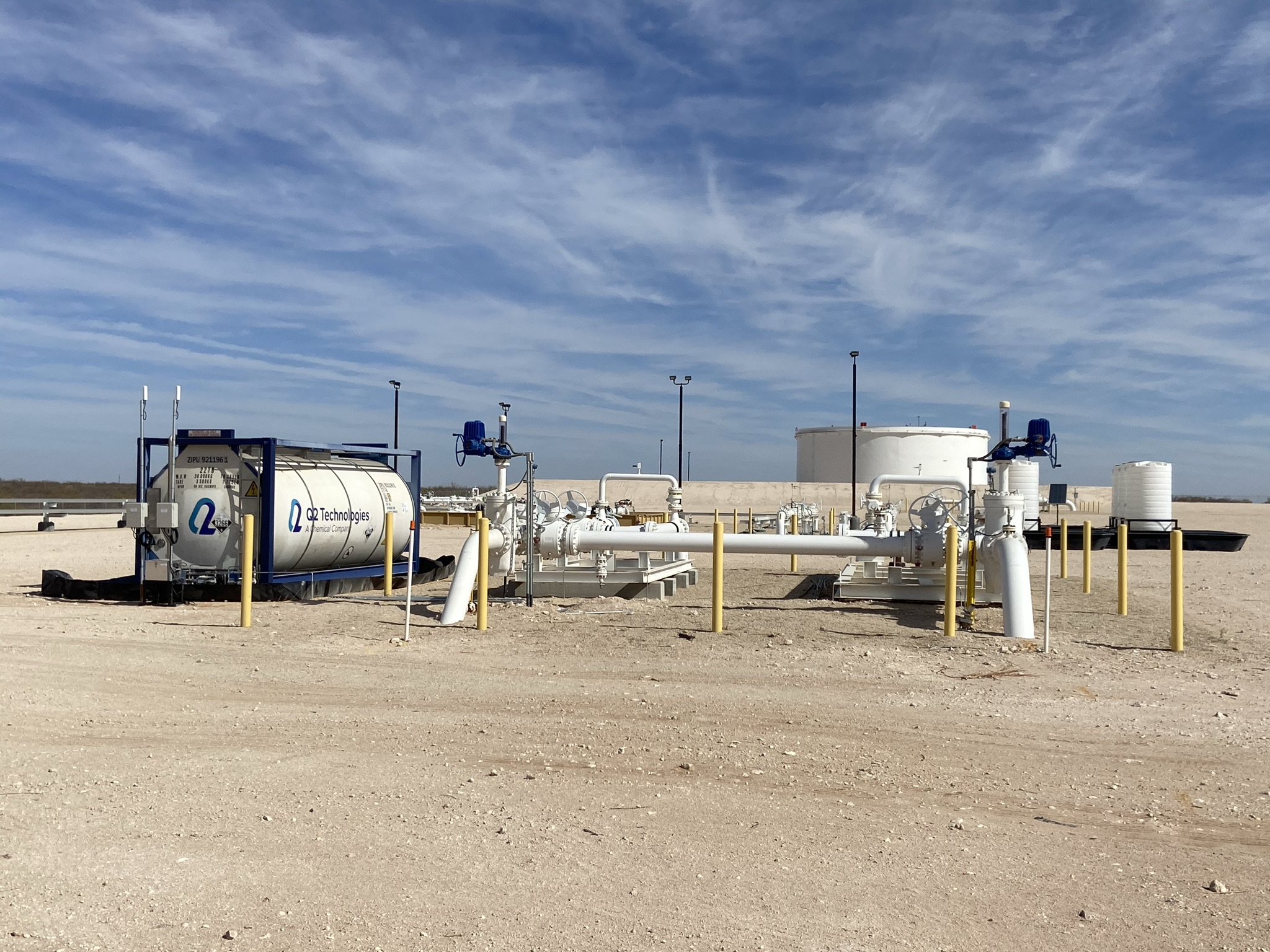



Hydrogen sulfide (H2S) in crude oil remains one of the most persistent operational and commercial challenges in oil and gas production. Elevated H2S levels affect safety, corrosion rates, sulfur specifications, storage stability, and marketability. Effective hydrogen sulfide removal is no longer optional; it is fundamental to crude quality management across upstream, midstream, and terminal operations.

H2S in Crude Oil: Origins, Vapor Partitioning, and Infrastructure Risk
H2S in crude oil originates from reservoir conditions, sulfate-reducing bacteria activity, thermal degradation, or blending practices. Once present, hydrogen sulfide partitions between liquid hydrocarbons and vapor space, creating tank vapor H2S control issues and increasing safety exposure risks. In addition, sulfur species contribute to iron sulfide formation, corrosion, and increased maintenance in storage tanks, pipelines, and processing infrastructure.
A Shift Toward Non-Triazine Scavenger Programs and Operational Design Factors
The most widely deployed solution for crude oil treatment is an engineered H2S scavenger program. Triazine H2S scavengers have historically dominated the market; however, non-triazine and non-amine H2S scavenger technologies, such as Pro3®, a leading non-triazine H2S scavenger for crude oil, are increasingly preferred in systems where solids formation, polymer byproducts, or sludge accumulation present operational constraints. Refiners in general prohibit the use of amine-based scavengers and midstream companies are increasingly requesting shippers to use non-amine/non-triazine H2S scavenger chemistries.
Effective crude oil chemical treatment requires understanding:
- H2S ppm concentration and variability
- Flow rates and retention time
- Temperature and pressure conditions
- Downstream sulfur specification compliance
- Interaction with mercaptans and other sulfur species
Engineered Treatment Programs: Balancing Chemical Efficiency, Cost, and Operational Risk
Hydrocarbon treatment programs must be engineered, not simply injected. Overfeeding chemical treatment increases operating cost and can create downstream separation issues. Under treatment risks sulfur spec violations, safety hazards, and accelerated corrosion. For high-temperature or high-BS&W systems, an oil soluble H2S scavenger may be required to avoid scaling and separation issues.
Q2 Technologies: Leading with Advanced Chemistry

Q2 Technologies leads the industry in hydrogen sulfide scavenger development for crude oil systems. Through our proprietary ProSeries product line, we manufacture advanced chemistries designed to deliver predictable sulfur reduction in liquid hydrocarbons. Our flagship crude oil scavenger, Pro3® O, is engineered specifically for sour crude applications where performance, stability, and operational reliability are essential.
Pro3® O provides effective hydrogen sulfide removal while minimizing solids formation and reducing the operational challenges often associated with traditional scavenger programs. Unlike commodity chemistries, ProSeries solutions are manufactured in-house and supported by field-driven engineering expertise.
At Q2 Technologies, our approach integrates:
- Laboratory evaluation of crude oil chemistry
- Reaction kinetics and scavenger consumption modeling
- Field validation and injection optimization
- Continuous program improvement for long-term performance
Need a pH neutral product or a multi-phase product capable of going downhole? We’ve got you covered on that too. Pro3® O7 is a wonderful complement to Pro3® O for applications that warrant these conditions.
For operators, midstream companies, and traders, hydrogen sulfide removal is not just about chemistry. It is about asset protection, sulfur compliance, and long-term reliability. The right H2S scavenger program protects infrastructure, stabilizes crude quality, and ensures crude oil moves safely from wellhead to market.
With ProSeries chemistries and engineered results, Q2 Technologies remains the leader in crude oil H2S treatment.
Let's Start a Conversation...
If you want to learn more about H2S removal or other innovative H2S removal solutions from a variety of streams including crude oil, natural gas, other hydrocarbon liquids, or produced water, we would welcome the opportunity to speak to you about your asset or application. Click here to reach out to us.