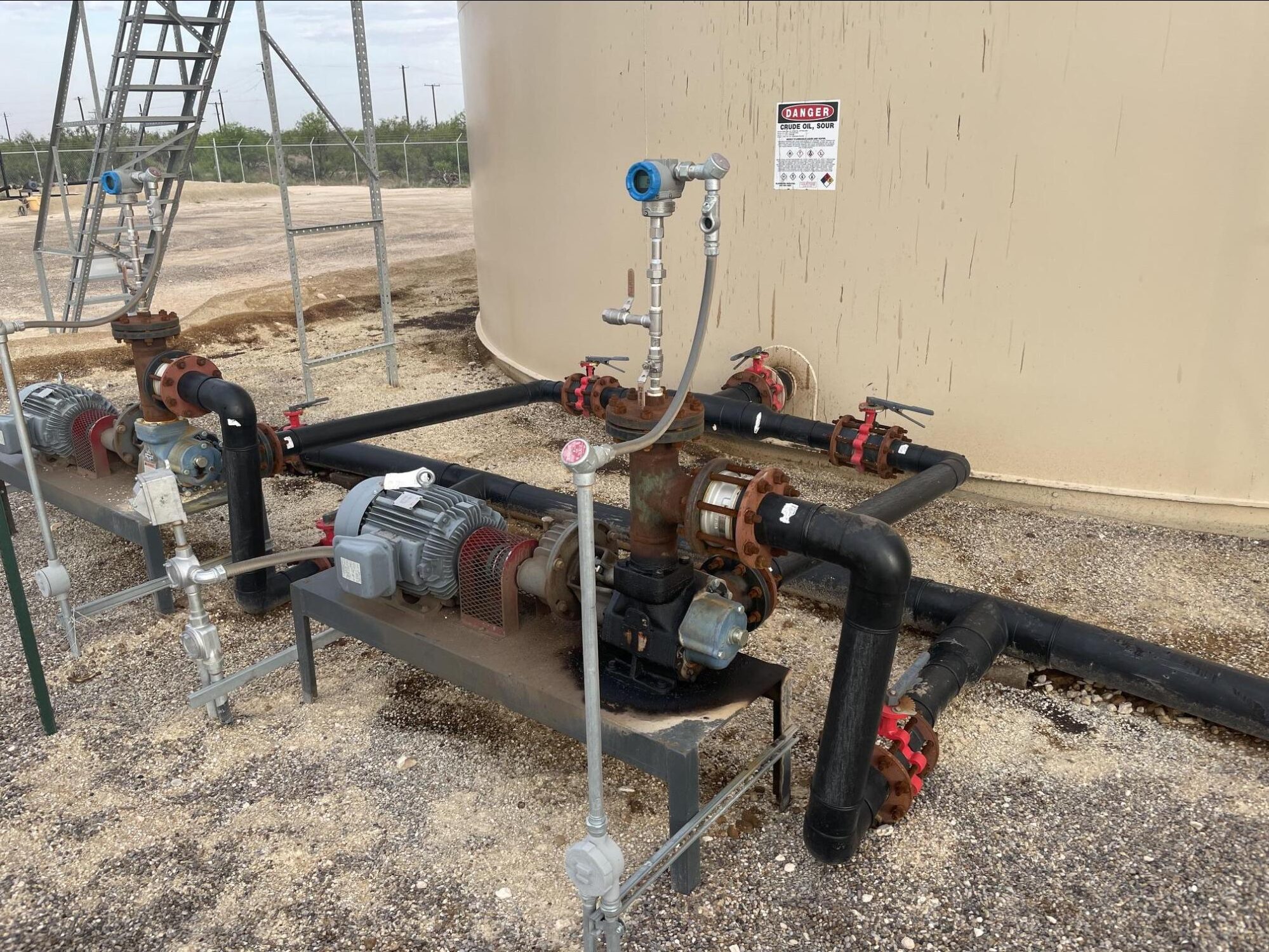


A treatment program can appear effective at the injection point and still fail at the sales line, tank vent, flare header, or worker exposure monitor. That gap is why a sulfur scavenger selection guide must begin with the actual operating duty, not a product name or a price per gallon. The right chemistry is the one that consistently controls sulfur contaminants at the required specification while fitting the stream, equipment, logistics, and safety constraints of the site.
For operators managing H2S, mercaptans, or mixed sulfur contamination, selection is rarely a single-variable decision. Fluid composition changes, production rates move, contact time varies, and chemical delivery conditions can be as consequential as the scavenger itself. A sound evaluation connects laboratory data to field performance and then verifies results with disciplined monitoring.
Start With the Treatment Objective
The first question is not which scavenger chemistry has the highest theoretical capacity. It is what must be controlled, where it must be controlled, and what happens if treatment falls short.
An upstream gas application may require H2S reduction before compression, dehydration, gathering, or pipeline delivery. A crude oil operation may need to manage dissolved H2S for vapor-space safety, transport specifications, corrosion control, or tank emissions. Wastewater, landfill gas, biogas, and process facilities may be focused on odor, worker protection, downstream equipment protection, or environmental compliance.
Define the required outlet target in practical terms. Is the goal to remain below a contractual H2S specification, reduce headspace readings, protect a catalyst, prevent odor complaints, or extend equipment life? Those objectives can require different injection locations, monitoring points, and chemistry attributes. Treating to an unnecessarily low level can inflate chemical spend. Treating only to an average reading can leave unacceptable peaks unaddressed.
Characterize the Stream Before Selecting Chemistry
Representative stream data provides the foundation for selection. At minimum, evaluate H2S and mercaptan concentrations, phase behavior, temperature, pressure, flow rate, pH where relevant, water cut, salinity, and the presence of oxygen, carbon dioxide, hydrocarbons, solids, or emulsions.
The contaminant concentration alone does not define the duty. A gas stream with fluctuating H2S concentrations may need faster response and closer monitoring than a stable stream with a higher average concentration. In a liquid system, the partitioning of H2S between the liquid and vapor phases can affect both treatment demand and where the treatment should be applied.
Mercaptans require separate consideration. They can create odor, corrosion, product-quality, and processing issues, but they do not always respond to the same approach used for H2S. A program designed around total sulfur without understanding sulfur species can produce misleading performance expectations.
Establish the Consequence of Variability
Field conditions are not static. Build expected changes into the selection process: startup and shutdown, slug flow, changing water cut, seasonal temperature shifts, well additions, upset conditions, and intermittent operations all influence treatment performance.
A chemistry that performs well under steady-state conditions may not have sufficient reaction speed or operating margin during an H2S spike. Conversely, a highly reactive program may not be the lowest total-cost solution if it creates handling concerns, deposit issues, or excessive carryover in downstream equipment. The practical target is reliable control across the expected operating range.
Compare Scavenger Options by Field Fit
Scavenger chemistry should be evaluated against the real treatment environment. Reaction rate, capacity, solubility, byproduct profile, material compatibility, handling characteristics, and disposal implications all matter. No single chemistry is optimal for every application.
Liquid scavengers are often selected where continuous injection, liquid-phase treatment, or rapid response is needed. Their effectiveness depends on mixing, contact time, phase distribution, and injection quality. In gas systems, a liquid scavenger can be highly effective when it is introduced at a location that provides adequate dispersion and contact before the measurement or delivery point.
Solid-bed and fixed-media approaches may fit applications with stable flows, predictable contaminant loads, and enough footprint for vessels and changeout operations. They can reduce the need for continuous liquid injection, but performance depends on bed design, channeling control, pressure drop, media changeout timing, and safe handling of spent material. They may be less suited to large, rapidly changing sulfur loads unless the system is designed with adequate capacity and redundancy.
Regenerative systems can be appropriate where sulfur loading, run time, utility availability, and capital economics support a more complex process. Their value is generally tied to long-term operating conditions rather than a short-term treatment need.
When comparing options, avoid using theoretical scavenging capacity as the deciding metric. Field efficiency is what determines chemical usage. A product with lower theoretical capacity may deliver better total performance if it reacts more completely in the available contact time, avoids emulsion problems, or is easier to inject and control.
Injection Design Determines Whether Chemistry Can Work
Even a well-chosen scavenger underperforms when it is injected into the wrong location or at a poorly controlled rate. The injection point should support dispersion, mixing, and sufficient residence time before the treated stream reaches the critical control point.
For a liquid stream, evaluate turbulence, line diameter, flow regime, and whether a static mixer or alternate injection quill is needed. For gas treatment, consider pressure, temperature, moisture content, and the distance between injection and the specification point. In vessel applications, account for retention time, liquid level changes, vapor-liquid equilibrium, and potential short-circuiting.
Pump selection and calibration deserve the same attention as chemistry selection. An inaccurate pump, plugged quill, poor suction setup, or inconsistent chemical supply can look like a scavenger failure. Confirm actual injection volume in the field, not just the programmed pump setting. Chemical day-tank level trends, pump stroke verification, and line inspections provide useful operating evidence.
Material compatibility should be reviewed early. Treatment chemicals, reaction byproducts, and process fluids can affect elastomers, pump components, coatings, seals, and metallurgy. The right program protects the asset rather than moving risk to another part of the system.
Measure Performance at the Points That Matter
A sulfur scavenger program needs reliable feedback. Testing only at the injection point or relying on occasional grab samples can hide a developing problem. Monitor upstream sulfur loading, injection rate, downstream H2S or mercaptan levels, and any relevant equipment or safety indicators.
The appropriate method depends on the application. Fixed H2S analyzers, portable meters, detector tubes, laboratory analysis, liquid sampling, and vapor-space testing may all have a role. Each has limits related to detection range, sample conditioning, calibration, response time, and operator technique. A monitoring plan should account for those limits rather than treating every reading as directly comparable.
Trend data is more useful than isolated results. Compare contaminant loading and treatment response over time, especially through production changes or process upsets. If chemical consumption rises without a corresponding change in sulfur loading, investigate mixing, pump accuracy, emulsion formation, changing phase behavior, or a new source of contamination before simply increasing dose.
Evaluate Total Treatment Cost, Not Unit Price
The delivered price of a scavenger is only one component of treatment cost. A lower-priced product can become more expensive if it requires higher dosing, generates operational issues, increases labor, or causes off-spec events. Likewise, a premium chemistry must demonstrate measurable value through lower consumption, better control, reduced downtime, or fewer logistics interventions.
A useful cost review includes chemical consumption per unit of sulfur removed, freight and storage requirements, injection equipment needs, labor, waste handling, analyzer support, and the financial exposure associated with an H2S excursion. Include the cost of production interruptions, pipeline rejection, odor complaints, corrosion damage, or safety response when those risks apply.
Service capability also belongs in the evaluation. Continuous-treatment operations need dependable inventory planning, field troubleshooting, and the ability to respond when stream conditions change. Q2 Technologies approaches this as a combined chemistry, monitoring, application-engineering, and delivery challenge because treatment performance depends on execution after the product arrives on site.
Use a Field Trial to Confirm the Selection
When conditions allow, a controlled field trial is the most practical way to compare treatment options. Establish a baseline first: contaminant concentration, flow, current dose, downstream results, sampling method, and operating conditions. Then change one meaningful variable at a time.
The trial should run long enough to capture normal variability, not just a favorable shift. Define success criteria before starting, such as outlet H2S control, reduction in chemical use, stable vapor-space readings, absence of process impacts, or improved performance through peak loading. Document injection volumes and verify instrument calibration throughout the trial.
A trial is not simply a product demonstration. It is an opportunity to determine the operating window: the dose range, injection location, monitoring frequency, and response plan needed to maintain control. That information is often more valuable than a single best-case result.
Build Flexibility Into the Program
The most effective sulfur treatment programs are designed for change. Maintain enough storage and delivery planning to avoid chemical outages. Keep critical injection equipment maintained and have clear troubleshooting steps for elevated readings. Review trends routinely rather than waiting for a specification failure.
Selection should remain an operating decision, not a one-time purchasing event. When the stream changes, revisit the chemistry, dose, injection point, and monitoring plan. A program that is actively managed can reduce sulfur-related risk while controlling chemical consumption – and that is the standard a treatment solution should be expected to meet.