
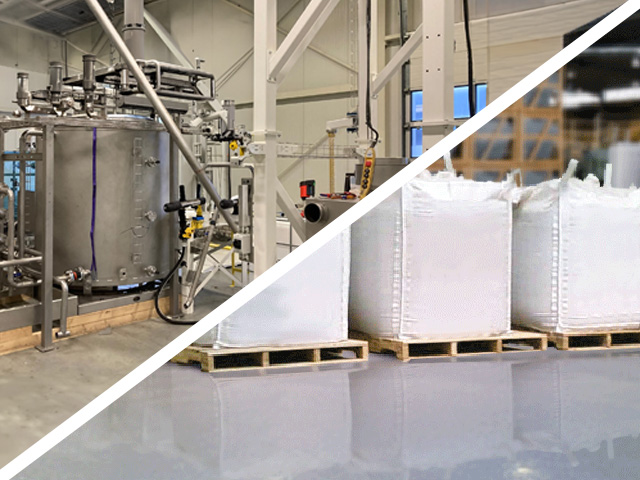
Treating Sour Natural Gas: Selecting the Right H2S Strategy

Understand the importance of choosing the right H2S strategy when Treating Sour Natural Gas for optimal performance and cost controls.

Hydrogen sulfide (H2S) removal in natural gas systems demands flexibility. Gas composition, pressure, temperature, and flow variability create conditions that challenge conventional treatment strategies. Operators typically rely on triazine H2S scavengers or fixed media systems, yet both approaches require careful evaluation.
Triazine H2S scavenger chemistry remains widely used for pipeline-quality gas compliance. It offers predictable reaction performance in steady-state systems and can be applied in upstream, midstream, and gathering operations. However, triazine programs may require careful residual management where sulfur loading fluctuates.

Non-Liquid Options for Intermittent Flow or Variable H2S Levels

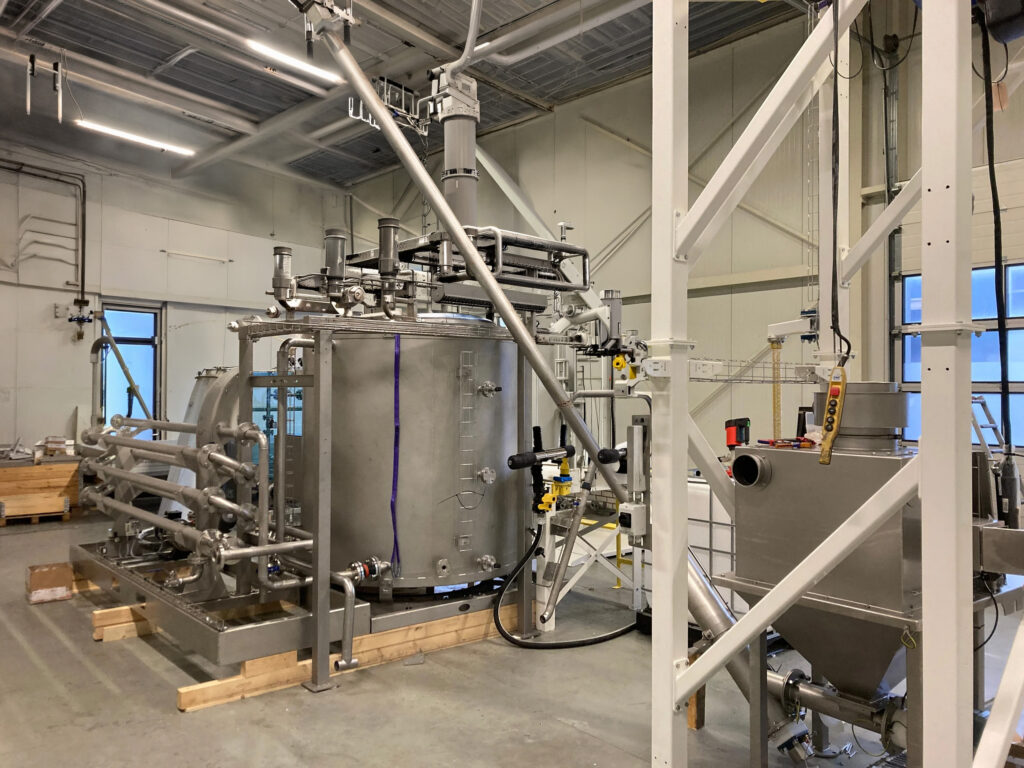
In contrast, mixed metal oxide catalyst systems offer a strong alternative when gas flows are intermittent or H2S concentrations vary significantly. Unlike liquid injection programs, catalyst-based systems operate within customized skid-mounted lead/lag reactors, allowing controlled adsorption and extended service life.

An excellent option for complex systems or for locations that do not have consistent oversight, our Pro3 Nano products are designed to have no moving parts or pumps. An elegant solution if liquid solutions prove to be challenging. 
Consider these as a first step

Regardless of the treatment solution, be it a dry media vs liquid scavenger, the following inputs for a sour natural gas treatment programs must consider:

  • H2S ppm variability
  • Gas flow rate fluctuations
  • Sulfur specification compliance
  • Operational footprint and maintenance intervals

Interested in understanding the different H2S removal treatment systems for sour natural gas – catalyst vs triazine – in more detail? We can certainly talk about economics, advantages, considerations, and areas of concern when selecting these systems.

Q2 Technologies: Expert in H2S Treatment Solutions

Q2 Technologies manufactures multiple concentrations of triazine at our Odessa, Texas facility, with the capability to incorporate additives tailored to system requirements. In parallel, we deploy advanced mixed metal oxide catalyst systems designed for reliability in variable gas environments.


Selecting between an H2S scavenger and catalyst-based hydrogen sulfide removal requires system-specific engineering. Q2 Technologies delivers engineered results by aligning chemistry, reactor design, and operational objectives to achieve consistent sulfur reduction in natural gas streams.

Let's Start a Conversation...

If you want to learn more about H2S removal or other innovative H2S removal solutions from a variety of streams including crude oil, natural gas, other hydrocarbon liquids, or produced water, we would welcome the opportunity to speak to you about your asset or application. Click here to reach out to us.

Ready to fix your H2S problem?

We would welcome an opportunity to connect.

Hydrogen sulfide (H2S) removal in natural gas systems demands flexibility. Gas composition, pressure, temperature, and flow variability create conditions that challenge conventional treatment strategies. Operators typically rely on triazine H2S scavengers or fixed media systems, yet both approaches require careful evaluation.

Triazine H2S scavenger chemistry remains widely used for pipeline-quality gas compliance. It offers predictable reaction performance in steady-state systems and can be applied in upstream, midstream, and gathering operations. However, triazine programs may require careful residual management where sulfur loading fluctuates.

Non-Liquid Options for Intermittent Flow or Variable H2S Levels

In contrast, mixed metal oxide catalyst systems offer a strong alternative when gas flows are intermittent or H2S concentrations vary significantly. Unlike liquid injection programs, catalyst-based systems operate within customized skid-mounted lead/lag reactors, allowing controlled adsorption and extended service life.

An excellent option for complex systems or for locations that do not have consistent oversight, our Pro3 Nano products are designed to have no moving parts or pumps. An elegant solution if liquid solutions prove to be challenging. 

Consider these as a first step

Regardless of the treatment solution, be it a dry media vs liquid scavenger, the following inputs for a sour natural gas treatment programs must consider:

  • H2S ppm variability
  • Gas flow rate fluctuations
  • Sulfur specification compliance
  • Operational footprint and maintenance intervals

Interested in understanding the different H2S removal treatment systems for sour natural gas – catalyst vs triazine – in more detail? We can certainly talk about economics, advantages, considerations, and areas of concern when selecting these systems.

Q2 Technologies: Expert in H2S Treatment Solutions

Q2 Technologies manufactures multiple concentrations of triazine at our Odessa, Texas facility, with the capability to incorporate additives tailored to system requirements. In parallel, we deploy advanced mixed metal oxide catalyst systems designed for reliability in variable gas environments.


Selecting between an H2S scavenger and catalyst-based hydrogen sulfide removal requires system-specific engineering. Q2 Technologies delivers engineered results by aligning chemistry, reactor design, and operational objectives to achieve consistent sulfur reduction in natural gas streams.

Let's Start a Conversation...

If you want to learn more about H2S removal or other innovative H2S removal solutions from a variety of streams including crude oil, natural gas, other hydrocarbon liquids, or produced water, we would welcome the opportunity to speak to you about your asset or application. Click here to reach out to us.

Ready to fix your H2S problem?

We would welcome an opportunity to connect.

When introduced into a stream afflicted with H2S, the hemiformal decomposes to release formaldehyde, which then reacts with hydrogen sulfide to form stable, non-volatile byproducts such as thiomethylene glycol.  The reaction is typically fast and efficient, particularly in aqueous or mixed-phase environments. Unlike some traditional scavengers, hemiformal can maintain activity across a broad pH range and is less likely to generate problematic solids. When considering if hemiformal is the right product, certain operating conditions are reviewed, such as pH and temperature.

Heading 1

When introduced into a stream afflicted with H2S, the hemiformal decomposes to release formaldehyde, which then reacts with hydrogen sulfide to form stable, non-volatile byproducts such as thiomethylene glycol.  The reaction is typically fast and efficient, particularly in aqueous or mixed-phase environments. Unlike some traditional scavengers, hemiformal can maintain activity across a broad pH range and is less likely to generate problematic solids. When considering if hemiformal is the right product, certain operating conditions are reviewed, such as pH and temperature.

Heading 2

When introduced into a stream afflicted with H2S, the hemiformal decomposes to release formaldehyde, which then reacts with hydrogen sulfide to form stable, non-volatile byproducts such as thiomethylene glycol.  The reaction is typically fast and efficient, particularly in aqueous or mixed-phase environments. Unlike some traditional scavengers, hemiformal can maintain activity across a broad pH range and is less likely to generate problematic solids. When considering if hemiformal is the right product, certain operating conditions are reviewed, such as pH and temperature.

Heading 3

Heading 4

When introduced into a stream afflicted with H2S, the hemiformal decomposes to release formaldehyde, which then reacts with hydrogen sulfide to form stable, non-volatile byproducts such as thiomethylene glycol.  The reaction is typically fast and efficient, particularly in aqueous or mixed-phase environments. Unlike some traditional scavengers, hemiformal can maintain activity across a broad pH range and is less likely to generate problematic solids. When considering if hemiformal is the right product, certain operating conditions are reviewed, such as pH and temperature. 

Key Benefits:

  • Controlled formaldehyde release 
  • Lower vapor pressure and improved safety profile 
  • Broad applicability across liquid and gas-phase systems 
  • Reduced scaling in sour water stripping and other high-temp operations 
  • Hemiformal can make the scavenger safe for transport as it is a very stable compound 

Heading 5

Hemiformal is used in a variety of upstream and midstream applications, including: 

  • Gas sweetening systems 
  • Produced water treatment 
  • Crude oil storage and transport 
  • Sour water stripper overheads 
  • Temporary H2S mitigation during maintenance or turnaround

Its adaptability makes it especially useful in operations where system conditions fluctuate or where traditional triazine-based products may underperform. 

Heading 6

While hemiformal offers many advantages, it is not a one-size-fits-all solution. The rate of formaldehyde release can vary depending on formulation and environmental conditions. Additionally, while safer than raw formaldehyde, hemiformal must still be handled with care and appropriate PPE. 

For optimal results, formulation expertise and application-specific customization are key—something we at Q2 Technologies excel at delivering. 

Related Blogs

FAQs

  1. Why is selective sulfur and oxygenate removal important for NGLs?

    Selective sulfur and oxygenate removal is increasingly important as pipeline specifications, end-use requirements, and petrochemical standards continue to tighten. Sulfur- and oxygenate-related contaminants can limit marketability, cause off-spec product issues, and create downstream processing challenges. A selective approach allows operators to meet these stricter requirements without over-treating or adding unnecessary operational complexity.

  2. How is this solution different from traditional amine-based treatment systems?

    Unlike traditional amine-based systems, which require significant equipment, continuous monitoring, and specialized operational expertise, this new technology is designed as a single-pass treatment solution. It delivers targeted sulfur and oxygenate removal while eliminating unnecessary complexity, reducing manpower needs, and simplifying operations — making it more practical for real-world field applications.

  3. What market challenges led Q2 Technologies to develop this new NGL treatment solution?

    Q2 Technologies developed this new NGL treatment solution in response to tightening sulfur- and oxygenate-related scrutiny across the liquid hydrocarbon market. Pipeline contracts, petrochemical feedstock requirements, and end-use specifications have become more restrictive, while traditional treatment options have struggled to deliver the level of selectivity, efficiency, and operational practicality operators now require. Recognizing this gap, Q2 Technologies pursued a more targeted, scalable solution that could address evolving market demands without adding unnecessary complexity or operational burden.

  4. How does this technology support pipeline and end-use specification compliance?

    This technology supports pipeline and end-use specification compliance by selectively removing sulfur species and oxygenates that commonly drive off-spec conditions in NGL streams. Its targeted, single-pass treatment approach enables operators to meet increasingly stringent quality requirements without over-treating valuable hydrocarbons or relying on complex, manpower-intensive systems. By delivering consistent contaminant control, the solution helps reduce the risk of rejections, penalties, and downstream processing issues, improving reliability across transportation and end-use applications.

Related Articles