


Elevated hydrogen sulfide (H2S) in crude oil is not a single-cause problem. It is the result of multiple formation and operational factors that vary across assets, reservoirs, and surface systems. Treating H2S effectively requires first understanding its origin. Without that foundation, chemical programs become reactive, inefficient, and costly.
Operators frequently default to scavenger injection without diagnosing the underlying source of sulfide. This approach can temporarily reduce measured H2S but often leads to excessive chemical consumption, unstable performance, and unintended downstream impacts. A structured evaluation of the system is required before selecting a treatment strategy.
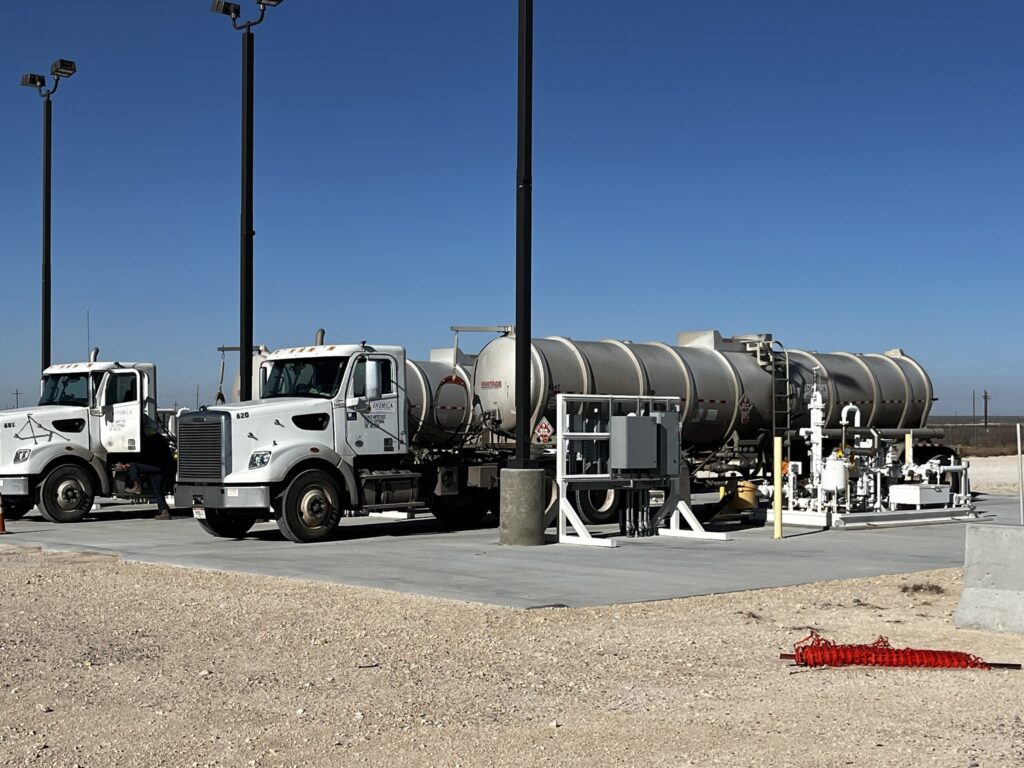
Sources of Sulfur in Crude Oil
Reservoir-Origin H2S
Certain formations are inherently sour, producing hydrocarbons with elevated levels of hydrogen sulfide and mercaptans. In these environments, H2S is present from initial production and remains consistent unless reservoir conditions change. These systems require continuous treatment, typically at the wellhead, central production facilities, or prior to midstream transfer. Treatment must be designed for sustained exposure rather than intermittent spikes.
Sulfate-Reducing Bacteria (SRB)
Microbial activity in produced water systems is a common and often underestimated source of H2S. Sulfate-reducing bacteria generate sulfide as a byproduct of their metabolic process. When water treatment is inadequate or systems experience stagnation, sulfide loading increases rapidly. This not only elevates H2S in crude but also accelerates corrosion and promotes iron sulfide formation. The interaction between water chemistry and hydrocarbon phases must be addressed in these cases.
Thermal Degradation and Blending Effects
Crude storage and blending operations can release dissolved H2S, increasing vapor space concentrations even when liquid-phase measurements appear controlled. Temperature changes, pressure drops, and mixing of different crude streams all contribute to this release. Tank vapor H2S becomes a safety concern, particularly in storage terminals, tank batteries, and export facilities. Vapor phase management must be considered alongside liquid treatment.

Elevated levels of H2S destroys infrastructure and lessens Crude Oil value
When these mechanisms are not properly managed, the impact is immediate and measurable:
- Corrosion in tanks, pipelines, and associated infrastructure
- Iron sulfide formation leading to solids deposition and fouling
- Challenges meeting sulfur specifications in midstream and refinery systems
- Increased chemical demand driven by inefficient treatment strategies
- Reduced marketability of sour crude streams
So triazine for Crude Oil is the right choice, right?
Crudes seeking the highest net back price should avoid triazine-based scavengers. True, they are effective in some crude oil applications, the limitation is not the chemistry, but how it is applied. Treatment programs are often built around the product instead of the system, leading to misalignment with the actual source of H2S. When this happens, operators compensate with increased dosage, driving higher chemical spend without achieving stable control.
In poorly managed systems, triazine reaction byproducts can contribute to polymer formation and solids buildup, especially in assets already prone to fouling. These solids can carry through separation, foul equipment, and create downstream processing challenges. What begins as a field-level treatment decision can quickly become a reliability and handling issue for downstream operations, including refining.
Consider an alternative
Alternative chemistries, including non-triazine and non-amine scavengers, provide advantages in systems where solids management and downstream separation are critical. These chemistries can offer improved reaction profiles and reduced byproduct formation when properly matched to the application.
A disciplined treatment strategy includes:
- Identifying the dominant source of H2S within the system
- Evaluating both hydrocarbon and produced water chemistry
- Designing injection points and contact time for effective reaction
- Selecting chemistry that aligns with downstream separation and solids handling
- Monitoring performance to adjust for changes in operating conditions
Q2 Technologies applies this structured approach through its ProSeries platform. Rather than relying on a single product, treatment programs are engineered based on system conditions. Proprietary scavenger chemistries are manufactured for crude oil applications, including Pro3® O, which is designed for systems with elevated variability and strict sulfur compliance requirements.
Pro3® O is formulated to address reaction kinetics, contact efficiency, and downstream separation performance. This ensures that sulfur removal is not only effective at the point of injection but also sustainable across the full production and handling process.
Field results reflect the importance of proper diagnosis and alignment.
Managing elevated H2S in crude oil requires more than chemical supply. It requires an understanding of the system, the discipline to diagnose root causes, and the ability to implement solutions that perform under field conditions. Identifying the source of sulfide is the first step. Sustained control depends on what follows.
Let's Start a Conversation...
If you want to learn more about H2S removal or other innovative H2S removal solutions from a variety of streams including crude oil, natural gas, other hydrocarbon liquids, or produced water, we would welcome the opportunity to speak to you about your asset or application. Click here to reach out to us.