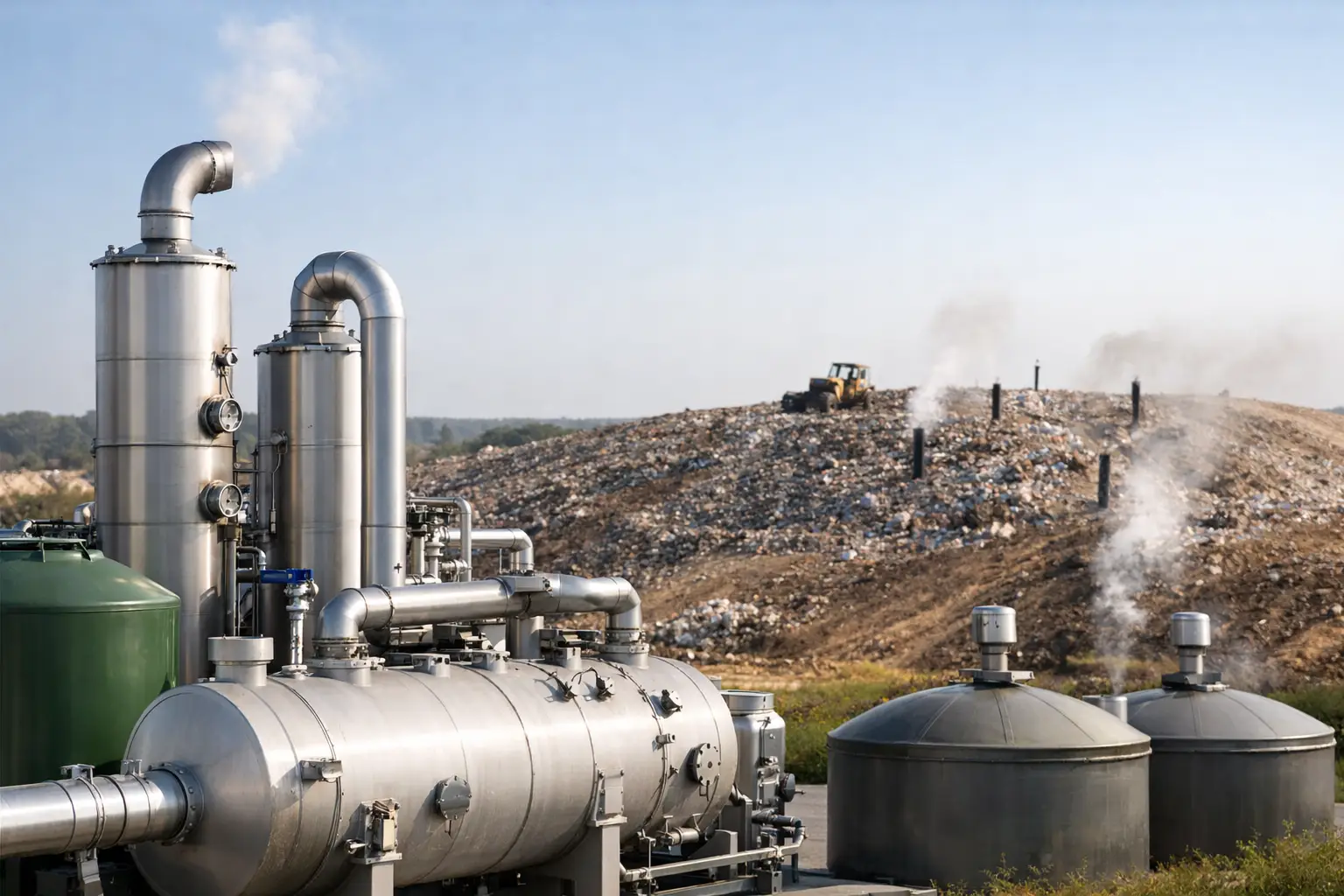

How a Non Triazine H2S Scavenger Performs

A treating program can look fine on paper and still create problems in the field. Operators see it when H2S numbers drift, solids begin to build, spent chemistry complicates handling, or chemical usage climbs faster than the gas rate. That is usually the point when a non triazine H2S scavenger moves from a product category to a serious operational question.

For many systems, triazine has been the default choice because it is familiar, widely available, and effective in the right window. But not every sour stream behaves the same way. H2S loading, residence time, water content, temperature, pressure, byproducts, logistics, and disposal constraints all change the economics of treatment. In those cases, choosing a non-triazine option is less about replacing a standard chemistry and more about matching the scavenger to the process conditions that actually control performance.

What a non triazine H2S scavenger is solving for

At the plant or field level, the job is straightforward: remove hydrogen sulfide fast enough and consistently enough to protect people, equipment, product quality, and compliance. The chemistry behind that job is where the trade-offs start.

A non triazine H2S scavenger generally refers to H2S treatment chemistry that does not rely on hexahydro-1,3,5-tris(2-hydroxyethyl)-s-triazine or related triazine-based reaction pathways. That distinction matters because triazine programs can produce operational side effects in some applications, especially where solids formation, fouling potential, spent product handling, or inefficient utilization become limiting factors.

Non-triazine chemistries are often evaluated when operators need a better fit for a difficult stream, a different byproduct profile, improved reaction efficiency, or a treatment program that supports cleaner operation over time. In some systems, the value is lower total treatment cost. In others, it is reduced plugging risk, simpler logistics, better compatibility, or more stable H2S control under changing flow conditions.

Why operators look beyond triazine

The first reason is usually not theory. It is field performance.

When triazine works well, it can be a practical solution. But treatment decisions change when scavenger residuals create downstream problems, when contact efficiency is poor, or when actual chemical consumption does not line up with the expected sulfur loading. A chemistry that appears inexpensive per gallon can become expensive per pound of H2S removed if the reaction is incomplete, side reactions increase loss, or maintenance events begin to pile up.

This is especially relevant in systems with variable composition, intermittent upsets, or limited residence time. In those environments, operators are not simply buying product. They are trying to maintain reliable sulfur control without creating a second operating problem.

A non-triazine program is often considered in gas treating, crude stabilization, tank vapor treatment, produced water applications, landfill gas, biogas, and wastewater odor control when one or more of the following issues appear: inconsistent scavenging, solids-related fouling, handling concerns, elevated maintenance, or poor overall treatment economics.

Where a non triazine H2S scavenger can fit best

The strongest applications are the ones where chemistry selection is tied directly to stream behavior.

In dry or relatively dry gas systems, reaction speed and mass transfer can dominate results. If the treatment point, injection quality, and contact opportunity are constrained, a non-triazine chemistry may offer better practical performance depending on the stream composition and the delivery method. In these cases, the right answer depends as much on injection design and monitoring as it does on the chemical itself.

In liquid hydrocarbon systems, compatibility and byproduct behavior can carry more weight. Crude oil, condensate, and mixed liquid streams can challenge some scavenger programs because treatment is happening in a moving system with changing temperature, pressure, and separation conditions. A non-triazine approach may be selected to reduce undesirable reaction products or to improve treating efficiency across the residence times that are actually available.

In wastewater, landfill gas, and biogas service, odor control and environmental handling are often part of the decision. The chemistry has to work, but it also has to fit the site’s operational realities – storage, feed control, staff workload, discharge constraints, and reliability expectations. A scavenger that performs well in a controlled lab test but requires constant intervention is usually not the best long-term answer.

Performance depends on the whole treatment system

One of the most common mistakes in scavenger selection is treating chemistry as the only variable. It rarely is.

The same non-triazine H2S scavenger can produce very different outcomes depending on injection location, droplet size, static mixing, separator configuration, liquid carryover, and the quality of real-time measurement. If H2S readings are delayed, if slug flow changes contact, or if the chemistry is injected where it never sees enough exposure, performance problems are almost guaranteed to show up as “chemical failure” even when the real issue is application design.

That is why experienced operators evaluate treatment as a system. The chemistry must fit the stream, but the feed equipment, monitoring plan, and delivery logistics also have to support the target result. A stronger scavenger program is usually built around four things: accurate sulfur data, the correct injection point, enough contact opportunity, and a dose rate based on real demand rather than assumption.

This is where technical support matters. In specialty treatment programs, optimization often comes from field adjustments, not a one-time product selection. If the gas composition changes or production rates move, the scavenger strategy should move with it.

Trade-offs to evaluate before switching chemistry

A non-triazine option is not automatically better. It is better when it solves the right problem.

Some non-triazine chemistries offer clear advantages in byproduct management or application-specific efficiency, but they may require tighter control over feed rate or a more deliberate implementation plan. Others may perform well in one phase of a process and less effectively in another. Some are chosen for cleaner operation, while others are selected for high reactivity or compatibility with a specific stream.

That means evaluation should focus on total operating impact, not just product category. Ask what the program does to treatment consistency, maintenance frequency, downstream equipment condition, spent chemical handling, and delivered cost per unit of sulfur removed. Also ask how quickly the supplier can support field changes, because treatment performance can deteriorate fast when conditions shift and response lags.

A reliable comparison includes more than a drum price. It should account for sulfur removal efficiency, actual consumption, impact on system cleanliness, logistics reliability, and whether the chemistry can hold performance at the treatment point that matters most.

How to assess a non-triazine program in practice

The best evaluations are disciplined and site-specific. Start with the stream itself: H2S concentration, phase behavior, pressure, temperature, flow variability, and contaminants that may interfere with reaction or measurement. Then look at the operational layout: where the chemistry is injected, how mixing occurs, what residence time exists, and where breakthrough is measured.

From there, the trial should be built around measurable outcomes. Reduced outlet H2S is the primary target, but not the only one. Chemical consumption rate, fouling tendency, maintenance burden, and stability under upset conditions often determine whether a program is truly better.

A short test can be misleading if it misses the events that create most of the operating cost. A meaningful evaluation should capture normal production, rate changes, and any recurring conditions that stress the system. It should also compare performance against the current program using consistent sampling and realistic field handling.

For industrial operators, this is where a technical solutions provider has a practical advantage. Chemistry selection, injection equipment, monitoring, and field logistics should work together. Q2 Technologies approaches sulfur treatment that way because scavenger performance is rarely isolated from the way the program is executed on site.

The bigger value is operational control

Most buyers begin by asking which chemistry removes H2S. The better question is which chemistry keeps the operation under control.

A non-triazine H2S scavenger can be the right answer when the standard approach is creating hidden costs – excess consumption, deposits, unstable treating, avoidable maintenance, or poor fit for the stream. But the chemistry only delivers its full value when it is applied with good data, sound injection design, and active optimization.

For operators managing sour gas, crude, wastewater, biogas, or sulfur-driven odor and corrosion risk, the goal is not to follow a default chemistry. It is to keep treatment effective, predictable, and field-ready as conditions change. That usually starts with a simple question: is the current scavenger solving the problem, or just adding another one?

That is the right place to make a better treatment decision.
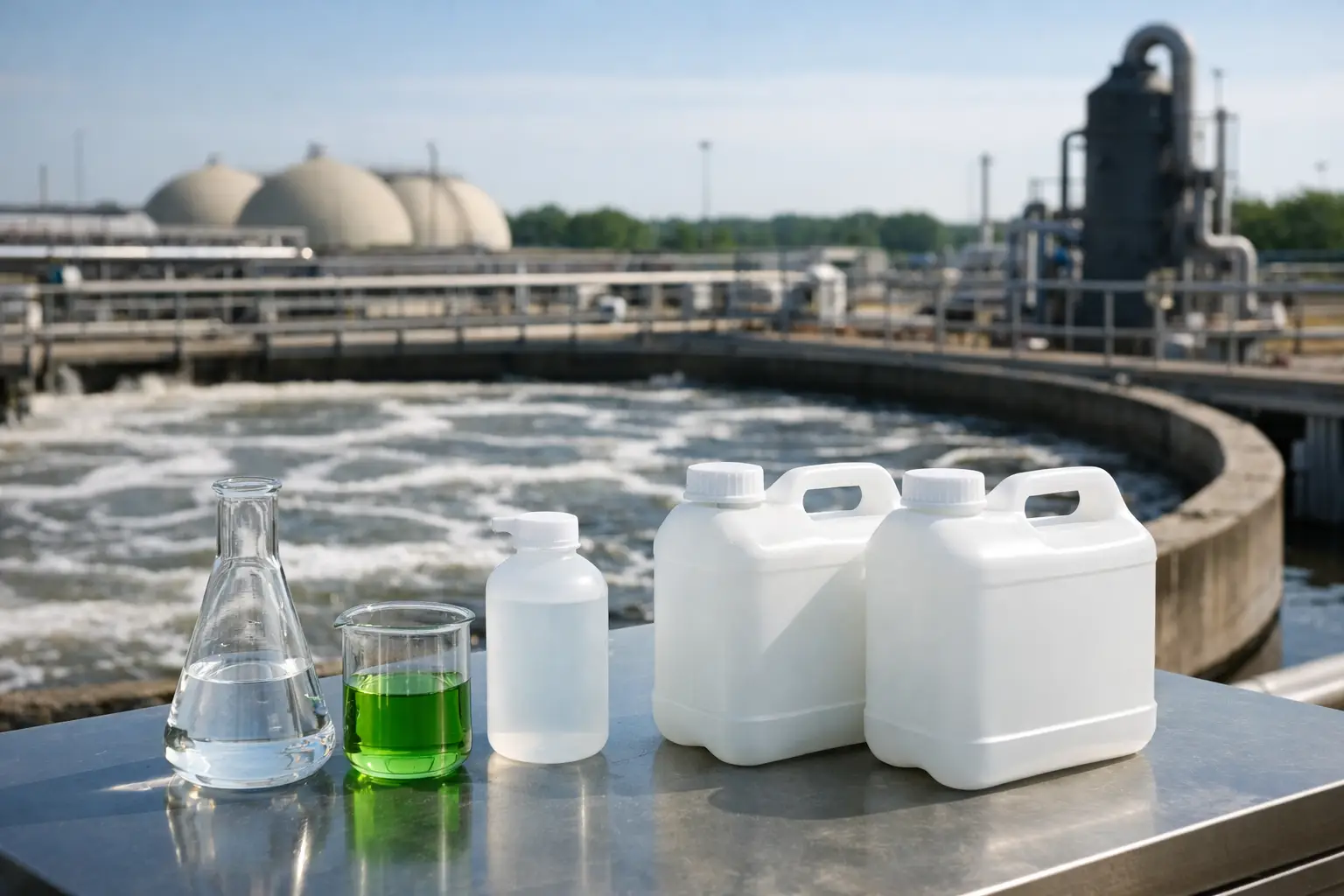
Choosing Wastewater Odor Control Chemicals

An odor complaint rarely starts as just an odor problem. By the time hydrogen sulfide is noticeable at a lift station, headworks, wet well, or force main discharge, the site may already be dealing with worker exposure concerns, accelerated corrosion, and growing pressure from nearby communities. That is why wastewater odor control chemicals should be evaluated as part of a broader operating strategy, not as a last-minute masking measure.

In wastewater systems, odor is usually tied to sulfur chemistry. Hydrogen sulfide forms under anaerobic conditions when sulfate-reducing bacteria become active in force mains, interceptors, equalization basins, and other low-oxygen zones. Once released into the vapor phase, H2S creates the familiar rotten egg odor, but the operational impact goes beyond nuisance. It can attack concrete and metal assets, increase maintenance costs, and create real safety risks in enclosed spaces.

What wastewater odor control chemicals are actually solving

The first practical question is not which product to buy. It is what mechanism is driving the odor event. In many systems, H2S is the primary target. In others, mercaptans, volatile fatty acids, ammonia, or a mixed sulfur load may contribute to the odor profile. A chemistry program that performs well against dissolved sulfides may not be the right choice if the issue is primarily vapor-phase emissions at a specific structure.

That distinction matters because odor control can happen at different points in the process. Some chemistries work upstream by preventing sulfide formation or binding dissolved sulfides before release. Others are applied at odor-release points to neutralize or oxidize compounds in the liquid or air space. The right approach depends on detention time, temperature, pH, turbulence, sulfide loading, and how consistently the wastewater characteristics change during the day.

Facilities that treat odor as a single-variable problem often end up overspending on chemistry while still dealing with complaints. The better approach is to match treatment chemistry to the sulfur species present, the location of odor generation, and the performance target that actually matters – lower ambient odor, reduced vapor H2S, better worker safety margins, or corrosion control.

Main classes of wastewater odor control chemicals

Most wastewater odor control chemicals fall into a few functional categories, but their field performance can vary significantly depending on application conditions.

Oxidizing chemistries are commonly used when rapid sulfide reduction is needed. They can convert sulfides into less problematic forms and produce quick results, which is useful in systems with acute odor events or high sulfide spikes. The trade-off is that oxidizers can be consumption-heavy, may require careful dose control, and in some systems create handling or compatibility considerations.

Metal-based chemistries, including iron salts, are often applied to bind sulfides in the liquid phase. These programs can be effective in collection systems and primary treatment applications where dissolved sulfide control is the main objective. However, treatment efficiency depends heavily on wastewater composition, competing demand, feed location, and retention time. A program that looks economical on a per-gallon basis can become expensive if dose requirements climb due to poor application design.

Caustic and pH-adjustment programs can shift sulfide equilibrium and reduce the release of H2S gas. This can help in targeted situations, but pH control alone does not remove total sulfide loading from the system. It is often part of a larger treatment strategy rather than a standalone answer.

Nitrate-based treatment is another upstream option used to suppress sulfate-reducing bacterial activity and limit sulfide generation under certain conditions. It can work well in long force mains or systems with predictable anaerobic development, but response time and dosage economics depend on system hydraulics and wastewater strength.

There are also specialty formulations designed specifically for odor neutralization, vapor suppression, or sulfur scavenging in difficult operating environments. In practice, these tend to offer the most value when the chemical supplier understands the full application rather than selling a standard drum into every site with the same recommendation.

Why feed point matters as much as chemistry

A strong product applied in the wrong location will underperform. In wastewater systems, feed point selection is often the difference between controlled odor and recurring complaints.

If sulfide is forming in a long upstream force main, treating only at the discharge point may be too late. The system may still experience corrosion and gas release along the route, even if odor at the endpoint improves somewhat. On the other hand, if odor complaints are isolated to a headworks channel or sludge handling area, an upstream bulk treatment program may be more expensive than necessary.

The feed point should be based on where sulfides are generated, where they are released, and where treatment contact time is sufficient. That usually requires more than a site walk. Good program design uses flow patterns, detention profiles, sulfide measurements, pH data, and field observations to determine where chemistry will provide the highest return.

This is also where many facilities miss an optimization opportunity. They focus on chemical price instead of delivered treatment performance. Lower-cost chemistry with poor contact time, inconsistent injection, or weak control at peak loading can produce a higher total operating cost than a more effective program with tighter dose control.

Measuring performance beyond odor complaints

Odor complaints matter, but they are a lagging indicator. By the time complaints come in, the treatment program has already failed to some degree.

A better way to evaluate wastewater odor control chemicals is to look at measurable process outcomes. Dissolved sulfide, vapor H2S, pH, oxidation-reduction potential, corrosion indicators, and chemical consumption per treated volume all provide a clearer picture of whether the program is working. In some systems, seasonal shifts and diurnal load swings are large enough that a fixed feed rate will only perform well for part of the day.

That is why monitoring and dose adjustment are so important. Facilities with variable flow, industrial influent swings, or temperature-driven odor spikes usually benefit from a more responsive treatment program. Automated monitoring and injection optimization can reduce overtreatment during light load periods while maintaining control during peak sulfide generation. That improves both performance and chemical efficiency.

Common mistakes when selecting wastewater odor control chemicals

The most common mistake is choosing based on chemical category alone. Two products may both be labeled as sulfide control chemistries, but their reaction profiles, feed requirements, handling characteristics, and field support can be very different.

Another mistake is treating odor control as separate from corrosion control. In wastewater infrastructure, those issues are closely linked because H2S in the vapor phase drives both odor and sulfuric acid-related asset damage. A treatment program that only reduces smell at the perimeter while leaving high vapor concentrations in structures may not protect the system where it counts.

Facilities also get into trouble when they assume jar testing or short trials tell the whole story. Lab screening has value, but wastewater systems are dynamic. Detention time changes. Flow changes. Sulfide loading changes. A successful program has to perform in the field, not just in a controlled sample.

Finally, some sites underestimate service and logistics. Odor treatment is often a continuous need, especially in warm weather or high-strength systems. If deliveries are unreliable, monitoring is limited, or field adjustments take too long, the chemistry itself will not carry the program.

What a stronger treatment program looks like

A strong program starts with application fit. The chemistry should be selected based on sulfur species, treatment objective, wastewater characteristics, and injection conditions. It should then be supported by practical field execution – storage, feed equipment, monitoring, delivery planning, and dosage refinement.

For many industrial and municipal operators, the difference between average and high-performing odor control comes from integration. Chemistry alone is only one part of the solution. The rest is knowing how to apply it consistently, how to verify results, and how to adjust before a small odor issue turns into a safety, compliance, or asset integrity problem.

That is the advantage of working with a technical supplier instead of a commodity reseller. In difficult sulfur applications, performance depends on understanding the chemistry and the operating environment together. Q2 Technologies approaches odor and sulfur treatment with that field-first mindset, combining chemistry, application support, monitoring, and delivery around the realities of continuous operations.

Wastewater odor control is rarely solved by adding more product. It is solved by using the right chemistry, at the right location, with the right control strategy – and then staying close enough to the system to keep it working when conditions change.

Landfill Gas H2S Treatment That Performs

A landfill gas system usually tells you when H2S treatment is falling behind. Iron sponge changeouts come faster, condensate turns more aggressive, engine maintenance starts creeping up, and odor complaints become harder to explain away. In most cases, landfill gas h2s treatment is not failing because the gas suddenly changed for no reason. It is failing because the treatment approach is no longer matched to the actual gas stream, operating conditions, or downstream risk.

That distinction matters. Hydrogen sulfide in landfill gas is not just a nuisance contaminant. It drives corrosion, shortens equipment life, increases maintenance frequency, creates safety concerns, and can push gas processing or utilization systems out of spec. If the site is feeding an RNG upgrading system, a flare, a boiler, or power generation equipment, H2S control affects both reliability and economics.

What makes landfill gas H2S treatment difficult

Landfill gas is rarely steady. H2S concentrations can swing with waste composition, moisture movement, leachate behavior, wellfield balancing, and seasonal conditions. A treatment program that looked adequate during one operating window may become inefficient when loading changes or gas flow shifts.

Moisture is one of the biggest variables. Landfill gas is saturated and carries contaminants that complicate sulfur control, including siloxanes, VOCs, and trace sulfur species beyond H2S alone. That means chemistry selection cannot be made in isolation. The wrong approach may perform well on paper and still create operational problems in the field because the reaction environment is unstable or because competing contaminants interfere with treatment efficiency.

Residence time also matters more than many systems allow for. Some treatment methods depend heavily on contact quality, vessel design, and gas distribution. When the site is constrained by footprint, capital budget, or legacy equipment, treatment can become a compromise between ideal chemistry and practical installation limits.

The real job of landfill gas H2S treatment

The goal is not simply to remove sulfur. The goal is to remove enough sulfur, at the right point in the process, with acceptable operating cost and minimal disruption to the rest of the system.

That sounds obvious, but many programs are still evaluated too narrowly. Operators may focus on drum cost, media cost, or unit price per gallon while missing the bigger drivers of treatment value. If lower-cost chemistry increases overfeed, causes handling issues, or fails under variable load, total treatment cost goes up. If a scavenger works chemically but creates fouling or downstream complications, the apparent savings disappear in maintenance and lost uptime.

Effective treatment should reduce sulfur-related risk without creating a new operating problem. That means looking at gas composition, target outlet spec, flow variability, injection point, contact time, monitoring capability, and delivery logistics as part of one treatment system rather than separate decisions.

Where H2S removal decisions usually go wrong

A common mistake is treating landfill gas like a simpler gas stream. It is not. The contaminant profile is broader, moisture load is higher, and operating conditions are less predictable than in many pipeline-quality or controlled process gas systems.

Another issue is underestimating variability. Grab samples can be useful, but they do not always capture the peaks that drive corrosion events or upset downstream equipment. If chemical feed rates are set to average conditions while the site regularly experiences spikes, treatment performance will look inconsistent even when the chemistry itself is sound.

There is also the question of where to treat. Removing H2S upstream can protect compression and conditioning assets, but the best injection or contact point depends on the process layout. In some systems, earlier treatment makes sense because it lowers exposure across multiple equipment stages. In others, targeted downstream polishing may be more economical. It depends on what needs protection and how the gas is being used.

Common treatment approaches and their trade-offs

Landfill operators typically evaluate dry media, liquid scavengers, scrubbing systems, or combinations of these methods. Each can be effective, but the right fit depends on the application.

Dry media systems can be attractive where flow is relatively stable and vessel-based treatment fits the site design. They offer a familiar operating model, but media life can become unpredictable when H2S loading swings or when moisture and contaminants affect bed performance. Changeout frequency, disposal cost, and pressure drop all need to be part of the calculation.

Caustic or other scrubbing approaches can achieve strong removal in the right setup, especially where high removal efficiency is required and supporting infrastructure is already in place. The trade-off is that these systems bring their own operational complexity, including liquid handling, maintenance, spent solution management, and process control requirements.

Liquid scavengers are often selected when operators need flexibility, rapid implementation, or targeted treatment at specific points in the system. The advantage is adaptability. Feed rates can be adjusted as gas quality changes, and treatment can often be deployed without major capital work. The limitation is that results depend heavily on matching the chemistry to the stream and controlling injection, mixing, and dose. Poor application design can make a good product look ineffective.

For many landfill sites, the most practical answer is not a generic product choice but an application-specific program that accounts for sulfur loading, moisture, contact conditions, downstream equipment sensitivity, and field logistics.

How to improve landfill gas H2S treatment performance

The first step is getting a realistic picture of the gas stream. Not just a single H2S number, but actual variability over time, likely peak conditions, and the presence of other contaminants that may affect treatment. If the gas data is weak, optimization becomes guesswork.

The next step is identifying the real treatment objective. A flare-only system has a different risk profile than an engine, turbine, boiler, or RNG plant. Required outlet levels, corrosion tolerance, and consequences of breakthrough are not the same. The treatment strategy should reflect those differences.

Then comes chemistry and application design. In liquid scavenger programs, injection point selection is critical. The chemistry has to see the gas under conditions that allow adequate contact and reaction. If injection occurs too late, or into a poorly mixed zone, chemical consumption rises while removal efficiency falls. In vessel-based systems, flow distribution and residence time matter just as much.

Monitoring closes the loop. Without regular performance tracking, sites tend to oscillate between overfeeding and under-treating. Overfeeding wastes money and can create handling or deposition issues. Under-treating exposes equipment and increases upset risk. A dependable program uses field data to adjust treatment before problems become visible in maintenance records.

This is where an integrated approach tends to outperform a product-only purchase. Chemistry selection, feed control, testing discipline, and delivery reliability all affect sulfur removal. A landfill site cannot optimize treatment if product arrives late, field support is slow, or dosage adjustments are based on assumptions instead of measured results.

Why chemical efficiency is only part of the answer

On paper, two scavenger programs may appear similar if they both reduce H2S. In practice, one may consume less chemical, respond better to gas swings, and create fewer operational side effects. That difference usually comes from application support, not just chemistry.

Landfill gas treatment is a field problem. Tanks run low. Weather changes conditions. Wells are adjusted. Flow rates move. Equipment sees intermittent stress. A treatment supplier that understands sulfur chemistry but not field execution will leave value on the table.

That is why many industrial operators look for a technical partner rather than a reseller. Q2 Technologies approaches sulfur treatment as an operating system made up of chemistry, monitoring, injection optimization, and dependable supply. For landfill gas applications, that kind of support can mean the difference between acceptable treatment and consistently efficient treatment.

What good treatment looks like in operation

You usually see it in the absence of trouble. Corrosion slows down. Maintenance intervals stabilize. Odor events become less frequent. Downstream equipment runs with fewer sulfur-related interruptions. Chemical usage becomes more predictable because dosage reflects actual conditions rather than safety-factor overfeed.

Just as important, the site gains decision-making confidence. Operators know what the treatment program is designed to do, where its limits are, and how to respond when gas conditions shift. That reduces surprises, which is one of the most valuable outcomes in any continuous industrial operation.

Landfill gas is not a simple stream, and H2S control is rarely a set-it-and-forget-it task. The sites that get the best results usually treat it as an optimization problem rather than a product purchase. When chemistry, application design, monitoring, and field support are aligned, sulfur treatment stops being a recurring headache and starts acting like it should – a controlled part of the process.

Biogas Hydrogen Sulfide Removal That Works

A digester can be producing stable gas volumes and still create a treatment problem that shows up somewhere else first – in blower corrosion, media changeout costs, off-spec fuel, or a CHP unit that starts seeing more maintenance than it should. That is why biogas hydrogen sulfide removal is not just a gas cleanup step. It is an operating decision that affects asset life, compliance, safety, and total treatment cost.

In biogas systems, H2S concentration can move with feedstock changes, digester conditions, temperature, and loading. A program that looked acceptable at startup can become expensive or unreliable once the gas profile shifts. The right approach starts with understanding what the sulfur load is doing in the real world, how low H2S must go for the downstream equipment or end use, and what trade-offs come with each treatment method.

Why biogas hydrogen sulfide removal matters

Hydrogen sulfide in biogas is a small molecule with outsized consequences. Even at relatively modest concentrations, it contributes to corrosion in piping, condensate systems, compressors, engines, and gas upgrading equipment. Once moisture and oxygen enter the picture, the corrosion risk gets worse, especially in systems that cycle or operate outdoors.

The product-quality side matters just as much. If biogas is feeding a boiler, engine, microturbine, RNG upgrading train, or flare, sulfur content directly affects equipment reliability and emissions performance. For landfill gas and wastewater applications, odor management is often tied to sulfur control as well. When H2S spikes are not controlled, operators end up reacting to failures instead of managing a treatment process.

There is also a cost issue that gets missed in simple media pricing comparisons. Poor sulfur control can increase lubricant replacement, shorten engine overhaul intervals, foul downstream systems, and create labor-intensive maintenance. In many facilities, the cheapest treatment method on paper becomes the most expensive option once the full operating picture is measured.

What makes H2S in biogas difficult to treat

Biogas treatment is rarely a steady-state problem. H2S levels can vary widely based on feedstock composition, digester biology, pH, retention time, and process upsets. Wastewater plants, agricultural digesters, food waste facilities, and landfill operations all behave differently, and each site can change over time.

Moisture is another factor. Biogas is typically saturated, and that affects both treatment chemistry and vessel performance. Some removal methods perform well only within narrow humidity or temperature windows. Others lose efficiency when condensate carryover, siloxanes, or particulates are present.

Residence time, pressure, and available footprint also shape the decision. A plant with limited space may not be able to install large polishing vessels. A system with highly variable flow may struggle to get consistent performance from a fixed-bed design sized around average rather than peak conditions. These are practical constraints, not secondary details.

Common methods for biogas hydrogen sulfide removal

Several treatment technologies are used in biogas service, and each has a place. The right fit depends on inlet H2S, required outlet specification, gas volume, variability, site staffing, and maintenance tolerance.

Iron sponge and iron oxide media

Iron-based media is widely used because it is familiar and can be effective for moderate sulfur loads. It is often a workable option for polishing duty or for systems where changeout logistics are manageable. The weakness is that performance can become expensive under high or fluctuating H2S loading, especially when media utilization is poor or vessels are undersized.

Operators also need to pay attention to channeling, moisture control, bed condition, and breakthrough monitoring. If the site is only checking H2S periodically, the media may be spent long before anyone realizes treatment has fallen off.

Activated carbon

Impregnated activated carbon is common where low outlet sulfur is required. It can perform well as a polishing step and is often selected for sensitive downstream equipment. But carbon is not a universal answer. It can be costly in high-H2S service, and performance depends heavily on gas composition, humidity, temperature, and contaminant profile.

In biogas streams with significant variability, carbon systems may need more oversight than expected. Fire risk, disposal requirements, and inconsistent bed life should be part of the evaluation, not an afterthought.

Biological treatment

Biological systems can be attractive for larger installations with stable operating conditions and the ability to support process control. They may offer lower operating cost in the right application, particularly where sulfur loading is predictable and utility support is available.

The trade-off is complexity. Biological removal systems are process units, not just passive equipment. They need control of oxygen, nutrients, circulation, temperature, and operating conditions. For some facilities, that is acceptable. For others, it introduces another part of the plant that can drift out of spec.

Liquid scavenger chemistry

Liquid scavengers are often used where operators need flexible, responsive treatment that can handle changing sulfur loads without major equipment changes. In biogas service, this approach can be useful for upstream control, polishing, or systems where space, flow variability, or rapid deployment matter.

The main advantage is controllability. Injection rate can be adjusted to actual inlet conditions rather than waiting for media to exhaust. The challenge is making sure chemistry selection, contact efficiency, and monitoring are aligned with the application. Treating biogas like dry natural gas is a common mistake. Water content, contaminant interactions, and field conditions can change chemical performance if the program is not designed around the actual stream.

How to choose the right treatment approach

The first question is not which technology is cheapest. It is what the gas has to look like at the point of use. A CHP engine, a boiler, a pipeline interconnect, and an RNG upgrading system do not have the same sulfur tolerance. Start with the outlet requirement, then work backward through normal and peak inlet H2S, flow range, moisture, and other contaminants.

Next, consider how the plant operates. If staffing is limited and maintenance windows are tight, a high-touch treatment system may not be the right fit even if it looks efficient on paper. If the site sees regular H2S swings, average inlet data is not enough for design. Peak events often drive breakthrough, corrosion, and chemical overfeed.

It also helps to separate bulk removal from polishing. Some facilities try to force one technology to do everything, which usually raises cost or lowers reliability. A staged approach can be more economical when the sulfur load is high but the outlet specification is tight.

Monitoring is what turns treatment into control

Too many H2S treatment programs are still managed by periodic checks, media replacement on a calendar, or chemical feed settings that were established months earlier. That is where wasted spend and treatment failures start.

Biogas H2S should be monitored in a way that reflects how the process actually moves. Continuous or near-real-time measurement at key points can show whether spikes are tied to feedstock changes, digester events, or process conditions. That data supports better dosing, more predictable vessel changeout, and fewer surprises at the engine or upgrading skid.

For liquid scavenger programs in particular, monitoring is essential. Without it, operators often overfeed to stay safe, which raises chemical cost without guaranteeing better performance. With the right data, feed rates can be tuned to actual sulfur loading and contact conditions.

Operational mistakes that raise sulfur treatment cost

A common mistake is sizing equipment around average gas flow and average H2S concentration. Biogas systems rarely behave that cleanly. If the design case ignores peak sulfur events, the result is usually breakthrough, emergency changeout, or both.

Another issue is treating chemistry as a commodity rather than an application. Two scavengers may not behave the same way in wet, variable biogas streams, especially when mercaptans or other sulfur species are present. Product selection should match the service, not just the price per gallon or tote.

Logistics matter too. If media or chemical deliveries are inconsistent, the treatment program becomes vulnerable. In continuous operations, supply reliability is part of treatment performance.

A field-based approach to better results

The strongest biogas hydrogen sulfide removal programs combine chemistry or media selection with application engineering, monitoring, and practical field support. That means validating inlet conditions, accounting for variability, setting realistic outlet targets, and adjusting the program as the plant changes.

For many operators, the gap is not awareness of H2S risk. It is execution. The difference between acceptable treatment and dependable treatment usually comes down to how well the solution matches the gas stream and how consistently the program is managed over time. That is where a technical provider can add more value than a simple product sale.

If sulfur treatment is creating recurring maintenance, unstable costs, or performance swings, the answer is usually not more of the same. It is a closer look at the gas, the process, and the treatment method working together in the field.

Choosing an H2S Scavenger for Crude Oil

A crude stream that tests clean at the wellhead can still create problems by the time it reaches storage, trucking, or custody transfer. That is why selecting the right h2s scavenger for crude oil is not just a chemistry decision. It is an operating decision tied to safety exposure, corrosion rates, vapor handling, product quality, and total treatment cost.

Hydrogen sulfide in crude oil rarely behaves like a simple contaminant with a single fixed number. Concentration can shift with temperature, pressure, agitation, water cut, residence time, and tank conditions. Some operations see stable H2S levels and predictable treatment demand. Others deal with fluctuating sourness, changing production chemistry, and recurring upsets that make a standard off-the-shelf program unreliable. In those cases, the best scavenger is not the one with the lowest drum price. It is the one that performs consistently in the actual system.

Why an H2S scavenger for crude oil has to be application-specific

In crude service, H2S treatment is complicated by the fluid itself. Light and heavy crudes behave differently. Emulsions change contact efficiency. Solids, paraffin, iron sulfide, and produced water can interfere with mixing and reaction. A chemistry that works well in a dry hydrocarbon stream may underperform in a crude tank battery if residence time is short or the injection point is poorly selected.

That is where many treatment programs lose efficiency. Operators may respond to high H2S by increasing dosage, but dosage alone does not solve poor contact, incompatible chemistry, or variable inlet conditions. The result is higher chemical consumption without stable sulfur control.

An effective program starts by matching scavenger chemistry to the stream and the operating objective. Sometimes the main goal is reducing vapor-phase H2S in tanks to protect personnel and downstream handling. In other cases, the priority is lowering liquid-phase H2S before transport or sale. Those are related problems, but not identical ones, and they do not always respond the same way to the same product.

How crude oil conditions affect scavenger performance

Reaction speed matters, but so does where and how the reaction occurs. If the crude moves quickly from separator to stock tank, the scavenger has limited time to react before vapors evolve. If injection happens too late in the process, the chemistry may not have enough contact time to suppress H2S where it matters most.

Water content is another major variable. Some scavenger chemistries partition more effectively into the phase where H2S is present or released. If H2S is distributed between oil, water, and vapor, treatment performance depends on how the chemistry moves through those phases. That is why field results can differ from lab expectations when the crude is heavily emulsified or when operating temperatures change.

Temperature can help or hurt. Higher temperatures may improve reaction rates, but they can also increase H2S release from the liquid into the vapor space. Agitation during trucking, pumping, or tank turnover can have the same effect. A crude that appears manageable in one part of the system may generate a higher vapor hazard later because the conditions changed.

This is also why operators need to watch for apparent over-treatment. If the wrong product generates byproducts, creates handling issues, or contributes to fouling, the program may reduce H2S while creating a different operating penalty. Good treatment is not measured only by one test result. It should support the broader system.

What to evaluate when selecting an H2S scavenger for crude oil

The first question is straightforward: what sulfur reduction target actually matters for the operation? Some sites are aiming to lower vapor-phase exposure risk in production equipment and storage. Others need to meet transportation or sales specifications. Others are trying to reduce corrosivity and protect downstream assets. The treatment plan should be built around the real constraint, not an abstract target.

The second question is how stable the crude conditions are. If the stream composition swings daily, a fixed-rate injection program may be inefficient. Variable conditions often require closer monitoring, better feed control, and a chemistry that can tolerate changing demand without large performance drops.

The third issue is compatibility with the rest of the chemical program. Demulsifiers, corrosion inhibitors, paraffin control products, and water treatment chemistries can all affect scavenger behavior. A strong scavenger on paper may still fail in the field if it conflicts with the existing treatment package or changes separation performance.

Then there is logistics. Bulk treatment programs only work when supply is dependable and field support is responsive. If the site is remote or the demand profile is uneven, the operating model matters as much as the chemistry. Missed deliveries or delayed adjustments can turn a manageable sulfur problem into a production risk.

Common treatment mistakes in crude oil systems

One common mistake is evaluating scavenger cost by price per gallon instead of cost per effective result. A lower-cost chemistry that requires high overfeed, frequent adjustment, or added labor can become the more expensive option very quickly. In crude systems, efficiency is a field outcome, not a line item on a quote.

Another mistake is treating H2S as a single-point issue. If sampling is limited to one tank or one process location, the program may miss where sulfur is being generated, released, or concentrated. Operators may solve the wrong problem and still see exposure or off-spec events downstream.

A third mistake is relying on chemistry without addressing injection and mixing. The right product fed at the wrong point often looks like a weak product. Better placement, improved atomization, or more realistic residence time can materially improve performance without changing chemistries.

Finally, some programs are left static for too long. Reservoir conditions change. Production chemistry changes. Throughput changes. A scavenger program that worked six months ago may now be underfeeding, overfeeding, or solving only part of the sulfur issue.

Why field support matters as much as chemistry

In practice, crude treatment is rarely a set-it-and-forget-it application. It requires tracking inlet sulfur, treatment response, equipment conditions, and the practical realities of the site. That includes how chemicals are stored, how often tanks turn over, what temperatures the system sees, and whether the injection equipment is performing the way the treatment design assumes.

This is where a technical solutions model has an advantage over commodity supply. The value is not just shipping scavenger to location. It is helping determine the right chemistry, feed strategy, monitoring approach, and delivery plan so the system stays in control. A supplier that understands sulfur behavior in real crude operations can usually reduce trial-and-error time and unnecessary chemical spend.

For operators managing continuous sour service, support should include more than product recommendations. It should involve performance review, dosage optimization, troubleshooting when conditions change, and the logistics discipline to keep treatment in place without interruption. Q2 Technologies approaches sulfur treatment that way because field performance depends on the full program, not just the drum label.

A practical way to improve H2S treatment results

If an existing crude treatment program is inconsistent, start by checking whether the measured problem is liquid H2S, vapor H2S, or both. Then review where the scavenger is injected relative to where sulfur is released. Many programs improve when sampling and injection strategy are aligned with actual process behavior.

Next, look at variability. If sulfur readings spike during tank turnover, trucking, or temperature swings, the issue may be operational timing rather than baseline chemistry capacity. In that case, adjustment of feed rates, injection location, or product selection can produce better control than simply increasing volume across the board.

It also helps to evaluate side effects honestly. If treatment is affecting separation, creating solids, or driving avoidable cost, those are signs the program should be refined. The best-performing H2S scavenger for crude oil is the one that lowers sulfur risk while supporting stable operations across the rest of the system.

Crude oil treatment works best when chemistry, monitoring, and field execution are treated as one operating discipline. When those pieces line up, H2S control becomes more predictable, chemical use becomes more efficient, and the margin for safety and compliance gets wider.

Mercaptan Removal From Crude Oil That Works

A crude tank can test within range on total sulfur and still create serious downstream problems because mercaptans behave differently in the field than they do on paper. Odor complaints, custody transfer penalties, corrosion concerns, and off-spec blending issues often trace back to one question: is mercaptan removal from crude oil being treated as a chemistry problem alone, or as an operating system that includes contact, dosage, measurement, and logistics?

That distinction matters. Mercaptans are not just another sulfur number to push lower. They affect handling, product quality, and commercial value in ways that vary by crude type, temperature, residence time, and where treatment is applied.

Why mercaptans in crude create outsized operating risk

Mercaptans are organic sulfur compounds that can remain in crude through production, storage, transport, and refining. Even at relatively low concentrations, they can produce strong odor, contribute to corrosivity under certain conditions, and complicate downstream processing. For operators, the issue is rarely limited to a lab result. It shows up as tank vent odor, blending constraints, pipeline concerns, or quality disputes at transfer points.

The challenge is that mercaptans do not behave uniformly across all crude streams. Light crudes, emulsified systems, and crudes with changing water cuts can respond very differently to the same treatment chemistry. A program that appears effective in static jar testing may underperform in live flow because mixing energy, injection location, and contact time are not sufficient.

That is why mercaptan treatment should be evaluated in operating terms, not just theoretical reactivity. The practical question is whether the chemistry can consistently reduce mercaptan impact under actual field conditions without creating an uneconomic treatment rate.

What effective mercaptan removal from crude oil really requires

Mercaptan removal from crude oil usually involves a combination of reactive chemistry selection, injection design, and verification testing. In some systems, the goal is direct reduction of measurable mercaptans. In others, the goal is broader control of sulfur-related product quality and odor risk at a point in the process where complete removal may not be realistic.

This is where treatment programs often succeed or fail. A product can be chemically active and still miss the target if it is introduced too late, over-diluted, or not matched to the mercaptan species present in the crude. Some streams need fast-reacting chemistry at the wellhead or upstream of tank batteries. Others respond better when treatment is applied where residence time and mixing are more favorable.

Effective programs usually start with a few practical questions. What mercaptan level is driving the problem? Is the issue a spec limit, an odor threshold, a blending concern, or all three? Where in the system can chemistry contact the crude most efficiently? How stable is the crude composition over time?

Without those answers, overfeeding is common. So is underfeeding. Both are expensive.

The main treatment variables operators cannot ignore

Crude composition and sulfur profile

Not all mercaptans react at the same rate, and not all crude matrices give chemistry equal access to them. Paraffinic and heavier crudes can present different treatment behavior. Water content, solids, and emulsion stability can also interfere with phase contact and reaction efficiency.

That means a chemistry chosen for one basin or gathering system may not scale cleanly to another. Field validation matters more than generic claims.

Injection point and mixing quality

Injection location is often underestimated. If the scavenger is added where turbulence is low or where the crude quickly separates into phases, treatment efficiency can drop even when dosage looks adequate on paper. A better injection point can reduce chemical consumption materially because it improves contact instead of forcing the chemistry to compensate for poor distribution.

In practical terms, the best location is often the point that gives the chemistry enough time and enough mixing before the crude reaches the quality-sensitive step, whether that is storage, transfer, or blending.

Residence time

Fast reaction is valuable, but field systems still need enough hold time for meaningful mercaptan reduction. If crude moves too quickly from injection to sales or transfer, the treatment window may be too short. In those cases, operators may need to shift the injection upstream or adjust flow management rather than simply increasing dosage.

Monitoring and adjustment

Mercaptan loading can change with production swings, crude sourcing, temperature, and operating conditions. A fixed feed rate may work for a week and fail the next. Monitoring should not be treated as a paperwork exercise. It is the basis for optimizing dose, catching upset conditions early, and keeping treatment spend tied to actual need.

Common pitfalls in mercaptan treatment programs

The most common mistake is treating mercaptans as if they were interchangeable with hydrogen sulfide. While both are sulfur compounds, their chemistry and field behavior are different enough that a program designed around H2S performance may not deliver acceptable mercaptan control.

A second problem is relying on batch treatment where continuous treatment is needed. Batch applications can help in some tank-based scenarios, but continuously changing crude flow often needs continuous injection to maintain stable control. Otherwise, operators get oscillating performance – acceptable results for a period, followed by odor, off-spec readings, or customer complaints.

Another pitfall is measuring only at the endpoint. If testing happens only after the crude reaches a sales tank or transfer point, troubleshooting gets slower and more expensive. Intermediate sampling can show whether the problem is reaction efficiency, injection failure, poor mixing, or changing inlet contamination.

Then there is the cost trap: selecting chemistry based on price per gallon instead of cost per treated barrel. Lower unit cost does not help if treatment efficiency is weak, feed rates are high, or field support is limited when conditions change.

Choosing the right chemistry for mercaptan removal from crude oil

The right chemistry depends on the crude, the operating objective, and the treatment constraints. There is no single universal answer. Some applications demand aggressive reduction to protect product value or meet customer requirements. Others need practical mitigation of odor and sulfur impact across variable field conditions.

For that reason, chemistry selection should be tied to application data and field execution. A good treatment program balances reactivity, compatibility with the crude system, dose efficiency, and handling practicality. It should also account for how the product will be delivered, stored, and injected across the site network.

This is where a technical supplier adds value beyond chemical inventory. The best results usually come from pairing product selection with field support, rate optimization, and ongoing verification. Q2 Technologies approaches sulfur treatment that way because chemistry alone does not solve a moving target.

How operators can improve performance without overspending

The fastest path to lower treatment cost is not always a stronger product. Often it is better system control. When injection points are corrected, pumps are calibrated, and testing frequency matches process variability, chemical use tends to become more efficient.

It also helps to define success correctly. If the business problem is a transfer spec, then treatment should be optimized to that requirement with appropriate operating margin. If the problem is odor in storage, the treatment design may need to prioritize vapor-phase impact and tank residence rather than only liquid-phase lab reduction. Those are different objectives, and they can lead to different chemistry and application strategies.

Operators should also plan for variability rather than assuming a single feed rate is permanent. Seasonal shifts, changing production blends, and upset conditions can all alter mercaptan demand. Programs that include regular review and adjustment generally perform better than set-and-forget treatment.

What a dependable program looks like in the field

A dependable mercaptan control program is measurable, adjustable, and logistically reliable. It starts with understanding the crude stream, then matching chemistry to the actual problem. It includes injection equipment that can maintain target rates, sampling that confirms performance, and support that can respond when crude quality shifts.

That matters because sulfur treatment failures rarely stay isolated. They can spread into higher chemical consumption, delayed transfers, customer dissatisfaction, odor incidents, and avoidable operating distraction. On the other hand, when treatment is aligned with the process, operators usually see a steadier crude quality profile and better control of both cost and risk.

Mercaptans are manageable, but not with assumptions. The operators who get the best results treat the issue as a field performance problem with a chemistry solution inside it. That mindset usually leads to better decisions, cleaner execution, and fewer surprises at the point where crude value is actually tested.

How to Remove H2S From Natural Gas

When H2S shows up in a gas stream, the problem is never just one number on a lab report. It affects worker safety, corrosion rates, sales gas quality, sulfur loading downstream, and the amount of treatment chemical you end up buying every month. For operators asking how to remove H2S from natural gas, the right answer depends less on theory and more on where the gas is going, how the stream behaves in the field, and what level of control the operation actually needs.

Hydrogen sulfide removal is not a one-size-fits-all decision. A low-volume well with variable production has different treatment needs than a gathering system, processing facility, landfill gas operation, or biogas upgrading site. The best approach balances removal efficiency, operating cost, reliability, maintenance burden, and how quickly the system can respond when conditions change.

How to remove H2S from natural gas in practice

At a practical level, H2S can be removed from natural gas through scavenger chemistry, regenerative treating systems, adsorption media, membrane-based separation in selected applications, or combinations of these methods. Each option works, but only within the operating window it was designed for.

For many field operations, liquid scavengers are the most direct way to control H2S. They are commonly used where flexibility, lower capital requirements, and fast deployment matter more than building a full processing unit. In these systems, the chemistry reacts with hydrogen sulfide and converts it into a more manageable form. Performance depends on contact efficiency, reaction kinetics, temperature, pressure, retention time, and how consistently the chemical is applied.

Regenerative amine systems are often the right fit when gas volumes are high and continuous, and when sulfur removal must be tightly controlled over long operating periods. These systems can achieve deep removal, but they come with higher capital cost, more equipment, greater operating complexity, and maintenance demands that smaller or more variable operations may not want to carry.

Solid-bed media can also remove H2S effectively, especially in lower-flow or polishing applications. Iron sponge, iron oxide media, and activated carbon variants are common examples. They can be useful, but media life, pressure drop, moisture sensitivity, changeout logistics, and disposal requirements all affect total cost. A media vessel that looks economical on paper can become expensive if the stream composition swings or if fouling shortens bed life.

The treatment method has to match the stream

The first mistake in H2S control is choosing chemistry or equipment before fully defining the gas. H2S concentration matters, but it is only one variable. Total gas flow, pressure, temperature, CO2 content, water content, hydrocarbon composition, mercaptans, oxygen exposure, slugging behavior, and daily production swings all change treatment performance.

For example, a scavenger program designed around average H2S concentration may fail if the well or system experiences spikes. Likewise, a vessel sized for dry gas may underperform when liquids carry over and disrupt contact. Gas streams with both H2S and mercaptans may also require a more tailored approach, because a product that performs well on one sulfur species may not deliver the same result on the other.

That is why field treatment should begin with actual operating data, not assumptions. Sampling quality, test frequency, and where measurements are taken all influence treatment decisions. If inlet data is inconsistent, treatment rates usually become conservative, which drives up chemical use without guaranteeing better results.

Chemical scavengers: fast to deploy, sensitive to execution

Chemical scavengers are often selected when operators need a practical solution without the lead time and capital investment of a larger treating unit. They can be applied at the wellhead, upstream of compression, in gathering systems, or at selected processing points depending on the application.

The advantage is operational flexibility. Injection rates can be adjusted as the stream changes, and systems can often be installed quickly. This is especially useful in field environments where production profiles are still developing or where H2S breakthrough creates an immediate safety or sales issue.

The trade-off is that scavenger performance depends heavily on execution. Injection location has to provide enough mixing and contact time. Chemical selection has to match the sulfur load and stream conditions. Overinjection raises treatment cost, while underinjection risks off-spec gas, corrosion, or breakthrough. Spent reaction products and fouling potential also need to be considered, particularly in systems with separators, compressors, or downstream equipment sensitive to solids or deposits.

A strong scavenger program is not simply a drum and a pump. It requires rate optimization, field verification, and a plan for responding when conditions shift. That is where a technical treatment provider adds value beyond supplying chemistry alone.

Amine treating: high performance with higher infrastructure demands

If the operation requires deep and consistent sulfur removal at substantial gas volumes, amine treating may be the better fit. Amines are widely used because they can remove H2S efficiently and, in many cases, support continuous processing economics better than non-regenerative methods.

But the system has to be justified by the application. Amine units require absorbers, regenerators, heat input, circulation control, contaminant management, and ongoing operator attention. Foaming, degradation, corrosion, hydrocarbon contamination, and reclaiming needs can all affect performance. For larger facilities these are manageable realities. For smaller or remote operations, they can be unnecessary complexity.

In other words, amine treating is often the best technical answer, but not always the best operational answer.

Solid scavengers and media beds: useful, but not maintenance-free

Solid media systems are often chosen because they appear simple. In many cases, they are. They can be effective for moderate loads, intermittent service, or polishing downstream of another treatment step.

Still, simplicity should not be confused with low oversight. Media life depends on inlet concentration, residence time, moisture, and contaminant loading. Uneven flow distribution can cause early breakthrough. If upstream liquids or particulates are not controlled, the bed may blind or channel. Disposal and replacement scheduling also have to be built into operating plans, especially in remote sites where changeout delays can create compliance or downtime risk.

For some operators, solid media is exactly the right answer. For others, the labor and replacement cycle make liquid treatment or a regenerative process more economical over time.

Why optimization matters as much as chemistry

Operators often focus on selecting a product or process, but the larger cost driver is usually optimization. Two treatment programs using similar chemistry can perform very differently depending on how they are monitored and adjusted.

The key questions are straightforward. Is the injection point giving adequate contact? Is the chemical rate based on actual sulfur loading or on a fixed estimate from months ago? Are field readings being checked against lab data? Is treatment being adjusted for flow and composition changes, or is the system being left at one rate regardless of conditions?

Poor optimization shows up in familiar ways: chronic overtreatment, recurring breakthrough, inconsistent sales gas quality, unexplained corrosion, and chemical invoices that keep rising without better control. Good optimization reduces all of those problems at once.

In practice, that means tying chemistry to field data, validating removal performance regularly, and treating logistics as part of the solution. Late deliveries, empty totes, or poorly maintained injection equipment can undermine an otherwise sound treatment plan.

Common field factors that change the answer

When evaluating how to remove H2S from natural gas, several real-world factors usually determine the final approach. Required outlet specification is one. Getting from 100 ppm to 20 ppm is a different problem than getting from 20 ppm to less than 4 ppm.

Stream variability is another. Highly variable gas often favors flexible treatment systems that can respond quickly. Site access matters too. Remote locations with limited labor may need simpler equipment, even if another method is theoretically more efficient.

Then there is total cost. The lowest chemical price is rarely the lowest treatment cost if performance is inconsistent, dosage is excessive, or support is weak. For many operations, the better metric is cost per unit of sulfur removed while maintaining reliable compliance and protecting equipment.

A better way to evaluate H2S treatment

The most effective H2S removal programs start with a practical question: what problem is the site trying to solve? Sales gas compliance, corrosion control, safety exposure reduction, odor management, and downstream process protection are related, but they are not identical objectives. The treatment strategy should reflect the primary risk.

That is why the best results usually come from combining chemistry, application engineering, monitoring, and dependable field execution. Q2 Technologies approaches H2S treatment that way because sulfur control succeeds in the field, not just in a product data sheet.

If your gas stream is carrying H2S, the right next step is not choosing the most familiar method. It is defining the stream, the operating constraints, and the true performance target so the treatment program fits the job from day one.

How to Reduce Mercaptans in Condensate

Condensate that looks acceptable on a basic quality check can still create downstream trouble when mercaptan levels stay high. For operators asking how to reduce mercaptans in condensate, the real issue is rarely just chemistry selection. It is usually a combination of feed variability, contact efficiency, treatment location, and whether the program is being managed against the right sulfur data.

Mercaptans are persistent because they do not behave exactly like H2S. In many condensate systems, a scavenger program that performs well on H2S may leave organic sulfur behind, especially when composition shifts with changing production conditions. The result can be off-spec product, odor complaints, blending limitations, corrosion concerns in some service environments, and avoidable chemical spend.

Why mercaptans in condensate are difficult to control

Mercaptans are organic sulfur compounds that partition into hydrocarbon liquids and can remain in condensate even when free H2S has been reduced. Their impact depends on the type of mercaptan present, the concentration, the condensate composition, and the downstream specification. Methyl mercaptan and ethyl mercaptan can behave differently from heavier mercaptans, and not every treatment method performs equally across that range.

This is why broad treatment assumptions often fail in the field. A program designed around total sulfur or vapor-phase H2S alone may miss the actual source of the liquid-phase problem. If the treating objective is sales quality, transportability, odor reduction, or downstream unit protection, the chemistry and injection strategy need to match that objective.

Start with the right diagnosis

The fastest way to overspend on mercaptan treatment is to treat the wrong sulfur species or the wrong part of the process. Before changing chemistry, verify what is in the condensate and where it is entering or concentrating.

A useful starting point is to separate four questions. First, what is the mercaptan concentration in the liquid stream, and how does it vary by time, well set, or operating condition? Second, how much H2S is present alongside it? Third, where is the best treatment point for mass transfer and residence time? Fourth, is the specification based on mercaptan sulfur, total sulfur, doctor test, odor, or a customer-specific limit?

Those details matter because the treatment target changes the solution. If a terminal requires lower mercaptan sulfur in a sales condensate stream, the approach may differ from a field objective focused mainly on odor mitigation before storage or truck loading.

How to reduce mercaptans in condensate with chemical treatment

In most operating environments, chemical treatment is the most practical field method for reducing mercaptans in condensate. The key is using chemistry designed for mercaptan reduction rather than assuming an H2S scavenger will deliver the same result.

Mercaptan treatment chemistry works best when it is applied at a point that gives adequate mixing and residence time in the liquid phase. Injection upstream of a static mixer, recirculation point, contact vessel, or other high-turbulence area generally performs better than injection into a poorly mixed storage section. If the chemical never gets properly distributed in the condensate, field personnel may respond by increasing dosage when the actual problem is contact efficiency.

Residence time is equally important. Some systems show acceptable initial reaction in a sample bottle but weak performance in continuous service because the stream moves too quickly from injection point to transfer point. In those cases, relocating the injection quill or adding contact volume can improve performance more than increasing feed rate.

Temperature, water content, and condensate composition also affect results. Heavier condensates, variable paraffin content, and emulsified water can change how treatment chemistry disperses and reacts. There is no single dose rate that applies across all condensate systems. That is why field validation, not just lab screening, is essential.

Common reasons mercaptan treatment underperforms

When operators struggle with how to reduce mercaptans in condensate, the root cause is often operational rather than theoretical. One common issue is treating for average conditions in a stream that swings widely over a 24-hour period. If slugging, separator upset, or changing well contribution causes mercaptan spikes, a flat chemical rate can leave the system underfed during critical periods.

Another issue is poor analytical alignment. If grab samples are taken inconsistently, or if turnaround time from the lab is too slow, treatment adjustments happen after the operating condition has already changed. This leads to the familiar cycle of under-treating, overcorrecting, and then carrying excess chemical cost without stable performance.

In other cases, the injection point is simply too late. Treating mercaptans just before custody transfer or truck loading may not leave enough contact time to reach the target. Earlier treatment, with enough downstream residence and mixing, usually gives a better result.

Process variables that should be checked first

Before increasing dosage, it is worth checking whether the system is giving the chemistry a fair chance to work. Separator conditions can influence sulfur partitioning between gas and liquid phases. Changes in pressure and temperature can shift what remains in condensate versus what exits with gas. If upstream process settings have changed, the liquid sulfur profile may have changed with them.

Storage practices matter as well. Tank turnover, recirculation, mixing quality, and vapor handling can all affect apparent performance. In some systems, untreated or partially treated condensate from one section is blending back into treated inventory and masking the actual response.

Sampling practices should also be reviewed. Mercaptans are sensitive enough that inconsistent sample handling can create misleading results. A treatment program should be managed using representative sampling points, consistent timing, and methods that distinguish mercaptans from H2S and other sulfur compounds.

Choosing between oxidation, sweetening, and scavenging approaches

Not every condensate application is best served by the same treatment path. In some larger or more centralized operations, oxidation or sweetening systems may be justified if throughput, specification severity, and capital availability support them. These approaches can be effective, but they also introduce equipment complexity, process control requirements, and maintenance considerations.

For many field and midstream applications, liquid-phase scavenging or specialty mercaptan treatment chemistry is more practical because it can be deployed quickly and optimized without major facility changes. The trade-off is that performance depends heavily on application engineering. Chemistry alone is not enough. Injection equipment, monitoring, dosage control, and logistics reliability all influence whether the program stays on target.

That is where a technical treatment partner can make a difference. Q2 Technologies approaches mercaptan reduction as an operating system, not just a drum of product, combining chemistry selection with field support, rate optimization, and practical delivery execution.

Build the program around measurement, not assumptions

The most effective mercaptan reduction programs are managed against live operating behavior. That means trending sulfur results against production rate, condensate volume, temperature, separator conditions, and chemical feed rate. Once those relationships are visible, treatment becomes more precise.

This often reveals useful patterns. A site may find that mercaptans rise during specific production windows, after maintenance events, or when a certain well group comes online. In that case, targeted dosage adjustments may outperform a permanent rate increase. Better control usually lowers total chemical consumption while improving compliance with condensate quality targets.

Field teams should also distinguish between treatment success and dilution effects. If mercaptan numbers improve only when the stream is blended with cleaner condensate, the treating program itself may still be underperforming. That distinction matters when operations tighten or blending flexibility disappears.

What good performance looks like

A strong mercaptan control program does more than produce a lower lab number. It provides stable condensate quality, fewer surprises at transfer points, less rehandling risk, and more predictable chemical usage. Operators should be able to explain why the current rate is set where it is, what variable would justify changing it, and how quickly the system responds after adjustment.

Good performance also means accepting that treatment margins are not fixed forever. As production evolves, sulfur composition can shift. A program that worked six months ago may need to be recalibrated after new wells are tied in, separator conditions are changed, or customer specifications tighten.

If you are working through how to reduce mercaptans in condensate, the most practical next step is usually not a larger pump setting. It is a tighter look at sulfur speciation, contact conditions, and where the chemistry is being asked to do its work. When those pieces line up, mercaptan reduction becomes far more predictable – and a lot less expensive to manage.