
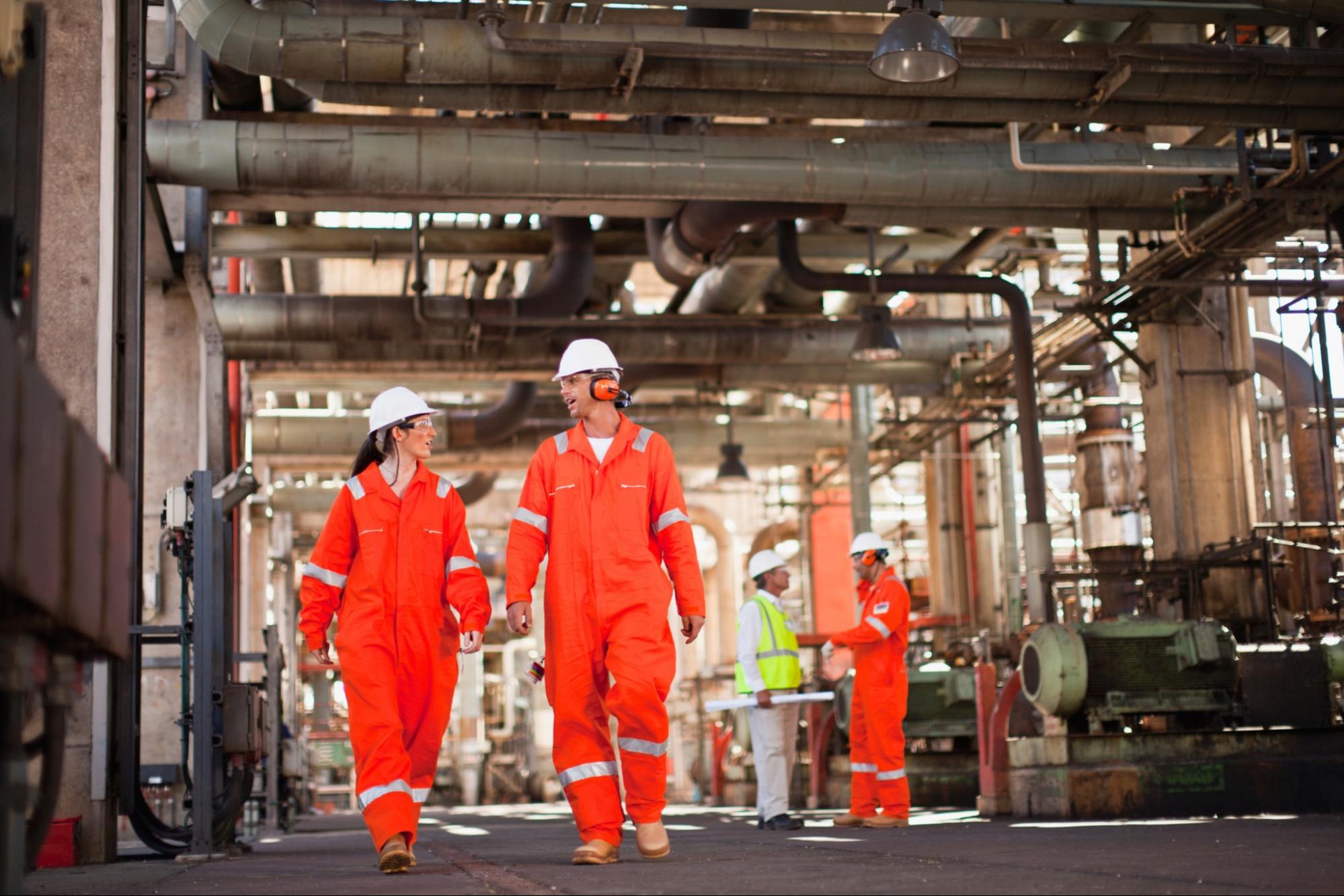
Pulling a live crude sample sounds like a routine field task, but when hydrogen sulfide is present, it becomes one of the higher-risk activities a field hand or technician can perform. H2S is colorless, heavier than air, and deadens the sense of smell at higher concentrations, which means the people most at risk often have the least warning. Before anyone opens a sample valve or cracks a bleeder on a wellhead with known or suspected H2S, the right PPE and monitoring equipment need to be in place, matched to the actual concentration expected.

Start With Monitoring, Not Just Gear
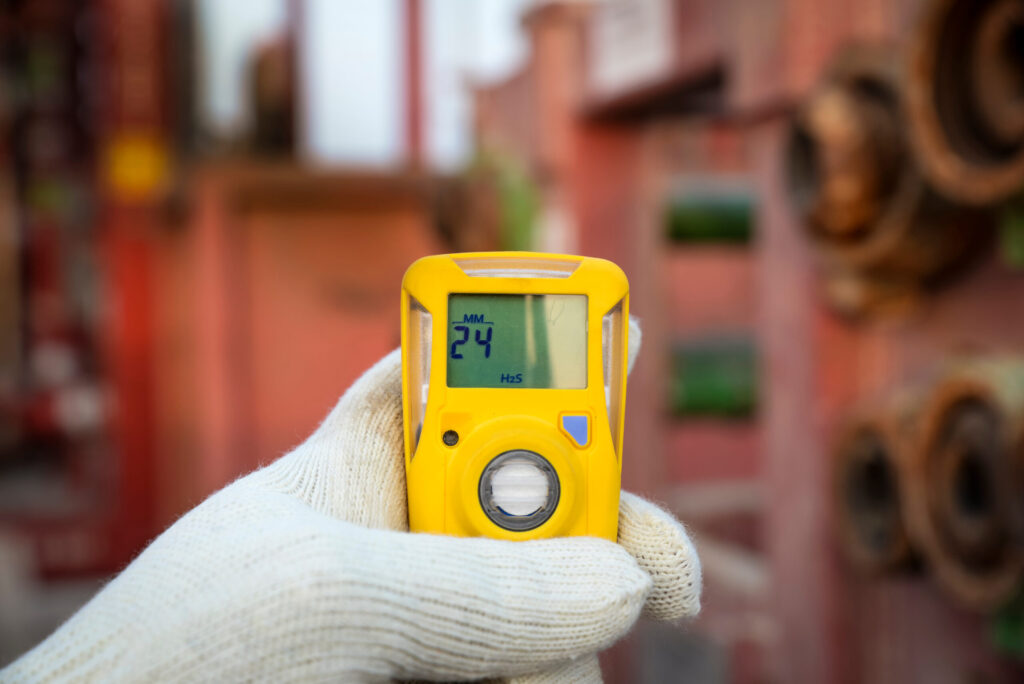
H2S Monitor

PPE selection depends entirely on knowing the H2S concentration at the sample point, so the first piece of “equipment” is a calibrated personal H2S monitor worn in the breathing zone, typically clipped near the collar or upper chest. OSHA and industry guidance both stress that personal monitors, not fixed area monitors alone, are the most reliable way to catch localized H2S exposure at a specific work location like a wellhead sample port. Before entering the location, bump-test the monitor to confirm the alarm functions and is loud enough to be heard over ambient noise. Never rely on smell to detect H2S. Olfactory fatigue can set in within minutes at concentrations around 100 ppm, silencing the body’s natural warning system exactly when the risk is highest.

Respiratory Protection: Matched to Concentration

Respiratory protection requirements scale directly with measured or anticipated H2S concentration:

Below 10 ppm: Engineering and administrative controls are generally sufficient, but a personal monitor should still be worn, and respiratory protection should be staged nearby if conditions could change.

10 ppm and above: A full-face, pressure-demand respirator is required at minimum. Below 100 ppm, this may be an air-purifying respirator fitted with an H2S-rated cartridge, provided the atmosphere is not oxygen-deficient.

100 ppm and above (IDLH range): Only a full-face, pressure-demand self-contained breathing apparatus (SCBA), or a combination full-face pressure-demand supplied-air respirator with an auxiliary self-contained escape air supply, is acceptable. At these concentrations, air-purifying cartridge respirators are not sufficient.

Facial hair that breaks the respirator seal, and glasses with temple bars that interfere with the mask seal, disqualify a worker from safely using a tight-fitting respirator in these conditions, so this needs to be checked before anyone is sent out to sample.

Other Required PPE
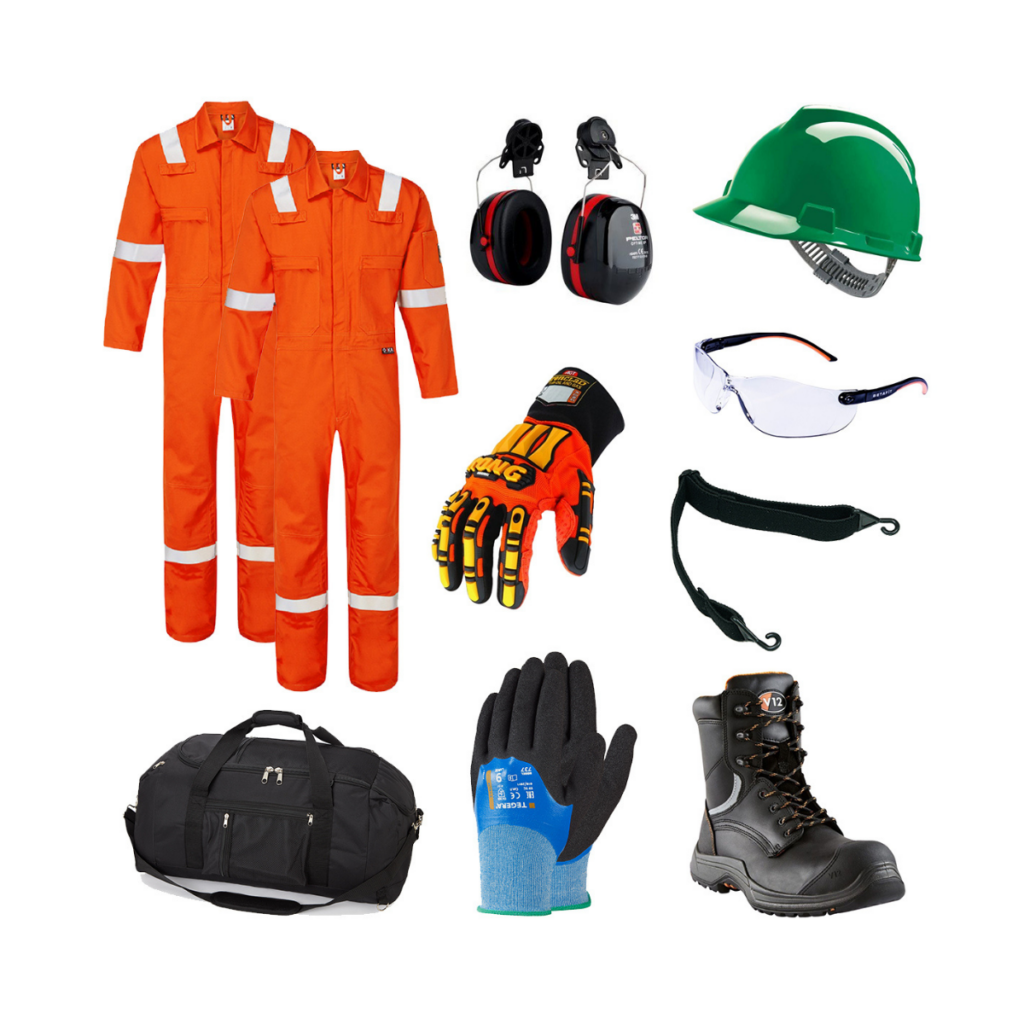
PPE kit

Beyond respiratory protection, a live crude sampling job with H2S present typically requires:

  • Flame-resistant (FR) clothing, since H2S environments frequently coincide with hydrocarbon and static ignition hazards.
  • Chemical splash goggles or a full face shield to protect against crude oil splash or spray during valve operation, in addition to whatever eye protection is built into the respirator.
  • Chemical-resistant gloves, typically nitrile, rated for hydrocarbon and sour service exposure, worn under any additional cut-resistant layer needed for valve or fitting work.
  • Steel-toed, chemical-resistant boots appropriate for a wellhead or well pad environment.
  • Hearing protection if the sample point is near compressors, engines, or other high-noise equipment.

Procedural Controls That Go Hand in Hand With PPE

PPE alone does not make live crude sampling with H2S present safe. It has to be paired with procedure:

  • Buddy system. No one should sample a known or suspected H2S location alone. A second trained person should be present, positioned upwind, with their own respiratory protection staged and ready.
  • Wind awareness. Confirm wind direction using a windsock or streamer before starting, and position yourself and your standby partner upwind of the sample point where practical.
  • Escape routes. Identify at least one, ideally two, clear escape paths before starting work, especially in low-lying areas where H2S can pool since it is heavier than air.
  • Standby rescue readiness. Never attempt to rescue an overcome coworker without first donning your own SCBA. Multiple documented fatalities in the industry have occurred when a would-be rescuer entered without protection and was overcome as well.
  • Bonding and grounding. Static discharge during sample transfer can ignite H2S or hydrocarbon vapors, so proper bonding between the sample container and the wellhead equipment is part of the job, not an optional step.
  • Sample containment equipment. Use a properly rated sample cylinder or “bomb” designed for sour service pressure and corrosion resistance, and follow closed-loop sampling procedures where available to minimize direct atmospheric exposure during the transfer.

Training Requirements

Anyone assigned to pull live crude samples where H2S may be present should hold current H2S safety training (often referred to as H2S Alive or an equivalent program depending on region) that includes hands-on SCBA donning and use, not just classroom awareness training. Annual refresher training is standard practice, and crews should periodically run emergency response drills specific to the sample locations they actually work, not a generic facility-wide drill.

The Bottom Line

Taking a live crude sample where H2S is present is not a task to approach with generic PPE. It requires a calibrated personal monitor, respiratory protection matched to actual measured concentration up to and including SCBA at IDLH levels, FR clothing, proper eye and hand protection, and a procedural framework built around the buddy system, wind awareness, and pre-identified escape routes. Skipping any one of these layers removes a safety margin that, in a sour service environment, may not leave room for a second chance.
Pulling a live crude sample sounds like a routine field task, but when hydrogen sulfide is present, it becomes one of the higher-risk activities a field hand or technician can perform. H2S is colorless, heavier than air, and deadens the sense of smell at higher concentrations, which means the people most at risk often have the least warning. Before anyone opens a sample valve or cracks a bleeder on a wellhead with known or suspected H2S, the right PPE and monitoring equipment need to be in place, matched to the actual concentration expected.

Start With Monitoring, Not Just Gear

H2S Monitor

PPE selection depends entirely on knowing the H2S concentration at the sample point, so the first piece of “equipment” is a calibrated personal H2S monitor worn in the breathing zone, typically clipped near the collar or upper chest. OSHA and industry guidance both stress that personal monitors, not fixed area monitors alone, are the most reliable way to catch localized H2S exposure at a specific work location like a wellhead sample port. Before entering the location, bump-test the monitor to confirm the alarm functions and is loud enough to be heard over ambient noise. Never rely on smell to detect H2S. Olfactory fatigue can set in within minutes at concentrations around 100 ppm, silencing the body’s natural warning system exactly when the risk is highest.

Respiratory Protection: Matched to Concentration

Respiratory protection requirements scale directly with measured or anticipated H2S concentration:

Below 10 ppm: Engineering and administrative controls are generally sufficient, but a personal monitor should still be worn, and respiratory protection should be staged nearby if conditions could change.

10 ppm and above: A full-face, pressure-demand respirator is required at minimum. Below 100 ppm, this may be an air-purifying respirator fitted with an H2S-rated cartridge, provided the atmosphere is not oxygen-deficient.

100 ppm and above (IDLH range): Only a full-face, pressure-demand self-contained breathing apparatus (SCBA), or a combination full-face pressure-demand supplied-air respirator with an auxiliary self-contained escape air supply, is acceptable. At these concentrations, air-purifying cartridge respirators are not sufficient.

Facial hair that breaks the respirator seal, and glasses with temple bars that interfere with the mask seal, disqualify a worker from safely using a tight-fitting respirator in these conditions, so this needs to be checked before anyone is sent out to sample.

Other Required PPE

PPE kit

Beyond respiratory protection, a live crude sampling job with H2S present typically requires:

  • Flame-resistant (FR) clothing, since H2S environments frequently coincide with hydrocarbon and static ignition hazards.
  • Chemical splash goggles or a full face shield to protect against crude oil splash or spray during valve operation, in addition to whatever eye protection is built into the respirator.
  • Chemical-resistant gloves, typically nitrile, rated for hydrocarbon and sour service exposure, worn under any additional cut-resistant layer needed for valve or fitting work.
  • Steel-toed, chemical-resistant boots appropriate for a wellhead or well pad environment.
  • Hearing protection if the sample point is near compressors, engines, or other high-noise equipment.

Procedural Controls That Go Hand in Hand With PPE

PPE alone does not make live crude sampling with H2S present safe. It has to be paired with procedure:

  • Buddy system. No one should sample a known or suspected H2S location alone. A second trained person should be present, positioned upwind, with their own respiratory protection staged and ready.
  • Wind awareness. Confirm wind direction using a windsock or streamer before starting, and position yourself and your standby partner upwind of the sample point where practical.
  • Escape routes. Identify at least one, ideally two, clear escape paths before starting work, especially in low-lying areas where H2S can pool since it is heavier than air.
  • Standby rescue readiness. Never attempt to rescue an overcome coworker without first donning your own SCBA. Multiple documented fatalities in the industry have occurred when a would-be rescuer entered without protection and was overcome as well.
  • Bonding and grounding. Static discharge during sample transfer can ignite H2S or hydrocarbon vapors, so proper bonding between the sample container and the wellhead equipment is part of the job, not an optional step.
  • Sample containment equipment. Use a properly rated sample cylinder or “bomb” designed for sour service pressure and corrosion resistance, and follow closed-loop sampling procedures where available to minimize direct atmospheric exposure during the transfer.

Training Requirements

Anyone assigned to pull live crude samples where H2S may be present should hold current H2S safety training (often referred to as H2S Alive or an equivalent program depending on region) that includes hands-on SCBA donning and use, not just classroom awareness training. Annual refresher training is standard practice, and crews should periodically run emergency response drills specific to the sample locations they actually work, not a generic facility-wide drill.

The Bottom Line

Taking a live crude sample where H2S is present is not a task to approach with generic PPE. It requires a calibrated personal monitor, respiratory protection matched to actual measured concentration up to and including SCBA at IDLH levels, FR clothing, proper eye and hand protection, and a procedural framework built around the buddy system, wind awareness, and pre-identified escape routes. Skipping any one of these layers removes a safety margin that, in a sour service environment, may not leave room for a second chance.

When introduced into a stream afflicted with H2S, the hemiformal decomposes to release formaldehyde, which then reacts with hydrogen sulfide to form stable, non-volatile byproducts such as thiomethylene glycol.  The reaction is typically fast and efficient, particularly in aqueous or mixed-phase environments. Unlike some traditional scavengers, hemiformal can maintain activity across a broad pH range and is less likely to generate problematic solids. When considering if hemiformal is the right product, certain operating conditions are reviewed, such as pH and temperature.

Heading 1

When introduced into a stream afflicted with H2S, the hemiformal decomposes to release formaldehyde, which then reacts with hydrogen sulfide to form stable, non-volatile byproducts such as thiomethylene glycol.  The reaction is typically fast and efficient, particularly in aqueous or mixed-phase environments. Unlike some traditional scavengers, hemiformal can maintain activity across a broad pH range and is less likely to generate problematic solids. When considering if hemiformal is the right product, certain operating conditions are reviewed, such as pH and temperature.

Heading 2

When introduced into a stream afflicted with H2S, the hemiformal decomposes to release formaldehyde, which then reacts with hydrogen sulfide to form stable, non-volatile byproducts such as thiomethylene glycol.  The reaction is typically fast and efficient, particularly in aqueous or mixed-phase environments. Unlike some traditional scavengers, hemiformal can maintain activity across a broad pH range and is less likely to generate problematic solids. When considering if hemiformal is the right product, certain operating conditions are reviewed, such as pH and temperature.

Heading 3

Heading 4

When introduced into a stream afflicted with H2S, the hemiformal decomposes to release formaldehyde, which then reacts with hydrogen sulfide to form stable, non-volatile byproducts such as thiomethylene glycol.  The reaction is typically fast and efficient, particularly in aqueous or mixed-phase environments. Unlike some traditional scavengers, hemiformal can maintain activity across a broad pH range and is less likely to generate problematic solids. When considering if hemiformal is the right product, certain operating conditions are reviewed, such as pH and temperature. 

Key Benefits:

  • Controlled formaldehyde release 
  • Lower vapor pressure and improved safety profile 
  • Broad applicability across liquid and gas-phase systems 
  • Reduced scaling in sour water stripping and other high-temp operations 
  • Hemiformal can make the scavenger safe for transport as it is a very stable compound 

Heading 5

Hemiformal is used in a variety of upstream and midstream applications, including: 

  • Gas sweetening systems 
  • Produced water treatment 
  • Crude oil storage and transport 
  • Sour water stripper overheads 
  • Temporary H2S mitigation during maintenance or turnaround

Its adaptability makes it especially useful in operations where system conditions fluctuate or where traditional triazine-based products may underperform. 

Heading 6

While hemiformal offers many advantages, it is not a one-size-fits-all solution. The rate of formaldehyde release can vary depending on formulation and environmental conditions. Additionally, while safer than raw formaldehyde, hemiformal must still be handled with care and appropriate PPE. 

For optimal results, formulation expertise and application-specific customization are key—something we at Q2 Technologies excel at delivering. 

Related Blogs

Wellhead Sampling Safety: What PPE Do You Need Around H2S?

A field safety breakdown of the personal protective equipment (PPE), monitoring equipment, and procedures needed before taking a live crude sample where hydrogen sulfide (H2S) may be present at the wellhead.

FAQs

  1. What concentration of H2S requires SCBA when sampling?

    At 100 ppm or above, which is generally treated as an IDLH atmosphere, only a full-face pressure-demand SCBA or a combination supplied-air respirator with an auxiliary self-contained escape supply is acceptable. Air-purifying cartridge respirators are not sufficient at this level.

  2. Can I rely on smell to detect H2S before sampling?

    No. H2S deadens the sense of smell at higher concentrations, sometimes within minutes, which means the odor can disappear even as exposure risk increases. A calibrated personal monitor should always be used instead of relying on odor.

  3. Is a buddy required when sampling a wellhead with known H2S?

    Yes. Industry and regulatory guidance consistently call for a second trained person to be present, positioned upwind with their own respiratory protection staged, whenever a worker is sampling a location with known or suspected H2S.

  4. What PPE is needed in addition to respiratory protection?

    Flame-resistant clothing, chemical splash goggles or a face shield, chemical-resistant gloves rated for sour hydrocarbon service, and steel-toed chemical-resistant boots are standard, along with hearing protection if near loud equipment.

  5. Why can't I rescue a coworker who has been overcome by H2S without my own SCBA?

    Entering an H2S atmosphere without respiratory protection puts the rescuer at the same risk as the person who was overcome, and industry incident records include multiple cases where untrained or unprotected rescue attempts resulted in a second casualty.

Related Articles