
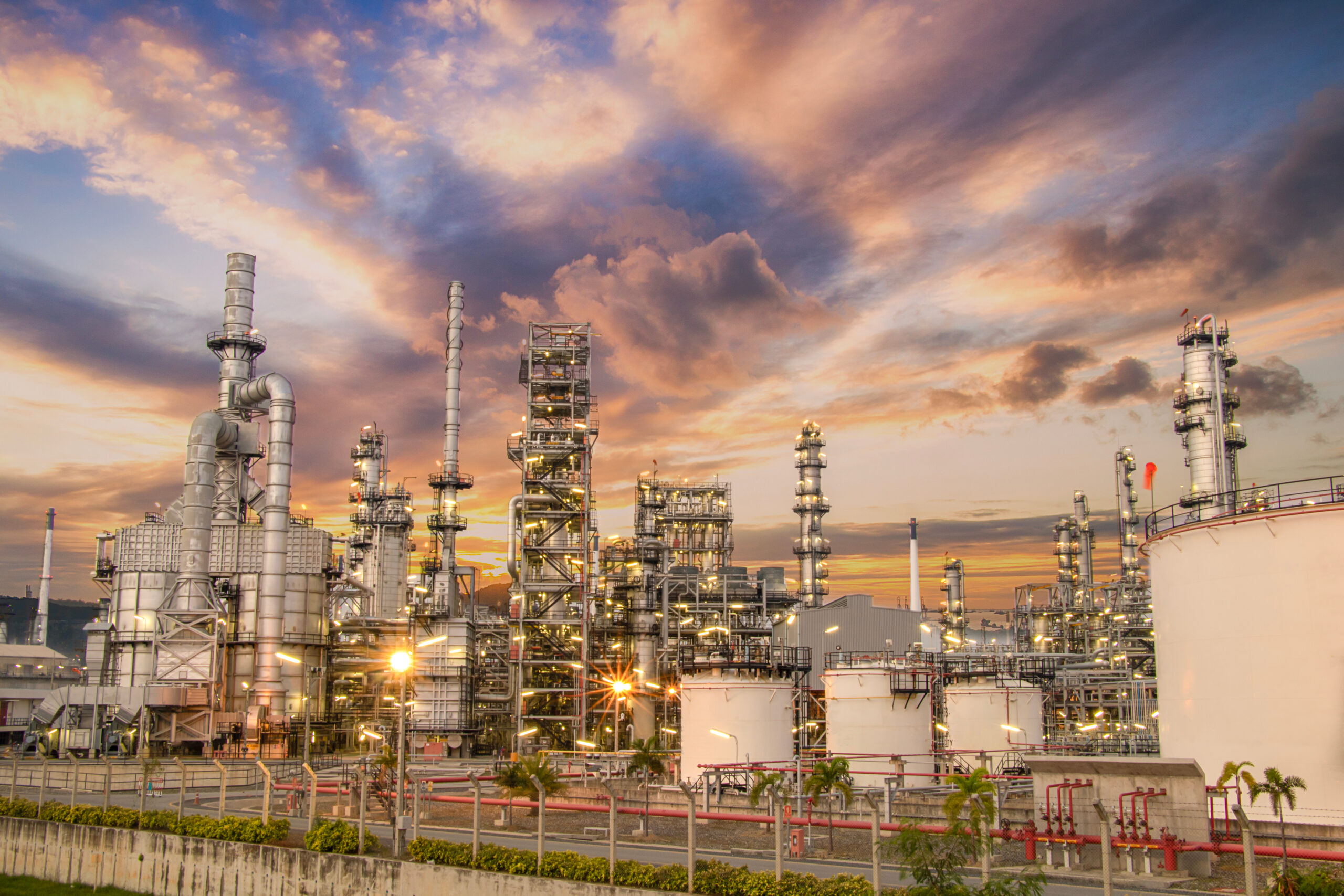
Refinery processing units and distillation towers where cracking operations produce olefins such as ethylene and propylene

Olefins in Hydrocarbon Processing: Valuable Product, Costly Contaminant?

What are olefins and why do refiners hydrogenate them? A practical guide to the molecules that drive margin in one place and cause fouling in another.

Olefins sit at a critical intersection in hydrocarbon processing. They are highly valuable when intentionally produced and highly problematic when they migrate into places they do not belong. For anyone operating across refining, petrochemicals, or midstream systems, a working understanding of olefins is foundational to both performance and reliability.


At their core, olefins, also called alkenes, are hydrocarbons that contain at least one carbon-carbon double bond. That double bond defines their behavior, introducing unsaturation, higher electron density, and a strong tendency to react. Compared with paraffins, which are relatively stable, olefins are active molecules that readily participate in chemical transformations. That reactivity is exactly what makes them both valuable and challenging.

Why Olefins Are Valuable

In petrochemical production, olefins are essential. Ethylene and propylene are the most common examples, and they serve as building blocks for plastics, resins, synthetic materials, and a wide range of industrial chemicals. Steam crackers and fluid catalytic cracking (FCC) units are designed specifically to generate these molecules because of their downstream value. As a plant manager at a Gulf Coast complex put it, ethylene and propylene drive the margin and everything else supports getting there.

Why Olefins Cause Problems

The same properties that make olefins valuable in controlled environments create challenges elsewhere. Because they are less stable than saturated hydrocarbons, olefins react when exposed to oxygen, heat, or simply time, and they do so in ways that degrade product quality. The main consequences operators watch for include:

  • Oxidation, gum formation, and deposit buildup that foul equipment
  • Polymerization during storage into heavier gums and varnishes
  • Reduced storage stability and shorter shelf life in finished products

Crude oil itself is generally free of olefins. Conventional crude is composed mainly of paraffins, naphthenes, and aromatics, and olefins do not persist over geologic time precisely because they are so reactive. Instead they are created during refining, particularly in cracking operations where larger molecules are broken into smaller fragments. Once formed, they must be managed deliberately.

The Olefin Balancing Act in Fuels

In gasoline blending, a controlled amount of olefins can raise octane, which is useful. Push the olefin content too high, though, and the fuel becomes unstable and its storage life shortens. As one refinery operations lead described the tradeoff, olefins can help hit octane targets but create headaches in storage and downstream handling if allowed to build up.


In diesel and jet fuel the calculus is different. Olefins are largely undesirable there because of their tendency to form deposits and degrade over time, so they are typically minimized or eliminated in finished-fuel specifications.

The Storage Problem in the Field

Olefins do not stay unchanged in a tank. Over time they can polymerize into heavier compounds, forming gums and varnishes that foul equipment and reduce flow efficiency. As a terminal manager observed, the impact may not show up immediately, but give olefins enough time in a tank and you start dealing with material that was never part of the original specification.

How Olefins Are Managed

In most refining operations the preferred way to handle olefins is hydrogenation. This process saturates the double bond, converting the olefin into a paraffin and yielding a more stable molecule that meets fuel specifications and resists degradation during storage and transport.

Other reaction pathways exist and play secondary roles. Oligomerization combines smaller olefins into larger molecules, which can be useful in certain upgrading processes but troublesome if it runs uncontrolled. Isomerization rearranges molecular structure, for instance shifting a double bond or branching the chain, changing the molecule’s properties without saturating it. In fuel-focused systems these pathways are generally secondary to hydrogenation, which remains the primary tool for turning a reactive olefin into a stable end-product component.

Olefins as Transitional Molecules

From an operational standpoint, olefins are best viewed as transitional molecules. They are highly effective intermediates but poor end-state components in most fuel systems, and their handling depends entirely on intent. In petrochemical operations the objective is to maximize and recover them. In refining and fuel production the objective is to control and convert them before they create downstream issues. As one plant manager summarized it, olefins are only a problem when they show up where they should not be; control where they go, and they become one of the most valuable tools in the system.


In practical terms, olefins are neither inherently good nor bad. Their value depends on where they sit in the process. Captured and converted intentionally, they drive significant economic value. Left unmanaged, they introduce instability, fouling, and long-term reliability concerns. The difference comes down to control, process design, and a clear understanding of their role in the system.

Key Take Aways

Olefins are unsaturated hydrocarbons whose carbon-carbon double bond makes them far more reactive than paraffins. That reactivity makes ethylene and propylene indispensable petrochemical feedstocks, but it also makes olefins a liability in fuels and storage, where they oxidize, form gums, and polymerize into deposits. They are absent from conventional crude and are created during cracking, after which refiners typically hydrogenate them into stable paraffins. Whether an olefin is an asset or a problem comes down to whether the process is designed to capture it or to convert it.

Frequently Asked Questions:

What are olefins?

Olefins, also called alkenes, are unsaturated hydrocarbons containing at least one carbon-carbon double bond. That double bond makes them more reactive than saturated hydrocarbons such as paraffins, which is why they are valuable as chemical feedstocks but troublesome in finished fuels.

Why are olefins not found in crude oil?

Conventional crude oil is made up mainly of paraffins, naphthenes, and aromatics. Olefins are too reactive to survive over geologic time, so they are essentially absent from crude and are instead created during refining, particularly in cracking operations that break larger molecules into smaller fragments.

Why are olefins a problem in fuels and storage?

Because olefins react readily with oxygen and heat, they degrade product quality over time. In storage they can polymerize into gums and varnishes that foul tanks and equipment and reduce flow efficiency, and they shorten the stability and shelf life of diesel and jet fuel, which is why those specifications minimize them.

How do refineries remove or control olefins?

The primary method is hydrogenation, which saturates the carbon-carbon double bond and converts the olefin into a stable paraffin that meets fuel specifications. Secondary pathways such as oligomerization and isomerization can also transform olefins, but hydrogenation is the standard route in fuel production.

Q2 Technologies

Q2 Technologies is a leader in H2S and mercaptan removal. We are experts in chemical engineering, production chemicals, and commercial structuring. We understand how the molecules move, react, and change in this dynamic framework. Knowledge of olefins is yet another example of how we articulate the complexity of this space to you. Reach out to us to learn more!
Olefins sit at a critical intersection in hydrocarbon processing. They are highly valuable when intentionally produced and highly problematic when they migrate into places they do not belong. For anyone operating across refining, petrochemicals, or midstream systems, a working understanding of olefins is foundational to both performance and reliability.


At their core, olefins, also called alkenes, are hydrocarbons that contain at least one carbon-carbon double bond. That double bond defines their behavior, introducing unsaturation, higher electron density, and a strong tendency to react. Compared with paraffins, which are relatively stable, olefins are active molecules that readily participate in chemical transformations. That reactivity is exactly what makes them both valuable and challenging.

Why Olefins Are Valuable

In petrochemical production, olefins are essential. Ethylene and propylene are the most common examples, and they serve as building blocks for plastics, resins, synthetic materials, and a wide range of industrial chemicals. Steam crackers and fluid catalytic cracking (FCC) units are designed specifically to generate these molecules because of their downstream value. As a plant manager at a Gulf Coast complex put it, ethylene and propylene drive the margin and everything else supports getting there.

Why Olefins Cause Problems

The same properties that make olefins valuable in controlled environments create challenges elsewhere. Because they are less stable than saturated hydrocarbons, olefins react when exposed to oxygen, heat, or simply time, and they do so in ways that degrade product quality. The main consequences operators watch for include:

  • Oxidation, gum formation, and deposit buildup that foul equipment
  • Polymerization during storage into heavier gums and varnishes
  • Reduced storage stability and shorter shelf life in finished products

Crude oil itself is generally free of olefins. Conventional crude is composed mainly of paraffins, naphthenes, and aromatics, and olefins do not persist over geologic time precisely because they are so reactive. Instead they are created during refining, particularly in cracking operations where larger molecules are broken into smaller fragments. Once formed, they must be managed deliberately.

The Olefin Balancing Act in Fuels

In gasoline blending, a controlled amount of olefins can raise octane, which is useful. Push the olefin content too high, though, and the fuel becomes unstable and its storage life shortens. As one refinery operations lead described the tradeoff, olefins can help hit octane targets but create headaches in storage and downstream handling if allowed to build up.


In diesel and jet fuel the calculus is different. Olefins are largely undesirable there because of their tendency to form deposits and degrade over time, so they are typically minimized or eliminated in finished-fuel specifications.

The Storage Problem in the Field

Olefins do not stay unchanged in a tank. Over time they can polymerize into heavier compounds, forming gums and varnishes that foul equipment and reduce flow efficiency. As a terminal manager observed, the impact may not show up immediately, but give olefins enough time in a tank and you start dealing with material that was never part of the original specification.

How Olefins Are Managed

In most refining operations the preferred way to handle olefins is hydrogenation. This process saturates the double bond, converting the olefin into a paraffin and yielding a more stable molecule that meets fuel specifications and resists degradation during storage and transport.

Other reaction pathways exist and play secondary roles. Oligomerization combines smaller olefins into larger molecules, which can be useful in certain upgrading processes but troublesome if it runs uncontrolled. Isomerization rearranges molecular structure, for instance shifting a double bond or branching the chain, changing the molecule’s properties without saturating it. In fuel-focused systems these pathways are generally secondary to hydrogenation, which remains the primary tool for turning a reactive olefin into a stable end-product component.

Olefins as Transitional Molecules

From an operational standpoint, olefins are best viewed as transitional molecules. They are highly effective intermediates but poor end-state components in most fuel systems, and their handling depends entirely on intent. In petrochemical operations the objective is to maximize and recover them. In refining and fuel production the objective is to control and convert them before they create downstream issues. As one plant manager summarized it, olefins are only a problem when they show up where they should not be; control where they go, and they become one of the most valuable tools in the system.


In practical terms, olefins are neither inherently good nor bad. Their value depends on where they sit in the process. Captured and converted intentionally, they drive significant economic value. Left unmanaged, they introduce instability, fouling, and long-term reliability concerns. The difference comes down to control, process design, and a clear understanding of their role in the system.

Key Take Aways

Olefins are unsaturated hydrocarbons whose carbon-carbon double bond makes them far more reactive than paraffins. That reactivity makes ethylene and propylene indispensable petrochemical feedstocks, but it also makes olefins a liability in fuels and storage, where they oxidize, form gums, and polymerize into deposits. They are absent from conventional crude and are created during cracking, after which refiners typically hydrogenate them into stable paraffins. Whether an olefin is an asset or a problem comes down to whether the process is designed to capture it or to convert it.

Frequently Asked Questions:

What are olefins?

Olefins, also called alkenes, are unsaturated hydrocarbons containing at least one carbon-carbon double bond. That double bond makes them more reactive than saturated hydrocarbons such as paraffins, which is why they are valuable as chemical feedstocks but troublesome in finished fuels.

Why are olefins not found in crude oil?

Conventional crude oil is made up mainly of paraffins, naphthenes, and aromatics. Olefins are too reactive to survive over geologic time, so they are essentially absent from crude and are instead created during refining, particularly in cracking operations that break larger molecules into smaller fragments.

Why are olefins a problem in fuels and storage?

Because olefins react readily with oxygen and heat, they degrade product quality over time. In storage they can polymerize into gums and varnishes that foul tanks and equipment and reduce flow efficiency, and they shorten the stability and shelf life of diesel and jet fuel, which is why those specifications minimize them.

How do refineries remove or control olefins?

The primary method is hydrogenation, which saturates the carbon-carbon double bond and converts the olefin into a stable paraffin that meets fuel specifications. Secondary pathways such as oligomerization and isomerization can also transform olefins, but hydrogenation is the standard route in fuel production.

Q2 Technologies

Q2 Technologies is a leader in H2S and mercaptan removal. We are experts in chemical engineering, production chemicals, and commercial structuring. We understand how the molecules move, react, and change in this dynamic framework. Knowledge of olefins is yet another example of how we articulate the complexity of this space to you. Reach out to us to learn more!
When introduced into a stream afflicted with H2S, the hemiformal decomposes to release formaldehyde, which then reacts with hydrogen sulfide to form stable, non-volatile byproducts such as thiomethylene glycol.  The reaction is typically fast and efficient, particularly in aqueous or mixed-phase environments. Unlike some traditional scavengers, hemiformal can maintain activity across a broad pH range and is less likely to generate problematic solids. When considering if hemiformal is the right product, certain operating conditions are reviewed, such as pH and temperature.

Heading 1

When introduced into a stream afflicted with H2S, the hemiformal decomposes to release formaldehyde, which then reacts with hydrogen sulfide to form stable, non-volatile byproducts such as thiomethylene glycol.  The reaction is typically fast and efficient, particularly in aqueous or mixed-phase environments. Unlike some traditional scavengers, hemiformal can maintain activity across a broad pH range and is less likely to generate problematic solids. When considering if hemiformal is the right product, certain operating conditions are reviewed, such as pH and temperature.

Heading 2

When introduced into a stream afflicted with H2S, the hemiformal decomposes to release formaldehyde, which then reacts with hydrogen sulfide to form stable, non-volatile byproducts such as thiomethylene glycol.  The reaction is typically fast and efficient, particularly in aqueous or mixed-phase environments. Unlike some traditional scavengers, hemiformal can maintain activity across a broad pH range and is less likely to generate problematic solids. When considering if hemiformal is the right product, certain operating conditions are reviewed, such as pH and temperature.

Heading 3

Heading 4

When introduced into a stream afflicted with H2S, the hemiformal decomposes to release formaldehyde, which then reacts with hydrogen sulfide to form stable, non-volatile byproducts such as thiomethylene glycol.  The reaction is typically fast and efficient, particularly in aqueous or mixed-phase environments. Unlike some traditional scavengers, hemiformal can maintain activity across a broad pH range and is less likely to generate problematic solids. When considering if hemiformal is the right product, certain operating conditions are reviewed, such as pH and temperature. 

Key Benefits:

  • Controlled formaldehyde release 
  • Lower vapor pressure and improved safety profile 
  • Broad applicability across liquid and gas-phase systems 
  • Reduced scaling in sour water stripping and other high-temp operations 
  • Hemiformal can make the scavenger safe for transport as it is a very stable compound 

Heading 5

Hemiformal is used in a variety of upstream and midstream applications, including: 

  • Gas sweetening systems 
  • Produced water treatment 
  • Crude oil storage and transport 
  • Sour water stripper overheads 
  • Temporary H2S mitigation during maintenance or turnaround

Its adaptability makes it especially useful in operations where system conditions fluctuate or where traditional triazine-based products may underperform. 

Heading 6

While hemiformal offers many advantages, it is not a one-size-fits-all solution. The rate of formaldehyde release can vary depending on formulation and environmental conditions. Additionally, while safer than raw formaldehyde, hemiformal must still be handled with care and appropriate PPE. 

For optimal results, formulation expertise and application-specific customization are key—something we at Q2 Technologies excel at delivering. 

In this Blog

Related Blogs

What Are Olefins? Why They Drive Petrochemical Margin and Foul Fuel Systems

Olefins occupy a peculiar place in hydrocarbon processing: the same molecule that drives petrochemical margin can quietly destroy fuel quality a few process steps away. Also called alkenes, olefins are unsaturated hydrocarbons defined by at least one carbon-carbon double bond, and that double bond is the source of everything that makes them both useful and difficult. It gives them higher electron density and a strong tendency to react, setting them apart from the relatively stable paraffins that dominate finished fuels.

This article walks through both sides of that reactivity. On the value side, ethylene and propylene are the foundational building blocks for plastics, resins, and synthetic materials, which is why steam crackers and FCC units are built specifically to produce them. On the problem side, olefins oxidize, form gums, and polymerize into varnishes and deposits during storage, shortening shelf life and fouling tanks and equipment. The piece explains why olefins are essentially absent from conventional crude, how cracking operations create them, and why a controlled amount can boost gasoline octane while excess content undermines stability in diesel and jet fuel.

It also covers how refiners manage olefins, centering on hydrogenation as the primary route for saturating the double bond into a stable paraffin, with oligomerization and isomerization as secondary pathways. Throughout, field-level operator perspectives reinforce the central theme: olefins are transitional molecules, excellent intermediates but poor end-state components, and whether they act as an asset or a liability comes down entirely to control, process design, and intent.

FAQs

  1. What are olefins?

    Olefins, also called alkenes, are unsaturated hydrocarbons containing at least one carbon-carbon double bond. That double bond makes them more reactive than saturated hydrocarbons such as paraffins, which is why they are valuable as chemical feedstocks but troublesome in finished fuels.

  2. Why are olefins not found in crude oil?

    Conventional crude oil is made up mainly of paraffins, naphthenes, and aromatics. Olefins are too reactive to survive over geologic time, so they are essentially absent from crude and are instead created during refining, particularly in cracking operations that break larger molecules into smaller fragments.

  3. Why are olefins a problem in fuels and storage?

    Because olefins react readily with oxygen and heat, they degrade product quality over time. In storage they can polymerize into gums and varnishes that foul tanks and equipment and reduce flow efficiency, and they shorten the stability and shelf life of diesel and jet fuel, which is why those specifications minimize them.

  4. How do refineries remove or control olefins?

    The primary method is hydrogenation, which saturates the carbon-carbon double bond and converts the olefin into a stable paraffin that meets fuel specifications. Secondary pathways such as oligomerization and isomerization can also transform olefins, but hydrogenation is the standard route in fuel production.

Related Articles