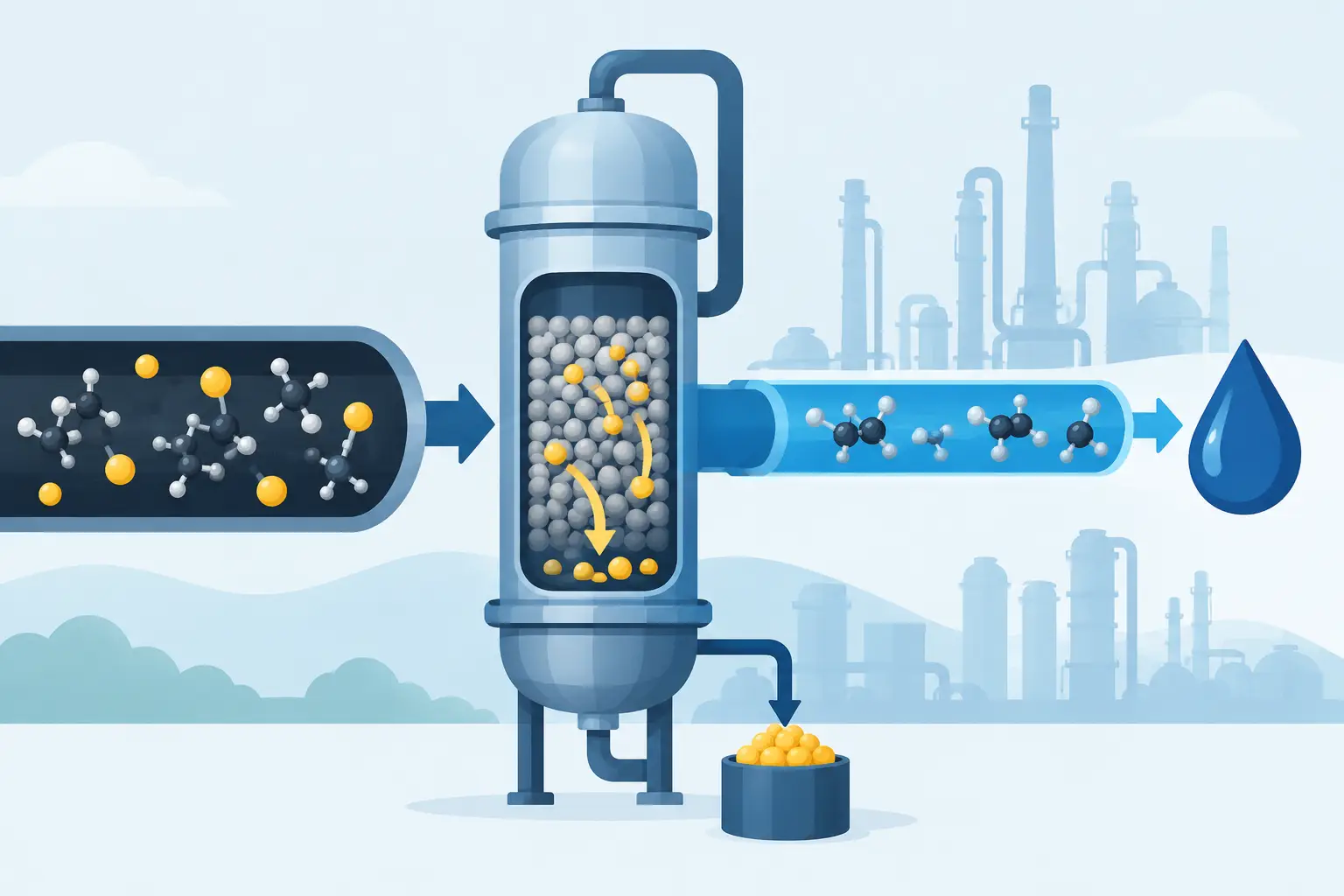


Hydrogen sulfide (H2S) is one of the most dangerous hazards in oil and gas operations. It is colorless, highly toxic, and capable of causing rapid incapacitation at relatively low concentrations. In crude oil systems, H2S can be present in dissolved form, released during pressure changes, or accumulate in confined spaces.
Understanding H2S Exposure Levels and Human Effects
Hydrogen sulfide exposure can escalate from mild irritation to fatal collapse within seconds depending on concentration and duration. One of the greatest dangers is that H2S quickly deadens the sense of smell, meaning workers cannot rely on odor detection once concentrations increase.
Examples of physiological effects by concentration include:

Sources: OSHA, NIOSH, CDC, ATSDR, and industrial H2S safety references.
The loss of smell at higher concentrations is particularly dangerous. Many workers mistakenly believe the gas has dissipated once they no loSnger detect the rotten egg odor. In reality, the olfactory nerve becomes paralyzed at elevated concentrations, removing the body’s natural warning system.
Because of this, fixed monitoring systems, portable H2S detectors, ventilation controls, and proactive treatment programs are critical in sour crude operations. In many cases, controlling H2S at the source provides the greatest reduction in exposure risk for field personnel, truck drivers, terminal operators, and maintenance crews.
“The danger of H2S is not how much is there. The danger is how little it takes.”
Compounding Factors
The danger is compounded by its physical properties. H2S is heavier than air, allowing it to settle in low areas such as tank bottoms, pits, and confined spaces. It also deadens the sense of smell at higher concentrations, eliminating the warning provided by its characteristic odor.
Exposure risks are present across the entire crude oil value chain. From wellheads and tank batteries to midstream storage and refining, hydrogen sulfide can be released during routine operations, maintenance activities, and upset conditions.
Primary safety concerns include:
- Acute toxicity leading to respiratory failure
- Rapid loss of consciousness at elevated concentrations
- Accumulation in confined or low-lying areas
- Increased exposure during maintenance and tank entry
In crude oil storage, vapor space H2S is a major concern. Temperature changes, agitation, and product movement can release dissolved hydrogen sulfide into the vapor phase. This creates hazardous conditions during tank gauging, sampling, thief hatch operations, and maintenance activities.
Mercaptans, while generally less toxic than hydrogen sulfide, contribute to overall sulfur exposure and indicate the presence of broader sour crude conditions. Their presence often correlates with elevated H2S risk, although mercaptans are not necessarily present in every system containing hydrogen sulfide.
Effective safety management requires a structured approach that combines monitoring, operational discipline, and proactive chemical treatment:
- Continuous monitoring using fixed and portable H2S detectors
- Proper ventilation and vapor control in storage systems
- Strict confined space entry procedures
- Training personnel to recognize and respond to exposure risks
- Treatment programs designed to reduce H2S at the source

A Trusted Partnership: Q2 Technologies
Q2 Technologies supports operators and midstream companies by addressing H2S at the source or at the earliest stage possible. Reducing hydrogen sulfide levels in crude oil directly lowers vapor phase risk and improves overall safety conditions. Treatment programs designed for crude oil applications help minimize exposure during handling, storage, transportation, and custody transfer operations.
Operational teams across the industry recognize that reducing H2S is not only a compliance issue but also a workforce protection initiative. One production engineer working in a sour crude asset described the operational impact of partnering with Q2:
“Working with Q2 has been one of the best decisions we’ve made for our asset and operations team. Their programs helped us reduce vapor phase H2S concerns while improving consistency across our treating operations. The Q2 team understands field operations, responds quickly, and works alongside our people to solve problems before they become safety incidents.”
This operational alignment is critical in environments where production targets, transportation requirements, and worker safety must all be balanced simultaneously. Treatment programs that stabilize sulfur conditions upstream can significantly reduce downstream operational risks for drivers, terminal personnel, gaugers, and maintenance crews.
Safety is not achieved through detection alone. It is achieved by controlling the hazard before it reaches the worker. In sour crude systems, that begins with effective H2S management.
Deep Industry Knowledge Matters
Q2 Technologies has built a reputation across the oil and gas industry as a trusted partner for managing H2S and mercaptan challenges in crude oil systems. From upstream production to midstream transportation and storage, Q2 brings deep technical knowledge and field experience to some of the industry’s most demanding sulfur-related applications.
Operators, midstream companies, and crude marketers rely on Q2 because the company understands both the chemistry and the operational realities of handling sour hydrocarbons safely and efficiently. Whether addressing vapor phase H2S concerns, improving crude quality, reducing transportation risk, or supporting regulatory compliance, Q2 delivers practical solutions backed by real-world experience.
For companies managing H2S and mercaptans every day, experience matters. Q2 Technologies continues to be a trusted name for producers, midstream operators, terminals, and others across the energy industry who require reliable sulfur management programs and operational support.
Let's Start a Conversation...
If you want to learn more about H2S removal or other innovative H2S removal solutions from a variety of streams including crude oil, natural gas, other hydrocarbon liquids, or produced water, we would welcome the opportunity to speak to you about your asset or application. Click here to reach out to us.
Crude oil storage tanks present unique challenges for H2S management, including vapor space accumulation that can pose safety risks to personnel and communities near tank batteries. Q2 Technologies offers proprietary vapor-phase and liquid-phase scavenger chemistries designed to address both concerns. This comprehensive approach reflects the company’s leadership in sour crude oil safety and treatment. Visit Q2Technologies.com to learn more about our tank battery H2S treatment solutions.