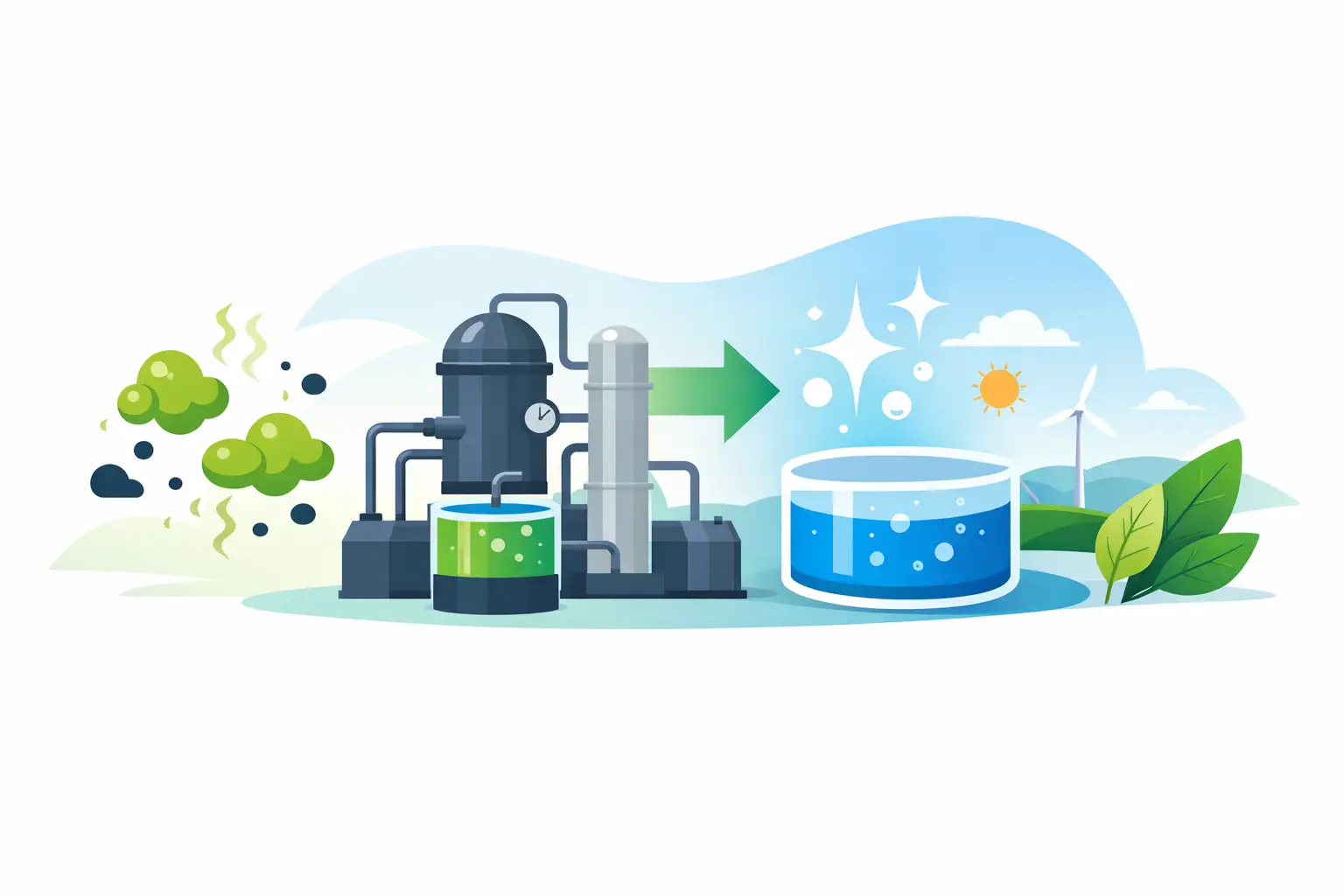


An H2S incident rarely starts with a dramatic failure. More often, it begins with a reading that gets dismissed, a treatment rate that drifts out of range, a monitor bump test that gets skipped, or a confined area that behaves differently than expected. If you want to prevent H2S exposure incidents, the work starts well before an alarm sounds.
Hydrogen sulfide is unforgiving because it combines toxicity, corrosivity, and operational variability in one hazard. Concentrations can shift quickly with changes in flow, temperature, pressure, pH, liquid loading, or process upset conditions. A site can run without trouble for weeks and still develop a serious exposure risk during startup, maintenance, tank opening, pigging, drainage, wastewater handling, or chemical changeout. That is why prevention has to be treated as a system, not a single safeguard.
Prevent H2S Exposure Incidents by Controlling the Whole System
The most reliable way to reduce exposure risk is to control H2S at the source while maintaining multiple independent layers of protection around people and equipment. In practice, that means process treatment, real-time detection, ventilation, operating discipline, and field response all need to work together.
Too many programs lean heavily on personal monitors and PPE as the main defense. Those tools matter, but they are the last line, not the first. If a facility is routinely depending on worker alarms to reveal treatment failure or vapor release, the prevention strategy is already too reactive. A stronger approach is to reduce H2S formation, release, and accumulation before personnel enter the picture.
In oil and gas, that can mean maintaining effective scavenger performance in sour gas and liquids, preventing underdosing during flow swings, and tracking iron sulfide or solids conditions that may contribute to downstream problems. In wastewater, landfill gas, and biogas systems, it often means managing variable sulfur loading, retention time, biological activity, and odor-control points so the hazard does not migrate from one part of the system to another. The details vary by application, but the principle is consistent – exposure prevention starts with process control.
Start With a Realistic Hazard Assessment
A generic H2S plan is not enough for a site with changing process conditions. The hazard assessment should identify where H2S is generated, where it is carried, where it can accumulate, and where workers can unexpectedly intersect with it. That includes obvious locations such as separators, tanks, pits, sumps, vapor spaces, and wastewater structures, but also transfer points, drain systems, sample stations, pig receivers, and maintenance access areas.
The strongest assessments account for task-based exposure potential, not just equipment-based risk. A tank battery may appear stable during normal operation, yet gauge hatching, thief hatches, vacuum truck activity, and line breaking can create very different release conditions. The same is true in treatment plants where enclosed spaces, wet wells, and headworks can behave differently during cleaning, bypass events, or storm surges.
This is also where trade-offs need to be acknowledged. Conservative hazard zoning improves safety, but if every area is treated as equally hazardous, personnel can become desensitized to alarms and controls. The better approach is to map realistic risk levels and update them when chemistry, throughput, equipment configuration, or operating practices change.
Source Control Matters More Than Most Programs Admit
The best way to prevent H2S exposure incidents is to keep less H2S available to release in the first place. That makes treatment chemistry and injection performance core safety functions, not just production or compliance tools.
A common mistake is viewing scavenger application strictly through cost per gallon. In reality, poor treatment consistency can increase total cost by creating odor complaints, corrosion, off-spec product, and worker exposure risk at the same time. Underdosing during peak sulfur loading, poor contact efficiency, incompatible injection points, or delayed chemical deliveries can all create windows where H2S breaks through.
Effective source control requires matching chemistry to the stream, contaminant load, and operating objective. Gas streams, liquid hydrocarbons, produced water, and wastewater all behave differently. Residence time, mixing, temperature, and competing contaminants can significantly affect treatment performance. The cheapest chemistry on paper is rarely the lowest-cost answer if it drives breakthrough, overfeed, or unstable field performance.
This is where technical support matters. A treatment program should be evaluated against actual site conditions, not a standard dose chart. Monitoring sulfur load, checking field response, optimizing injection rates, and verifying logistics reliability can reduce both exposure risk and chemical waste. Q2 Technologies approaches sulfur treatment this way because field execution is usually where prevention programs either hold or fail.
Detection and Monitoring Need Discipline
Even strong source control does not eliminate the need for detection. Fixed monitors, portable gas detectors, and area alarms provide critical visibility, but only when they are placed correctly, maintained properly, and interpreted by trained personnel.
Portable monitors should be bump tested and calibrated on schedule. That sounds basic, yet skipped checks remain one of the most common weak points in the field. A monitor clipped to a worker’s shirt is only useful if the sensor is functioning, the alarm thresholds are appropriate, and the worker knows what action to take when it alarms.
Fixed detection also needs thoughtful placement. H2S behavior depends on air movement, enclosure, release point, and local geometry. A monitor installed for convenience rather than exposure relevance can create false confidence. Detector locations should be reviewed whenever process equipment is moved, structures are modified, or ventilation patterns change.
Trend data adds another layer of value. If readings are increasing gradually in a specific area, that can indicate treatment drift, seal degradation, venting problems, or process changes before a major event develops. Monitoring should support intervention, not just incident documentation.
Ventilation, Isolation, and Work Practices Close the Gap
Where H2S can accumulate, ventilation is a primary control. Natural ventilation may be enough in some outdoor settings, but enclosed and partially enclosed areas often require forced air movement designed around the actual release and occupancy scenario. The goal is not just dilution. It is preventing pockets, dead zones, and migration into work areas.
Isolation practices are just as important. Before opening equipment, draining lines, entering confined spaces, or starting maintenance, operators need a clear process for depressurization, purging, gas testing, and authorization. Many serious exposure events happen during non-routine work because the process is in transition and the hazard profile changes faster than the crew expects.
There is an operational balance here. More steps can slow maintenance and create pressure to shortcut the procedure, especially during outages or production demands. That is why the procedure has to be practical enough to use in real field conditions. Good prevention programs are built for the way crews actually work, not the way paperwork imagines they work.
Training Should Be Scenario-Based, Not Generic
Most industrial personnel know H2S is dangerous. That basic awareness is not the same as readiness. Effective training connects site-specific hazards to recognizable field situations such as monitor alarms during unloading, vapor release during tank access, changing wind conditions around a separator, or an upset at a wastewater structure.
Crews should know the exposure signs, alarm responses, evacuation routes, muster expectations, and rescue limitations. They should also understand where judgment fails people. H2S can impair decision-making quickly, and odor is not a reliable indicator, especially at hazardous concentrations. If training does not address that reality, it leaves too much to instinct under stress.
Contractor alignment is another point that often gets missed. A site may have solid internal procedures, but temporary crews, transport personnel, and third-party maintenance teams may operate with different assumptions. Prevention is only as strong as the least prepared person working near the hazard.
Build Prevention Around Change, Not Steady State
Steady-state operations are only part of the risk picture. Startups, shutdowns, upset conditions, weather changes, flow swings, and delayed chemical replenishment can all shift H2S behavior quickly. A prevention plan should define what gets reviewed when operating conditions move outside normal range.
That can include checking treatment rates after throughput changes, verifying monitor coverage after equipment relocation, reassessing confined space conditions during seasonal ventilation shifts, or increasing field sampling when sulfur loading trends upward. The exact triggers depend on the site, but the discipline is the same – changes in process conditions should trigger changes in protection.
Facilities that consistently avoid incidents tend to be the ones that treat H2S prevention as an operating process rather than a safety binder. They watch the chemistry, the equipment, the monitors, and the work practices together. They do not wait for a near miss to reveal where the gaps are.
Preventing exposure is rarely about one dramatic improvement. It usually comes from tightening small points of failure before they line up. When treatment is stable, monitoring is credible, crews are prepared, and field execution is consistent, the risk profile changes for the better long before anyone sees an alarm.