


A refinery can meet its sulfur specification on paper and still carry significant operational risk. A changing crude slate, unstable sour-water load, sulfur-recovery upset, or mercaptan breakthrough can quickly create corrosion exposure, off-spec product, odor concerns, and lost throughput. The best refinery sulfur treatment options are therefore not a single technology choice. They are a treatment strategy matched to contaminant type, stream conditions, sulfur loading, recovery requirements, and the practical limits of the existing unit.
For refinery teams, the right question is not simply, “What removes sulfur?” It is whether a treatment program delivers predictable outlet quality without shifting cost, risk, or maintenance burden to another part of the operation.
Start With the Sulfur Species and Stream
Refineries manage several sulfur challenges that behave very differently in treatment. Hydrogen sulfide is toxic, corrosive in wet service, and commonly routed through amine treating and sulfur recovery systems. Mercaptans can create odor, corrosion, and product-quality issues even at low concentrations. Carbonyl sulfide, carbon disulfide, sulfides, and polysulfides may also affect gas processing, hydrocarbon product quality, catalyst performance, or downstream emissions.
The stream matters as much as the contaminant. A high-pressure refinery fuel-gas stream calls for a different approach than a low-volume vent, a tank headspace, sour water, LPG, naphtha, or diesel blendstock. Temperature, pressure, water content, hydrocarbon composition, pH, oxygen availability, and residence time all influence treatment results.
Before selecting chemistry or equipment, characterize the inlet concentration range, flow variability, required outlet specification, and consequences of a temporary breakthrough. This assessment should include normal operation, start-up, shutdown, tank turnover, unit upsets, and crude changes. Designing only around an average H2S reading often produces a treatment system that underperforms when the refinery needs it most.
Best Refinery Sulfur Treatment Options by Application
Amine Treating for Continuous Acid-Gas Removal
Amine systems remain the primary choice for continuous, high-volume removal of H2S and, where required, carbon dioxide from refinery gas streams. Properly selected and operated, an amine contactor and regeneration system can provide dependable bulk acid-gas removal while sending concentrated acid gas to sulfur recovery.
This option is best suited to stable, substantial gas volumes where sulfur recovery infrastructure exists or can be justified. Its economics improve with scale, but performance depends on solvent health, circulation rate, heat balance, filtration, foaming control, corrosion management, and reliable regeneration.
Amine treating is not a cure-all. Hydrocarbon carryover, oxygen ingress, heat-stable salts, suspended solids, and poor feed separation can degrade solvent performance and increase corrosion or foaming risk. When acid-gas loading changes sharply, the apparent issue may be the amine unit, but the root cause can be upstream liquid carryover or inadequate inlet conditioning.
Claus Sulfur Recovery and Tail-Gas Treatment
For refineries processing material acid-gas volumes, the Claus process is the standard route for converting H2S into elemental sulfur. It supports sulfur recovery rather than simply transferring sulfur to a spent medium, making it central to large refinery sulfur-management programs.
A conventional Claus unit alone may not achieve the sulfur recovery needed for modern emissions limits or site targets. Tail-gas treatment units, followed by incineration or other final-control steps, are commonly used to raise overall recovery and reduce sulfur dioxide emissions. The exact configuration depends on acid-gas composition, ammonia content, turndown requirements, catalyst condition, and emissions obligations.
The trade-off is capital and operating complexity. Claus and tail-gas systems require disciplined combustion control, catalyst management, analyzer reliability, and maintenance planning. They are the right answer for large, continuous sulfur loads, but not necessarily for intermittent sources or isolated low-volume streams.
Hydroprocessing for Sulfur in Liquid Products
Hydrotreating and hydrodesulfurization remove sulfur compounds from refinery liquid streams by converting them, typically to H2S, under hydrogen and catalyst. The resulting H2S is then handled through the refinery gas and sulfur-recovery network.
This is the primary path for producing low-sulfur transportation fuels and upgrading intermediate streams. It is effective across many sulfur species, but severity requirements rise as feedstocks become heavier or more refractory and final sulfur specifications tighten. Higher severity can increase hydrogen consumption, catalyst deactivation risk, utility demand, and capital requirements.
For product sulfur control, the treatment decision should consider the entire refinery hydrogen and acid-gas balance. A hydrotreater may reduce sulfur in the product pool while increasing the load on amine, sour-water stripping, and sulfur-recovery assets. Those downstream constraints can determine the true economic limit of additional hydroprocessing.
Caustic and Catalytic Sweetening for Mercaptans
Mercaptan treatment is often a different problem from bulk H2S removal. Depending on the stream, caustic extraction, catalytic sweetening, or related oxidation processes may be used to reduce mercaptan content or convert objectionable mercaptans into disulfides.
These approaches can be highly effective in LPG, light hydrocarbon, and selected liquid-product applications. Selection depends on whether the goal is extraction, conversion, odor reduction, corrosion control, or final product specification. Treatment performance must be measured against the actual mercaptan species present, because not all mercaptans respond equally under the same operating conditions.
Caustic systems also create a spent-caustic management obligation. Poor phase separation, emulsion formation, oxidizer imbalance, and inadequate circulation can reduce performance and create downstream handling issues. A lower chemical price does not automatically equal lower total cost when waste treatment, safety controls, and operational attention are included.
Chemical Scavengers for Targeted or Variable Loads
Liquid scavengers provide a practical option for H2S and, in certain applications, mercaptan treatment where installing or expanding a major process unit is not justified. They are especially useful for intermittent streams, low-to-moderate flow rates, temporary treatment needs, upset protection, tank vapors, fuel gas, and locations where rapid deployment matters.
Scavenger selection should be based on reaction rate, capacity, phase compatibility, temperature, contact time, solids formation, byproduct handling, and required outlet concentration. A product that performs well in a water-rich stream may be a poor fit for a dry gas or hydrocarbon-dominant service. Injection location and mixing are often as important as the chemistry itself.
For refinery applications, treatment optimization should focus on cost per pound of sulfur removed, not only price per gallon of chemical. Underfeeding invites breakthrough. Overfeeding raises chemical spend, can create unwanted byproducts, and may complicate downstream separation or disposal. Field testing, injection optimization, and real-time monitoring can reduce both risks.
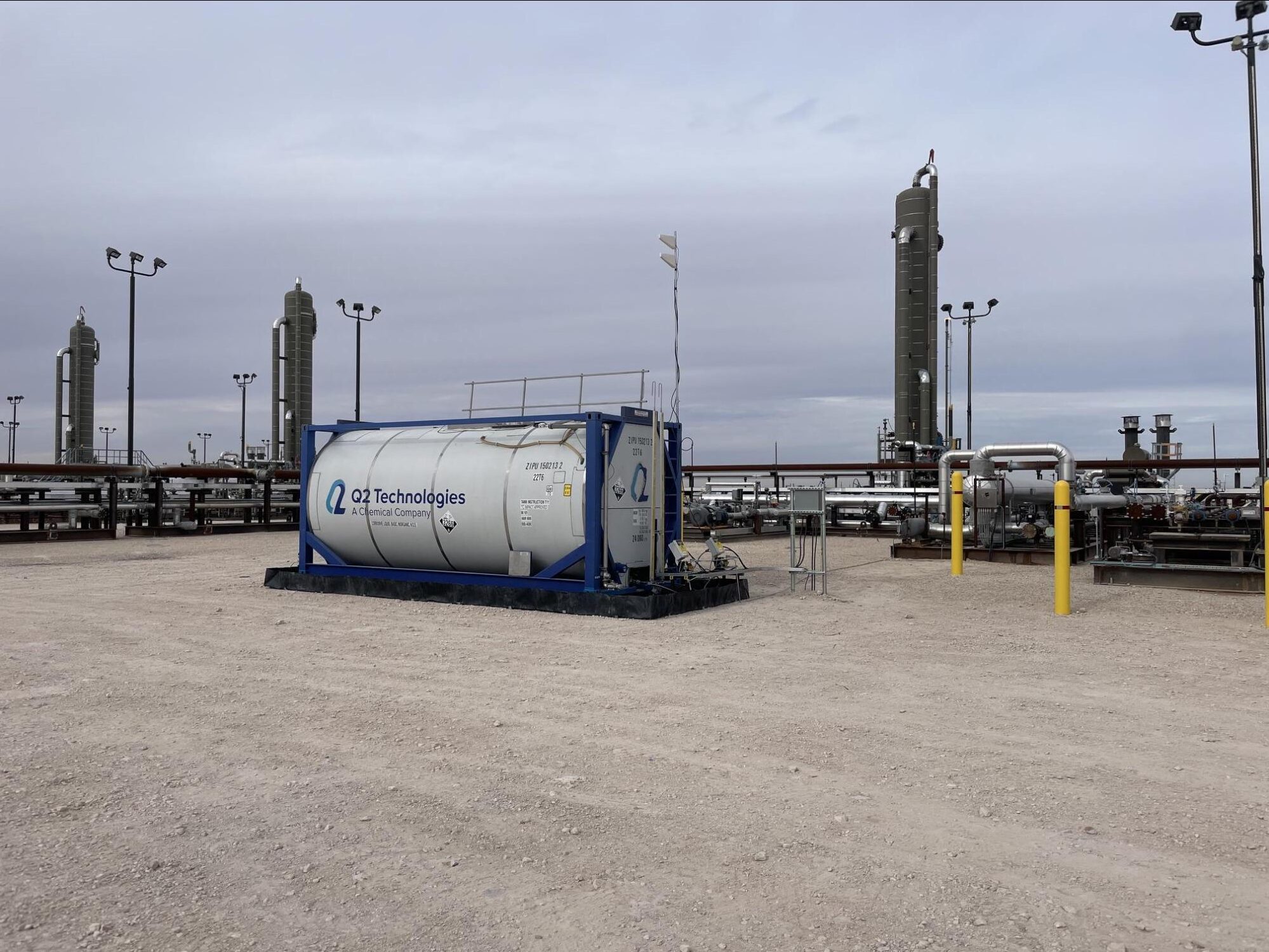
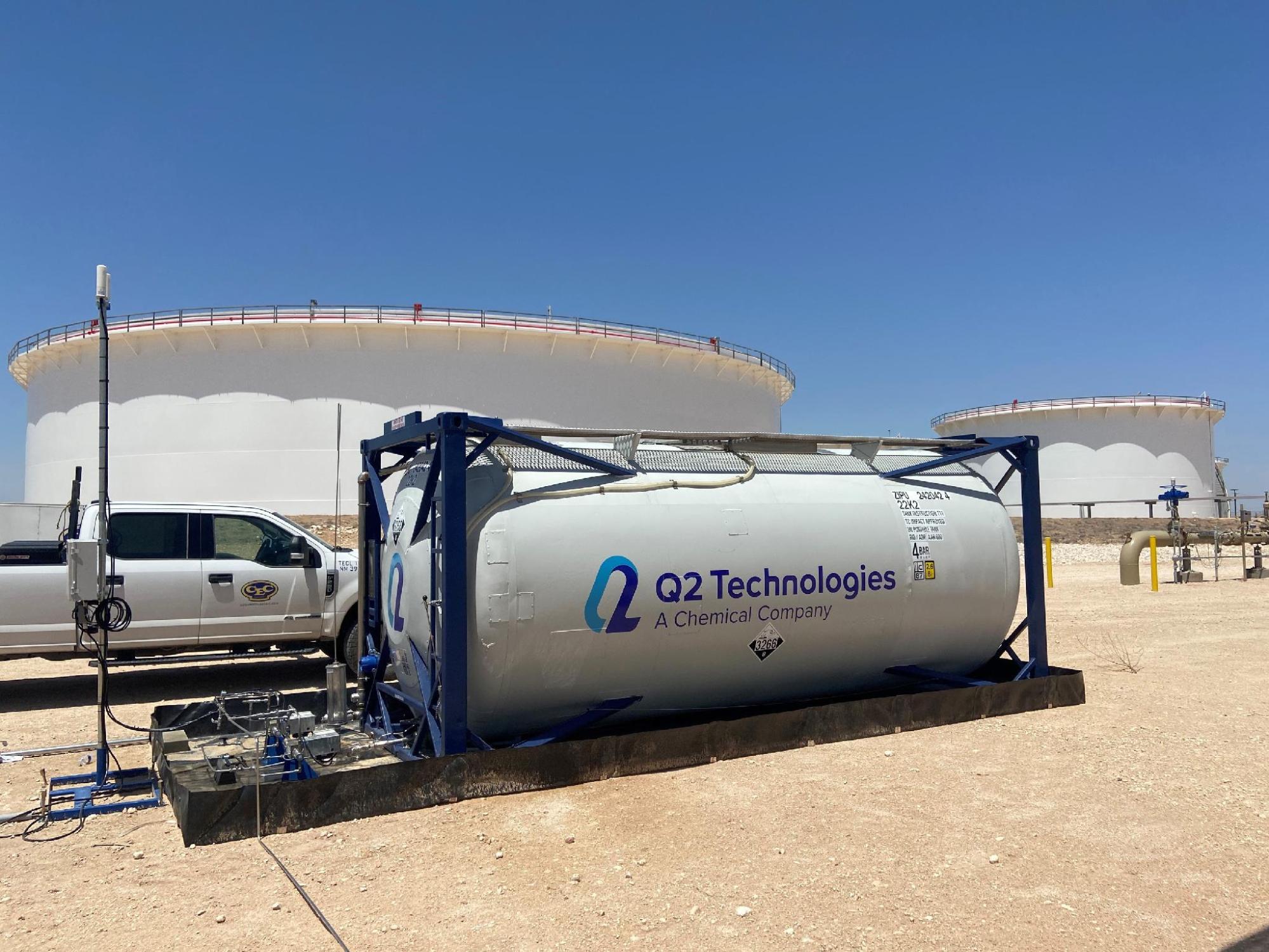
Q2 Technologies applies this approach through application-specific scavenger chemistry, including its Pro3® and ProM® product lines, supported by field engineering and delivery coordination for continuous treatment needs.
Adsorbents for Polishing and Small Streams
Solid media such as zinc oxide, activated carbon, iron-based media, and specialty adsorbents can provide effective sulfur polishing. They are commonly used where low outlet H2S levels are required, flow rates are manageable, or a simple fixed-bed design is preferred.
Adsorbents are valuable for final cleanup, but they have finite capacity. Bed life can change dramatically with moisture, temperature, oxygen, hydrocarbons, particulate loading, and sulfur concentration swings. Operators should track breakthrough trends rather than rely solely on a theoretical media-life estimate. Changeout logistics, spent-media classification, and vessel isolation requirements belong in the initial evaluation.
Build Treatment Around Measurement and Response Time
A refinery sulfur program is only as dependable as its measurement strategy. Fixed analyzers, portable verification, grab samples, and corrosion or process indicators each have a role. Continuous H2S monitoring can identify loading changes early, while routine lab analysis helps verify mercaptan and total-sulfur performance in liquid streams.
Monitoring should drive action. If an analyzer identifies increasing H2S at an amine outlet, tail-gas point, or fuel-gas header, the site needs defined response steps: confirm the reading, inspect upstream conditions, adjust chemical or operating rates, and escalate before product quality or exposure limits are affected. Data without operating ownership does not prevent a breakthrough.
Supply reliability also deserves the same attention as chemistry selection. A scavenger program that depends on frequent deliveries needs dependable inventory visibility, tank capacity, injection equipment, and contingency planning. For high-consequence service, the last mile can be as critical as the treatment reaction.
Select for Total Operating Value, Not a Single Metric
The lowest-cost sulfur treatment option depends on the job. Large, steady acid-gas loads generally favor regenerative treating and sulfur recovery. Product desulfurization relies on hydroprocessing. Mercaptan-specific liquid streams may favor extraction or sweetening. Variable, remote, or short-duration sources often justify targeted scavenger treatment or adsorbent polishing.
Evaluate each option against sulfur-removal efficiency, outlet-specification confidence, capital exposure, energy demand, waste generation, maintenance burden, operator workload, safety risk, and recovery from upset conditions. Most importantly, test the solution under realistic feed variability rather than ideal conditions.
A well-designed refinery sulfur treatment program gives operators a clear line of sight from contaminant measurement to treatment response. That discipline protects people and assets while keeping sulfur control aligned with the refinery’s actual operating plan.
Q2 Technologies understands that effective mercaptan treatment in crude oil requires more than a single chemistry, it requires a program built around each stream’s specific sulfur content and operating conditions. The company’s technical experts evaluate crude quality data to recommend treatment rates and chemistries suited to each application. This tailored approach has made Q2 a trusted partner for crude oil producers managing complex sulfur chemistry. Have questions about mercaptan treatment programs? Check out our FAQ page for answers.