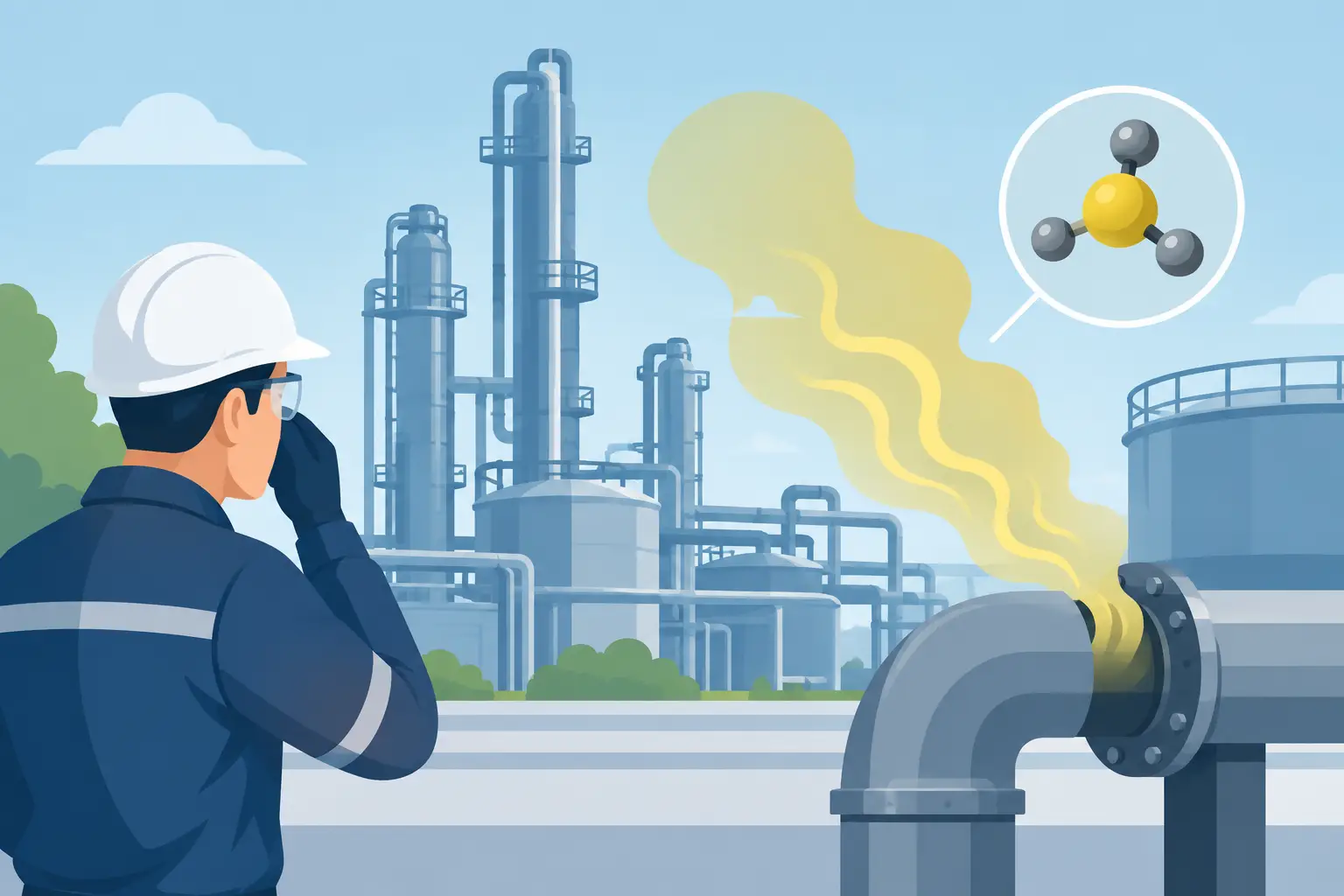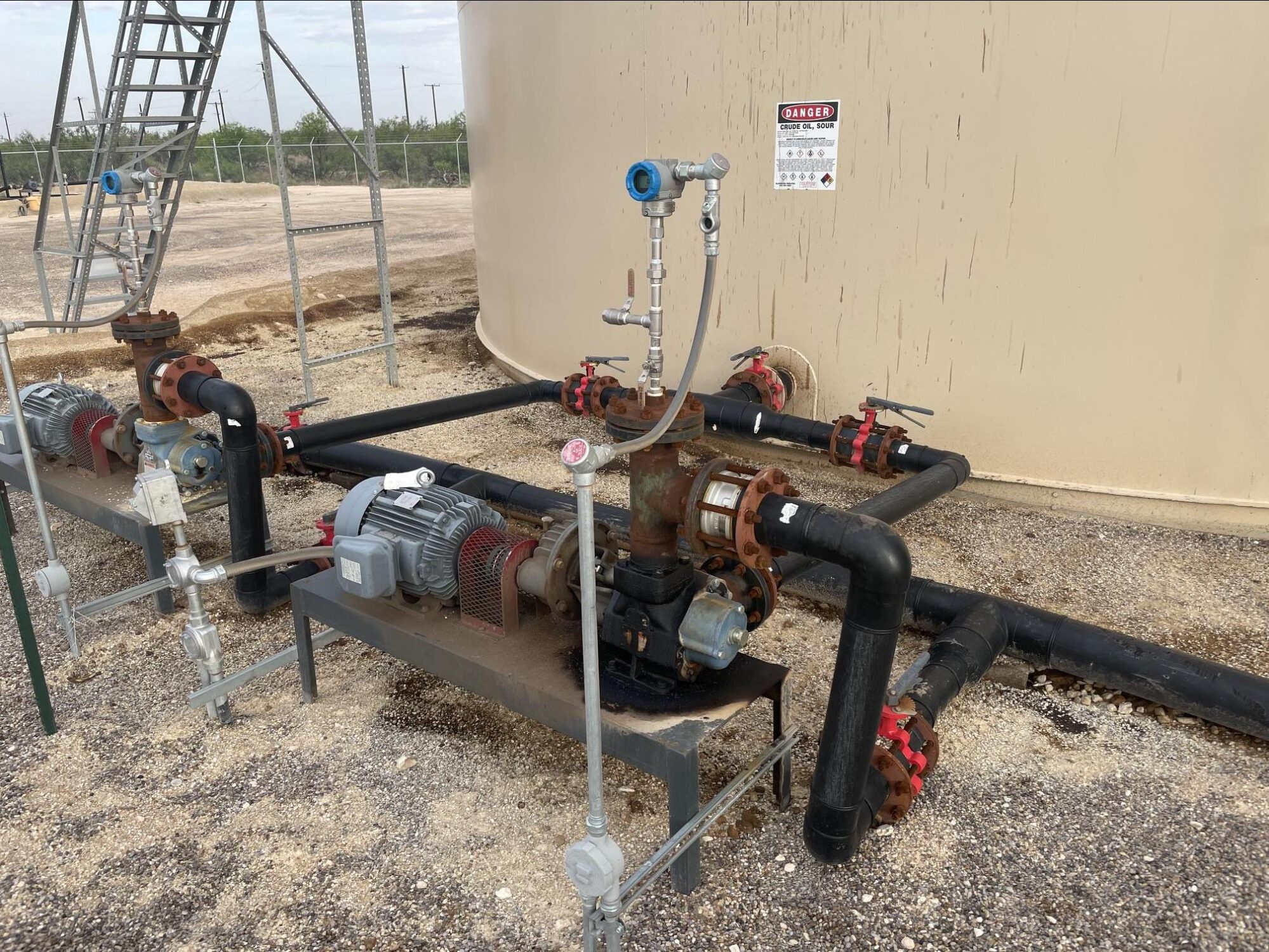


A personal monitor alarming at a tank battery, wastewater headworks, or biogas skid is not the beginning of an H2S safety program. It is evidence that earlier controls must work as designed. The best H2S safety controls use layers: prevent or reduce the hazard at its source, contain it, detect changes quickly, protect workers from exposure, and make the response predictable when conditions deteriorate.
Hydrogen sulfide is uniquely unforgiving in operating environments. It is toxic at low concentrations, can accumulate in confined or poorly ventilated areas, and may be released unpredictably during line breaks, tank work, pigging, sampling, upset conditions, or changes in feed chemistry. Its odor is not a reliable warning because olfactory fatigue can occur quickly. A control strategy that relies on smell, a single fixed detector, or PPE alone leaves too much to chance.
Best H2S Safety Controls Start With Source Reduction
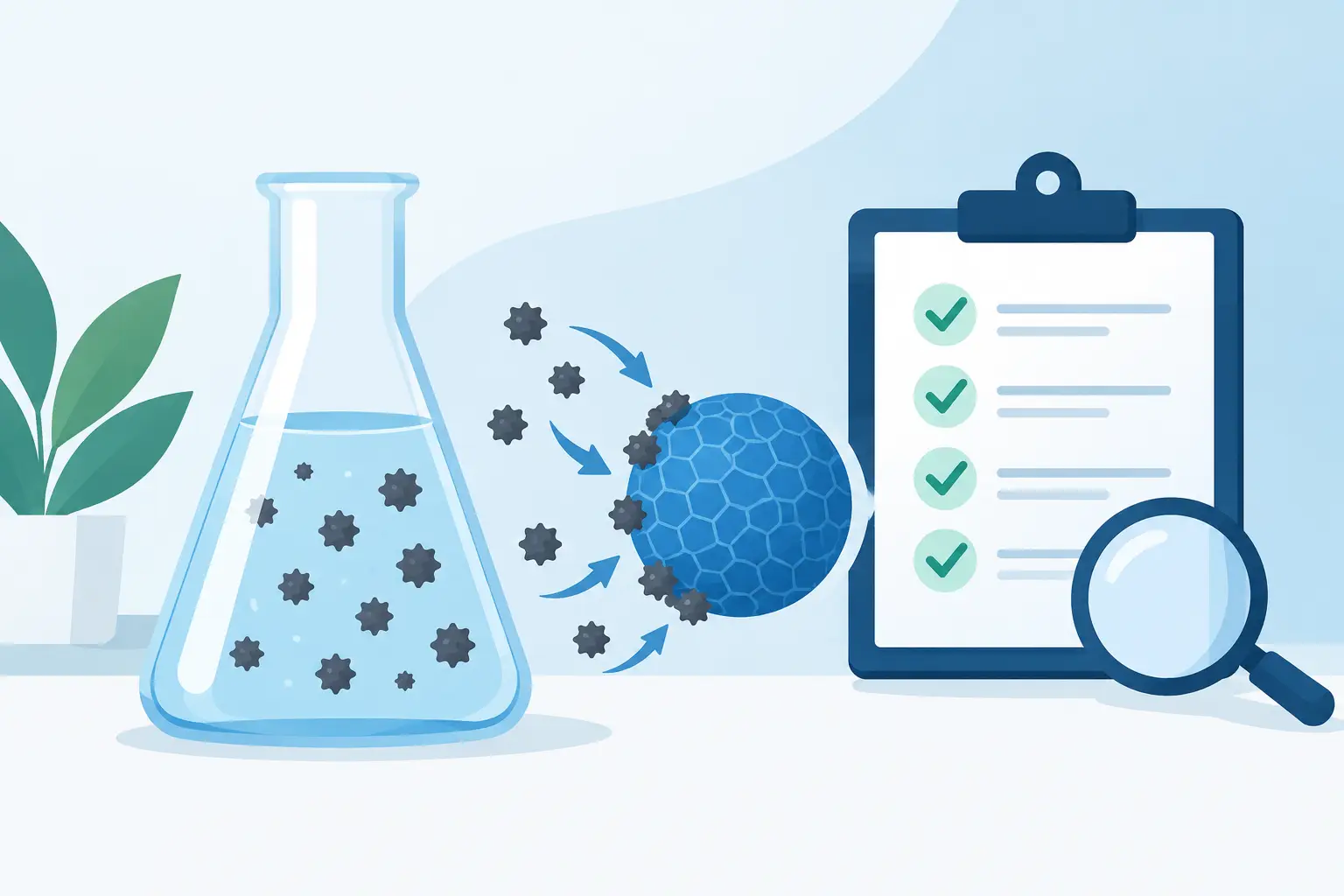
The strongest safety control is lowering H2S concentration before workers encounter the stream, vessel, or vapor space. In sour gas, crude oil, produced water, wastewater, landfill gas, and biogas applications, that often means applying the right scavenger or treatment chemistry at the right injection point and dosage.
Treatment is not merely a product-quality or corrosion-management decision. Reducing H2S in process streams can lower the frequency and severity of exposure scenarios, reduce emissions and odor potential, and limit acid-gas damage to downstream equipment. But chemical treatment must be matched to the application. Flow rate, H2S loading, pressure, temperature, retention time, phase behavior, competing contaminants, and injection location all affect performance.
An underfed scavenger program can allow breakthrough precisely when operations are under pressure. An overfed program can raise chemical spend, create handling concerns, and potentially introduce downstream compatibility issues. Field data, routine sampling, and adjustment based on actual conditions are more dependable than treating to a fixed historical rate.
Where practical, process design should also reduce opportunities for release. Closed sampling systems, vapor recovery, sealed drains, remote blowdown arrangements, and isolation valves that can be operated without entering a high-risk area all reduce the need for workers to approach a potential H2S source.
Use Engineering Controls Before Administrative Rules
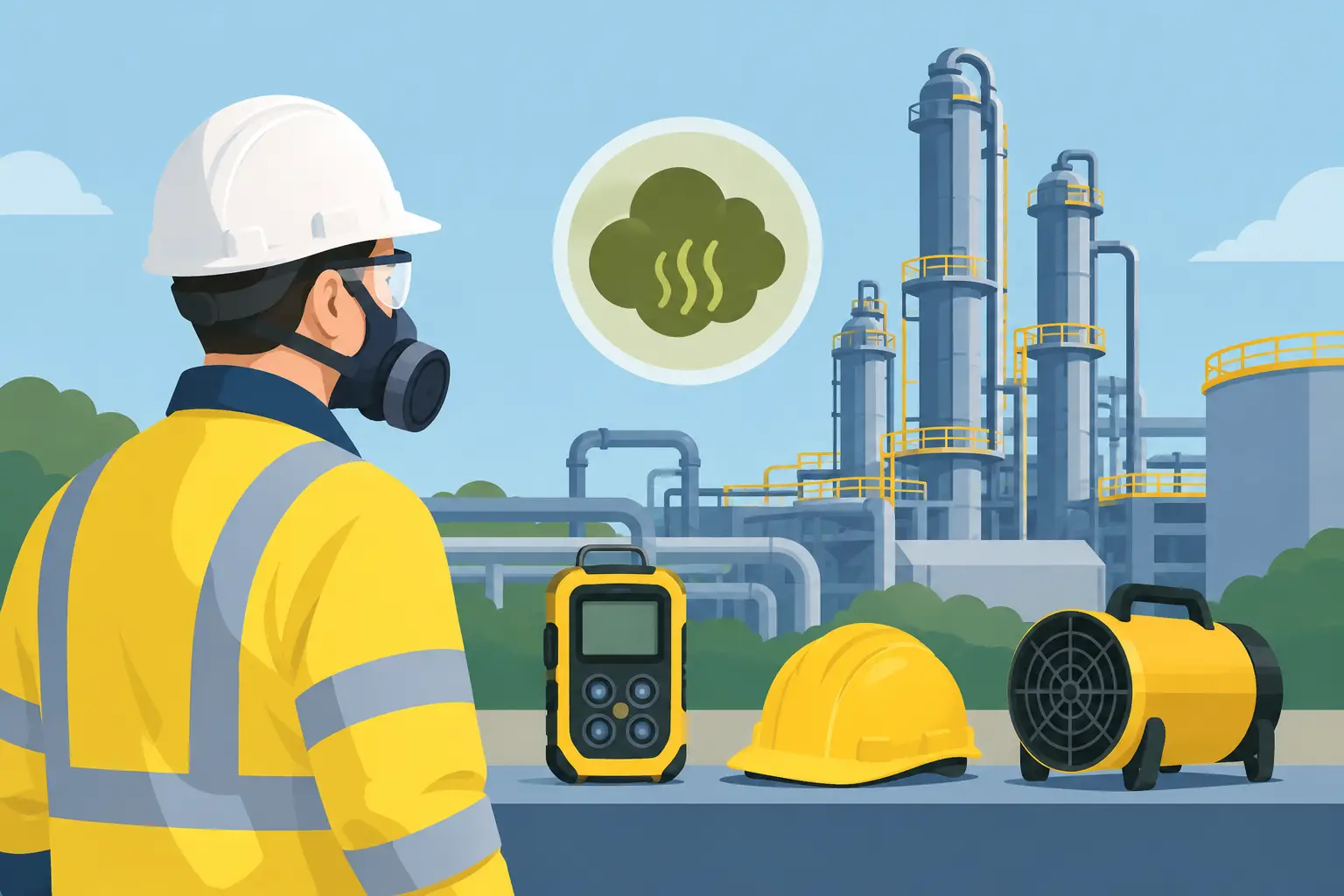
Engineering controls do not depend on a worker remembering every step in a changing environment. They provide a physical or automated barrier between personnel and the hazard. For facilities with credible H2S exposure potential, key controls commonly include fixed gas detection, mechanical ventilation, enclosed handling systems, remote monitoring, and emergency shutdown or isolation capabilities.
Fixed detection should be placed based on how gas can actually travel, not simply where equipment is easiest to access. H2S is heavier than air, so low points, pits, trenches, cellars, enclosed loading areas, and poorly ventilated buildings deserve particular attention. Still, buoyancy is only one factor. Wind, thermal currents, equipment geometry, ventilation patterns, and release pressure can change plume behavior.
Detector placement should follow a documented hazard assessment, with calibration, bump-testing, maintenance, alarm verification, and records managed as operating requirements. A detector that has not been maintained is not a control. It is an unverified assumption.
Ventilation design also needs to fit the task. General building ventilation may be sufficient for a low-level, well-characterized risk, while entry into a pit, tank, vault, or enclosed process area may require forced ventilation and continuous atmospheric monitoring. Ventilation should never be treated as proof that a space is safe without testing the atmosphere where people will work.
Detection Must Support a Decision
Alarms only improve safety when everyone knows what they mean and what happens next. Facilities should establish clear action levels for personal monitors and fixed systems, including who stops work, who evacuates, who notifies supervision, and when emergency response is activated.
The exact alarm setpoints and response procedures should be based on the facility hazard assessment, applicable regulations, customer requirements, and the characteristics of the work. A uniform policy can be useful, but it should not flatten real differences between routine outdoor operations and confined-space work involving sour liquids or vapor release potential.
Treat Personal Monitoring as a Last Line of Warning
Portable H2S monitors are essential for workers entering or working near potential release areas, but they are not a substitute for process control or engineered safeguards. A personal monitor tells the wearer conditions have become hazardous. It does not control the source, contain the gas, or rescue someone who is already incapacitated.
Each worker should understand instrument limitations and use requirements: pre-use inspection, bump testing according to the manufacturer and site program, proper wearing location, calibration schedule, sensor life, alarm interpretation, and response expectations. Workers should also know when a multigas meter is required instead of an H2S-only device, particularly for confined spaces where oxygen deficiency or flammable atmospheres may be present.
Respiratory protection is another critical layer, but it comes with strict conditions. Air-purifying respirators are not appropriate for unknown concentrations, oxygen-deficient atmospheres, or emergency rescue. Those situations may require supplied-air equipment or self-contained breathing apparatus, used by trained and properly equipped personnel. Selecting respiratory protection without considering concentration, oxygen level, task duration, fit testing, and rescue capability can create a false sense of security.
Build Procedures Around Real Work, Not Binder Language
Administrative controls matter because many H2S releases occur during non-routine work: opening equipment, draining a line, cleaning a vessel, handling sludge, changing filters, troubleshooting a treatment skid, or responding to a process upset. These jobs need task-specific planning rather than a generic reminder to wear a monitor.
A strong pre-job review identifies the source of H2S, expected concentration range, wind direction or ventilation conditions, isolation points, monitoring method, communication plan, required PPE, exclusion zones, and evacuation route. For higher-risk tasks, a permit process should verify that the controls are in place before work begins and remain effective as conditions change.
Confined-space entry deserves additional discipline. Atmospheric testing must be completed before entry and continued as required by the permit and changing conditions. Entrants, attendants, supervisors, and rescue personnel need defined responsibilities. No worker should enter to perform an unplanned rescue after a collapse. Multiple fatalities have occurred when coworkers rush into an H2S-contaminated space without respiratory protection or a rescue plan.
Train for Recognition, Response, and Stop-Work Authority
H2S training should be specific enough that an operator can apply it under pressure. Workers need to recognize likely sources, understand that odor is unreliable, respond to alarms immediately, move crosswind or upwind when possible, and account for coworkers without entering a hazardous area.
Training should also reinforce the authority to stop work. Production schedules and maintenance windows can create pressure to continue despite changing readings or treatment performance. Supervisors need to make it clear that elevated H2S readings, detector faults, unexpected odor complaints, or loss of ventilation are valid reasons to pause and reassess.
Drills are valuable when they test realistic failure points. A useful exercise might simulate detector alarms during a line break, a worker down near a wastewater structure, or an H2S breakthrough at a treatment unit. The purpose is not to produce a perfect drill. It is to expose gaps in communication, muster accountability, access control, and emergency equipment readiness before an actual event.
Make Treatment Performance Part of the Safety Review
H2S control often becomes fragmented across safety, operations, maintenance, and chemical procurement. That separation can hide emerging risk. If H2S levels are trending upward, chemical consumption is changing, scavenger residuals are inconsistent, or odor complaints are increasing, the site should evaluate whether the treatment program and safety controls still match current operating conditions.
This is where technical support has operational value. Q2 Technologies works with industrial operators to evaluate sulfur-related treatment requirements in the field, including chemistry selection, injection optimization, monitoring, and dependable supply support. The objective is not simply to consume more chemical. It is to maintain effective H2S reduction with the right control point, dosage, and operational visibility.
Review performance after feedstock changes, production increases, equipment modifications, seasonal temperature shifts, or recurring upsets. These are the conditions that can turn an acceptable historical program into a developing exposure hazard.
A Layered System Holds Up Better Than a Single Fix
No single device, procedure, or treatment product represents the best answer in every facility. A remote well pad, a refinery unit, a municipal wastewater plant, and a renewable natural gas facility have different release scenarios, staffing models, and response capabilities. The common requirement is a layered system that does not fail when one barrier is challenged.
The practical test is simple: if H2S treatment underperforms, does detection identify the change? If detection alarms, do workers have a clear way to get out safely? If someone is overcome, does the site have trained responders and the right respiratory equipment without relying on an unplanned rescue? When those answers are clear, H2S safety becomes a managed operating discipline rather than a reaction to the next alarm.