
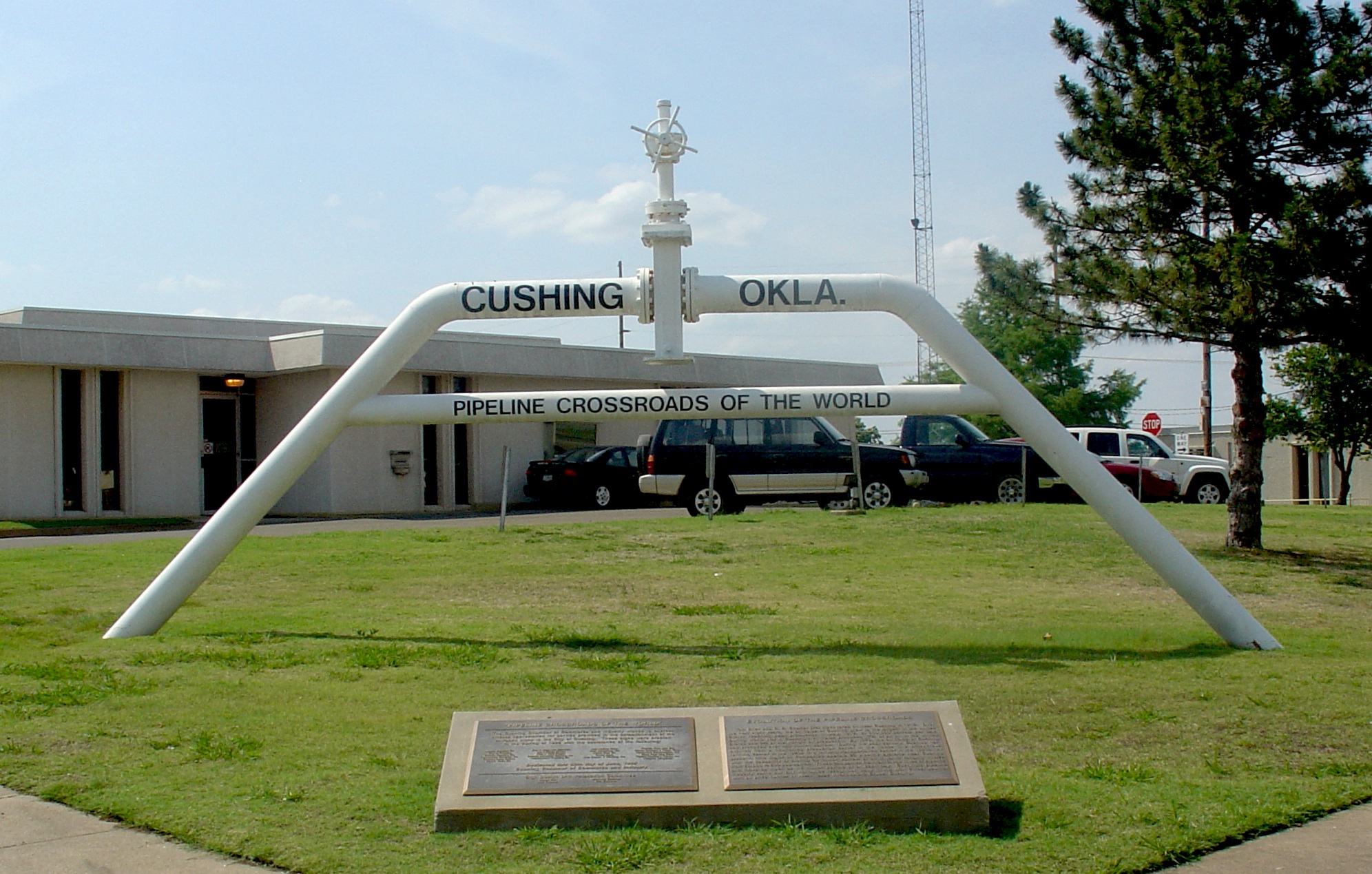
There are places in the energy world that you read about in market reports, see quoted on trading screens, and reference in client conversations for years before you ever set foot in them. Cushing, Oklahoma is one of those places. Recently, Q2 Technologies was honored to receive an exclusive invitation from a prominent pipeline and storage operator to tour their facilities at the Cushing hub. What we witnessed reshaped how we think about crude oil infrastructure, market pricing, and the extraordinary human and technological systems that keep the global energy economy running

Why Cushing, Oklahoma Matters More Than Almost Any Place on Earth

Ask any crude oil trader, refinery scheduler, or energy analyst where West Texas Intermediate (WTI) crude oil finds its price, and they will tell you: Cushing, Oklahoma. This small city of roughly 8,000 people in Payne County sits at the physical and commercial intersection of more crude oil pipeline capacity than almost anywhere else on the planet.


Cushing is the designated delivery point for the New York Mercantile Exchange (NYMEX) WTI crude oil futures contract, which means that when you see the price of WTI crude quoted on a Bloomberg terminal or in the Wall Street Journal, that price is anchored to physical storage and delivery activity happening right here, in this unassuming stretch of the Oklahoma plains.


The hub is connected to virtually every major crude oil producing basin in North America. Pipelines arrive from the Permian Basin, the Bakken, the DJ Basin, Eagle Ford, the Gulf Coast, and Canadian oil sands. From Cushing, crude moves outward to refineries along the Gulf Coast, the Midwest, and beyond. With storage capacity that has at various times exceeded 90 million barrels, Cushing functions as the connective tissue of the North American crude oil market. When storage levels rise at Cushing, WTI prices feel downward pressure. When tanks draw down, the market often tightens. The inventory reports released weekly by the U.S. Energy Information Administration for Cushing alone move markets globally. Simply put, Cushing is the heartbeat of the energy industry.


To put that in perspective: a single weekly inventory number from one hub in a town most Americans have never heard of can shift the price of crude oil worldwide within seconds. That is how central Cushing is.

The Scale Is Almost Incomprehensible

Nothing in a chart or a report fully prepares you for the visual reality of Cushing. Driving through the hub, you encounter tank farm after tank farm stretching to the horizon. Enormous white storage tanks, many of them 300 feet or more in diameter, sit in neat rows surrounded by earthen berms and containment systems. There are hundreds of them. The sheer density of infrastructure packed into this area of south-central Oklahoma is staggering.


During our tour, our host gave us a sense of the numbers involved. Multiple operators maintain large footprints here. Individual tank farms can hold tens of millions of barrels. The pipeline network threading through the area includes dozens of major trunk lines and an intricate web of smaller connecting segments. Metering stations, manifolds, valve complexes, and pump stations punctuate the landscape at regular intervals.


Walking the grounds, you begin to understand why traders, analysts, and regulators pay such close attention to this single geographic point. This is not just an oil field or a refinery. It is a living, continuously operating exchange for one of the world’s most important commodities.

Fully Manifolded Systems and the Power of Gravity Assist

One of the most technically impressive aspects of the operation we toured is the degree to which the facility has achieved full manifolding of its pipelines and tankage. In pipeline and storage operations, manifolding refers to the ability to interconnect any pipeline with any tank or any other pipeline through a network of valves and headers. Full manifolding gives operators extraordinary flexibility to route crude oil to wherever it needs to go without being constrained by fixed, dedicated connections.


What makes Cushing’s manifolding particularly elegant is the role that gravity plays. The operators here have invested heavily in designing the facility’s grade and elevation to allow crude to flow between tanks and into pipelines using gravity assistance wherever possible. This is not a trivial engineering achievement. Moving crude oil is energy-intensive under normal circumstances, and every barrel that can be routed by gravity rather than by pump represents meaningful cost savings and reliability improvements. Gravity does not break down. It does not have a maintenance window. It does not require spare parts.


This gravity-assisted design works in concert with a robust redundant pumping infrastructure. At every critical junction in the system, there are redundant pump configurations designed to ensure that no single equipment failure can interrupt flow. The operators we toured with take pipeline integrity and continuity of operations with absolute seriousness. Their redundancy philosophy is not simply having a backup pump. It is having backup systems for the backup systems, tested regularly and ready to assume load within moments.

Control Rooms Built Like Fortresses: The F4-Rated Bunker Standard

If the tank farms are the muscle of the Cushing hub, the control rooms are its central nervous system. During our tour, we had the privilege of visiting a facility that maintains control rooms meeting F4-rated bunker specifications, designed to house operational control infrastructure for multiple operators simultaneously within a single fortified structure.


An F4-rated bunker designation refers to a facility engineered to withstand significant external forces, including blast pressures and structural threats that would compromise conventional construction. These are not ordinary buildings. They are purpose-built, heavily reinforced structures designed to keep operational control functioning through extreme scenarios.


Inside, the environment is remarkable. Multiple operator workstations sit behind hardened walls, with screens displaying real-time telemetry from pipelines, tanks, pumps, and metering equipment across the entire hub network. Flow rates, pressures, temperatures, tank levels, and pump statuses are all visible and continuously monitored. Operators can initiate valve movements, adjust pump configurations, reroute flows, and respond to anomalies from this centralized command environment.


The technology in use is state of the art. Modern SCADA (Supervisory Control and Data Acquisition) systems integrate with pipeline management software, leak detection algorithms, and predictive maintenance tools to give operators a comprehensive and continuously updated picture of everything happening across a sprawling physical footprint. Alarms are tiered by priority. Communications systems are redundant. Every action taken from these control rooms is logged and time-stamped with precision.


Sharing a bunker environment across multiple operators also brings coordination benefits. When crude is moving from one operator’s tanks into another’s pipeline, the people responsible for both sides of that transaction can coordinate in real time from adjacent workstations. That level of integration reduces handoff errors, improves response times, and builds the kind of institutional trust between operators that keeps a complex, multi-party system running smoothly.


What makes Cushing’s manifolding particularly elegant is the role that gravity plays. The operators here have invested heavily in designing the facility’s grade and elevation to allow crude to flow between tanks and into pipelines using gravity assistance wherever possible. This is not a trivial engineering achievement. Moving crude oil is energy-intensive under normal circumstances, and every barrel that can be routed by gravity rather than by pump represents meaningful cost savings and reliability improvements. Gravity does not break down. It does not have a maintenance window. It does not require spare parts.


This gravity-assisted design works in concert with a robust redundant pumping infrastructure. At every critical junction in the system, there are redundant pump configurations designed to ensure that no single equipment failure can interrupt flow. The operators we toured with take pipeline integrity and continuity of operations with absolute seriousness. Their redundancy philosophy is not simply having a backup pump. It is having backup systems for the backup systems, tested regularly and ready to assume load within moments.

The Human Element: Hourly Manual Balancing

Here is what surprised us most. Amid all of the advanced technology, the real-time digital telemetry, the SCADA systems, the automated alarms, and the software-driven analytics, this facility still conducts hourly manual paper-copy balancing of the entire facility.


Every hour of every day. 24/7/365.


Every hour, operators physically walk portions of the facility, manually read gauges and meters, record measurements on paper logs, and reconcile those readings against the digital system. A complete paper-based balance of all tanks, pipelines, and custody transfer meters is produced on a regular cycle, creating a physical, timestamped record of the facility’s state that exists entirely independently of any digital infrastructure.


This practice is not a relic of the past that no one has gotten around to eliminating. It is a deliberate, actively maintained operational discipline that the operators regard as essential. The reasoning is straightforward: digital systems can fail, be compromised, or produce erroneous readings. A paper record created by a human with a clipboard standing next to an actual gauge cannot be hacked, cannot be corrupted by a software bug, and cannot be affected by a network outage.


In an era when every discussion of industrial operations centers on digitization and automation, there is something both humbling and reassuring about watching a highly skilled operator in a hard hat walk a measured route, reading physical instruments and committing those readings to paper. It is a reminder that the most resilient systems in the world are not purely digital. They layer human judgment and analog verification over technological sophistication.


For Q2 Technologies, this observation carries real relevance. The best technology solutions we build for our clients do not replace human oversight. They enhance it. The Cushing model, where world-class digital infrastructure and disciplined manual verification exist side by side, is a philosophy worth carrying into any critical operational environment.

What Q2 Technologies Took Away from Cushing

Our visit to Cushing reinforced several convictions that guide how we think about infrastructure, technology, and operational excellence.


First, scale demands redundancy. At the volumes and values moving through Cushing every single day, there is no tolerance for single points of failure. Every critical system has a backup. Every backup has a backup. The cost of redundancy is always less than the cost of an unplanned outage at this scale.


Second, technology and human process are not in competition. The most sophisticated operational environments we encountered in Cushing do not choose between digital and analog. They use both, deliberately and in complementary ways.


Third, gravity is an underappreciated engineering resource. The design discipline required to make gravity work for you rather than against you in a complex pipeline and storage environment is impressive, and the operational and cost benefits compound over decades.


Fourth, physical fortification of critical infrastructure is not optional. The F4-rated control bunkers we toured exist because the operators who built them understand that the infrastructure they manage is genuinely critical, both to their business and to the broader economy. Protecting it accordingly is not overcaution. It is professional responsibility.


We are deeply grateful to our host operator for the access and generosity they extended to the Q2 Technologies team. Cushing is, without exaggeration, one of the most consequential pieces of energy infrastructure on the planet. Seeing it up close makes that fact vivid in a way that no report or data feed ever could.
There are places in the energy world that you read about in market reports, see quoted on trading screens, and reference in client conversations for years before you ever set foot in them. Cushing, Oklahoma is one of those places. Recently, Q2 Technologies was honored to receive an exclusive invitation from a prominent pipeline and storage operator to tour their facilities at the Cushing hub. What we witnessed reshaped how we think about crude oil infrastructure, market pricing, and the extraordinary human and technological systems that keep the global energy economy running

Why Cushing, Oklahoma Matters More Than Almost Any Place on Earth

Ask any crude oil trader, refinery scheduler, or energy analyst where West Texas Intermediate (WTI) crude oil finds its price, and they will tell you: Cushing, Oklahoma. This small city of roughly 8,000 people in Payne County sits at the physical and commercial intersection of more crude oil pipeline capacity than almost anywhere else on the planet.


Cushing is the designated delivery point for the New York Mercantile Exchange (NYMEX) WTI crude oil futures contract, which means that when you see the price of WTI crude quoted on a Bloomberg terminal or in the Wall Street Journal, that price is anchored to physical storage and delivery activity happening right here, in this unassuming stretch of the Oklahoma plains.


The hub is connected to virtually every major crude oil producing basin in North America. Pipelines arrive from the Permian Basin, the Bakken, the DJ Basin, Eagle Ford, the Gulf Coast, and Canadian oil sands. From Cushing, crude moves outward to refineries along the Gulf Coast, the Midwest, and beyond. With storage capacity that has at various times exceeded 90 million barrels, Cushing functions as the connective tissue of the North American crude oil market. When storage levels rise at Cushing, WTI prices feel downward pressure. When tanks draw down, the market often tightens. The inventory reports released weekly by the U.S. Energy Information Administration for Cushing alone move markets globally. Simply put, Cushing is the heartbeat of the energy industry.


To put that in perspective: a single weekly inventory number from one hub in a town most Americans have never heard of can shift the price of crude oil worldwide within seconds. That is how central Cushing is.

The Scale Is Almost Incomprehensible

Nothing in a chart or a report fully prepares you for the visual reality of Cushing. Driving through the hub, you encounter tank farm after tank farm stretching to the horizon. Enormous white storage tanks, many of them 300 feet or more in diameter, sit in neat rows surrounded by earthen berms and containment systems. There are hundreds of them. The sheer density of infrastructure packed into this area of south-central Oklahoma is staggering.


During our tour, our host gave us a sense of the numbers involved. Multiple operators maintain large footprints here. Individual tank farms can hold tens of millions of barrels. The pipeline network threading through the area includes dozens of major trunk lines and an intricate web of smaller connecting segments. Metering stations, manifolds, valve complexes, and pump stations punctuate the landscape at regular intervals.


Walking the grounds, you begin to understand why traders, analysts, and regulators pay such close attention to this single geographic point. This is not just an oil field or a refinery. It is a living, continuously operating exchange for one of the world’s most important commodities.

Fully Manifolded Systems and the Power of Gravity Assist

One of the most technically impressive aspects of the operation we toured is the degree to which the facility has achieved full manifolding of its pipelines and tankage. In pipeline and storage operations, manifolding refers to the ability to interconnect any pipeline with any tank or any other pipeline through a network of valves and headers. Full manifolding gives operators extraordinary flexibility to route crude oil to wherever it needs to go without being constrained by fixed, dedicated connections.


What makes Cushing’s manifolding particularly elegant is the role that gravity plays. The operators here have invested heavily in designing the facility’s grade and elevation to allow crude to flow between tanks and into pipelines using gravity assistance wherever possible. This is not a trivial engineering achievement. Moving crude oil is energy-intensive under normal circumstances, and every barrel that can be routed by gravity rather than by pump represents meaningful cost savings and reliability improvements. Gravity does not break down. It does not have a maintenance window. It does not require spare parts.


This gravity-assisted design works in concert with a robust redundant pumping infrastructure. At every critical junction in the system, there are redundant pump configurations designed to ensure that no single equipment failure can interrupt flow. The operators we toured with take pipeline integrity and continuity of operations with absolute seriousness. Their redundancy philosophy is not simply having a backup pump. It is having backup systems for the backup systems, tested regularly and ready to assume load within moments.

Control Rooms Built Like Fortresses: The F4-Rated Bunker Standard

If the tank farms are the muscle of the Cushing hub, the control rooms are its central nervous system. During our tour, we had the privilege of visiting a facility that maintains control rooms meeting F4-rated bunker specifications, designed to house operational control infrastructure for multiple operators simultaneously within a single fortified structure.


An F4-rated bunker designation refers to a facility engineered to withstand significant external forces, including blast pressures and structural threats that would compromise conventional construction. These are not ordinary buildings. They are purpose-built, heavily reinforced structures designed to keep operational control functioning through extreme scenarios.


Inside, the environment is remarkable. Multiple operator workstations sit behind hardened walls, with screens displaying real-time telemetry from pipelines, tanks, pumps, and metering equipment across the entire hub network. Flow rates, pressures, temperatures, tank levels, and pump statuses are all visible and continuously monitored. Operators can initiate valve movements, adjust pump configurations, reroute flows, and respond to anomalies from this centralized command environment.


The technology in use is state of the art. Modern SCADA (Supervisory Control and Data Acquisition) systems integrate with pipeline management software, leak detection algorithms, and predictive maintenance tools to give operators a comprehensive and continuously updated picture of everything happening across a sprawling physical footprint. Alarms are tiered by priority. Communications systems are redundant. Every action taken from these control rooms is logged and time-stamped with precision.


Sharing a bunker environment across multiple operators also brings coordination benefits. When crude is moving from one operator’s tanks into another’s pipeline, the people responsible for both sides of that transaction can coordinate in real time from adjacent workstations. That level of integration reduces handoff errors, improves response times, and builds the kind of institutional trust between operators that keeps a complex, multi-party system running smoothly.


What makes Cushing’s manifolding particularly elegant is the role that gravity plays. The operators here have invested heavily in designing the facility’s grade and elevation to allow crude to flow between tanks and into pipelines using gravity assistance wherever possible. This is not a trivial engineering achievement. Moving crude oil is energy-intensive under normal circumstances, and every barrel that can be routed by gravity rather than by pump represents meaningful cost savings and reliability improvements. Gravity does not break down. It does not have a maintenance window. It does not require spare parts.


This gravity-assisted design works in concert with a robust redundant pumping infrastructure. At every critical junction in the system, there are redundant pump configurations designed to ensure that no single equipment failure can interrupt flow. The operators we toured with take pipeline integrity and continuity of operations with absolute seriousness. Their redundancy philosophy is not simply having a backup pump. It is having backup systems for the backup systems, tested regularly and ready to assume load within moments.

The Human Element: Hourly Manual Balancing

Here is what surprised us most. Amid all of the advanced technology, the real-time digital telemetry, the SCADA systems, the automated alarms, and the software-driven analytics, this facility still conducts hourly manual paper-copy balancing of the entire facility.


Every hour of every day. 24/7/365.


Every hour, operators physically walk portions of the facility, manually read gauges and meters, record measurements on paper logs, and reconcile those readings against the digital system. A complete paper-based balance of all tanks, pipelines, and custody transfer meters is produced on a regular cycle, creating a physical, timestamped record of the facility’s state that exists entirely independently of any digital infrastructure.


This practice is not a relic of the past that no one has gotten around to eliminating. It is a deliberate, actively maintained operational discipline that the operators regard as essential. The reasoning is straightforward: digital systems can fail, be compromised, or produce erroneous readings. A paper record created by a human with a clipboard standing next to an actual gauge cannot be hacked, cannot be corrupted by a software bug, and cannot be affected by a network outage.


In an era when every discussion of industrial operations centers on digitization and automation, there is something both humbling and reassuring about watching a highly skilled operator in a hard hat walk a measured route, reading physical instruments and committing those readings to paper. It is a reminder that the most resilient systems in the world are not purely digital. They layer human judgment and analog verification over technological sophistication.


For Q2 Technologies, this observation carries real relevance. The best technology solutions we build for our clients do not replace human oversight. They enhance it. The Cushing model, where world-class digital infrastructure and disciplined manual verification exist side by side, is a philosophy worth carrying into any critical operational environment.

What Q2 Technologies Took Away from Cushing

Our visit to Cushing reinforced several convictions that guide how we think about infrastructure, technology, and operational excellence.


First, scale demands redundancy. At the volumes and values moving through Cushing every single day, there is no tolerance for single points of failure. Every critical system has a backup. Every backup has a backup. The cost of redundancy is always less than the cost of an unplanned outage at this scale.


Second, technology and human process are not in competition. The most sophisticated operational environments we encountered in Cushing do not choose between digital and analog. They use both, deliberately and in complementary ways.


Third, gravity is an underappreciated engineering resource. The design discipline required to make gravity work for you rather than against you in a complex pipeline and storage environment is impressive, and the operational and cost benefits compound over decades.


Fourth, physical fortification of critical infrastructure is not optional. The F4-rated control bunkers we toured exist because the operators who built them understand that the infrastructure they manage is genuinely critical, both to their business and to the broader economy. Protecting it accordingly is not overcaution. It is professional responsibility.


We are deeply grateful to our host operator for the access and generosity they extended to the Q2 Technologies team. Cushing is, without exaggeration, one of the most consequential pieces of energy infrastructure on the planet. Seeing it up close makes that fact vivid in a way that no report or data feed ever could.
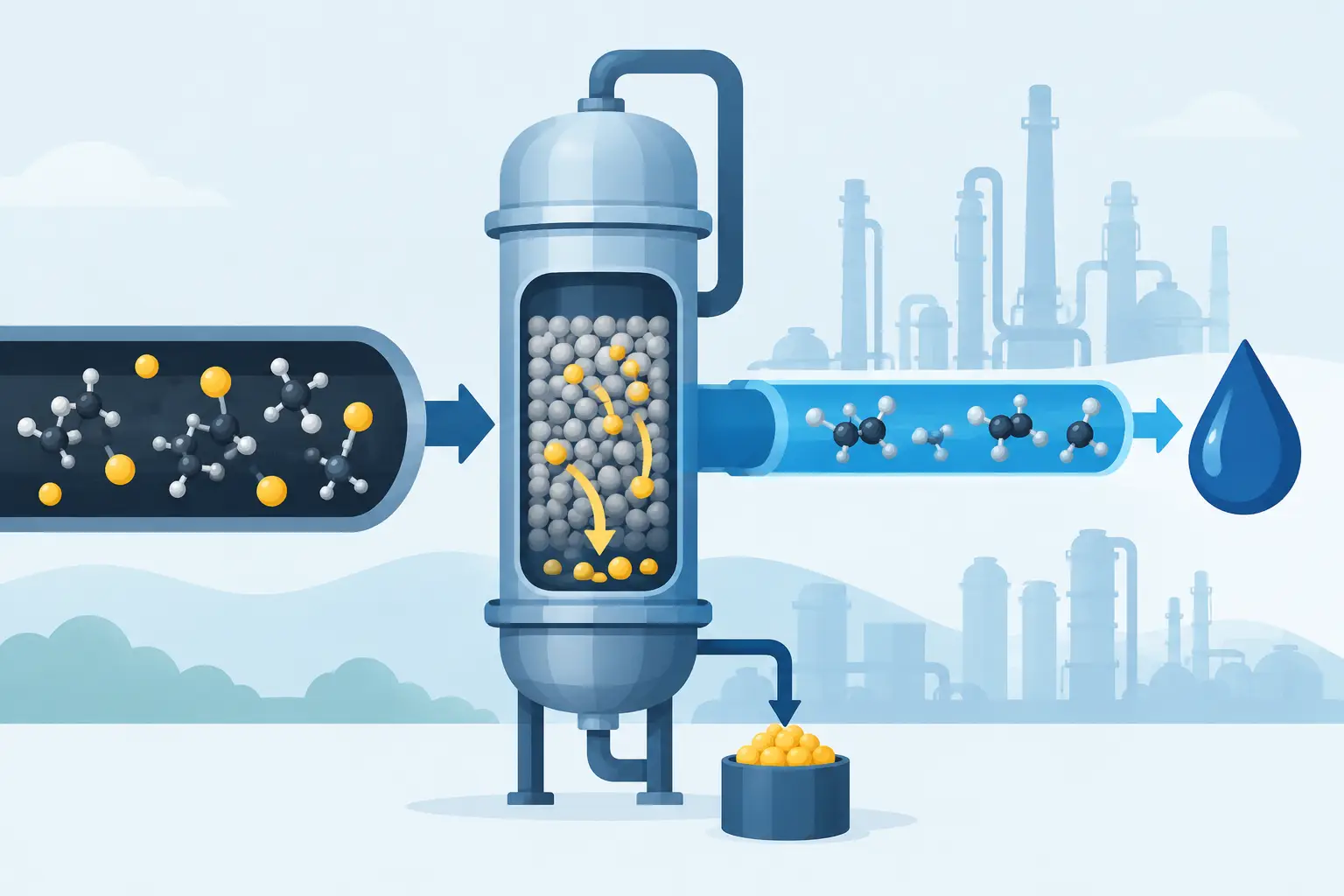
When introduced into a stream afflicted with H2S, the hemiformal decomposes to release formaldehyde, which then reacts with hydrogen sulfide to form stable, non-volatile byproducts such as thiomethylene glycol.  The reaction is typically fast and efficient, particularly in aqueous or mixed-phase environments. Unlike some traditional scavengers, hemiformal can maintain activity across a broad pH range and is less likely to generate problematic solids. When considering if hemiformal is the right product, certain operating conditions are reviewed, such as pH and temperature.

Heading 1

When introduced into a stream afflicted with H2S, the hemiformal decomposes to release formaldehyde, which then reacts with hydrogen sulfide to form stable, non-volatile byproducts such as thiomethylene glycol.  The reaction is typically fast and efficient, particularly in aqueous or mixed-phase environments. Unlike some traditional scavengers, hemiformal can maintain activity across a broad pH range and is less likely to generate problematic solids. When considering if hemiformal is the right product, certain operating conditions are reviewed, such as pH and temperature.

Heading 2

When introduced into a stream afflicted with H2S, the hemiformal decomposes to release formaldehyde, which then reacts with hydrogen sulfide to form stable, non-volatile byproducts such as thiomethylene glycol.  The reaction is typically fast and efficient, particularly in aqueous or mixed-phase environments. Unlike some traditional scavengers, hemiformal can maintain activity across a broad pH range and is less likely to generate problematic solids. When considering if hemiformal is the right product, certain operating conditions are reviewed, such as pH and temperature.

Heading 3

Heading 4

When introduced into a stream afflicted with H2S, the hemiformal decomposes to release formaldehyde, which then reacts with hydrogen sulfide to form stable, non-volatile byproducts such as thiomethylene glycol.  The reaction is typically fast and efficient, particularly in aqueous or mixed-phase environments. Unlike some traditional scavengers, hemiformal can maintain activity across a broad pH range and is less likely to generate problematic solids. When considering if hemiformal is the right product, certain operating conditions are reviewed, such as pH and temperature. 

Key Benefits:

  • Controlled formaldehyde release 
  • Lower vapor pressure and improved safety profile 
  • Broad applicability across liquid and gas-phase systems 
  • Reduced scaling in sour water stripping and other high-temp operations 
  • Hemiformal can make the scavenger safe for transport as it is a very stable compound 

Heading 5

Hemiformal is used in a variety of upstream and midstream applications, including: 

  • Gas sweetening systems 
  • Produced water treatment 
  • Crude oil storage and transport 
  • Sour water stripper overheads 
  • Temporary H2S mitigation during maintenance or turnaround

Its adaptability makes it especially useful in operations where system conditions fluctuate or where traditional triazine-based products may underperform. 

Heading 6

While hemiformal offers many advantages, it is not a one-size-fits-all solution. The rate of formaldehyde release can vary depending on formulation and environmental conditions. Additionally, while safer than raw formaldehyde, hemiformal must still be handled with care and appropriate PPE. 

For optimal results, formulation expertise and application-specific customization are key—something we at Q2 Technologies excel at delivering. 

Related Blogs

Behind the Tanks: What Q2 Technologies Learned at the Cushing Crude Oil Hub

Explore the engineering, redundancy, gravity-fed pipeline systems, fortified control rooms, and operational excellence that make Cushing, Oklahoma the pipeline capital of the world. Join Q2 Technologies for an inside look at one of the most critical energy hubs on the planet.

FAQs

  1. Why is Cushing, Oklahoma called the Pipeline Capital of the World?

    Cushing has earned this designation because it sits at the convergence of more crude oil pipelines than virtually any other single location in North America. It connects producing basins across the continent and serves as the official delivery point for NYMEX WTI futures contracts, making it the physical anchor of the global WTI benchmark price.

  2. How does Cushing affect the price of WTI crude oil?

    Because Cushing is the NYMEX delivery point for WTI futures, inventory levels at Cushing directly influence the WTI price. Rising inventories typically signal oversupply and push prices lower. Falling inventories suggest tightening supply and tend to support higher prices. Weekly EIA inventory reports for Cushing are watched closely by traders worldwide.

  3. What is gravity-assisted manifolding in crude oil storage?

    Gravity-assisted manifolding refers to designing the physical layout of tanks and pipelines so that crude oil can flow between storage assets and into pipelines using the natural force of gravity rather than relying entirely on pumps. This reduces energy costs, improves system reliability, and decreases wear on mechanical equipment.

  4. What does an F4-rated bunker mean for pipeline control rooms?

    An F4 rating refers to a structural specification for hardened facilities designed to withstand significant external forces, including blast pressures and structural impacts. At Cushing, F4-rated control bunkers house the SCADA systems and operator workstations that manage pipeline and storage operations for multiple operators, ensuring that control capabilities remain intact even in extreme scenarios.

  5. Why do Cushing operators still use paper logs in addition to digital systems?

    Paper-based manual logging provides an independent verification layer that cannot be compromised by software failures, cyberattacks, or network outages. Hourly manual balancing at Cushing serves as a physical audit trail and a human-verified backup to digital telemetry, maintaining operational integrity regardless of what happens in the digital environment.

  6. What pipelines connect to Cushing, Oklahoma?

    Cushing is connected to pipelines originating from virtually every major North American crude producing region, including the Permian Basin in West Texas and New Mexico, the Bakken in North Dakota, Eagle Ford in South Texas, the DJ Basin in Colorado, and Canadian oil sands production. It also connects to Gulf Coast refining centers via major trunk lines including the Seaway, Ozark, Longhorn, and Keystone pipeline systems.

  7. How much crude oil storage capacity does Cushing have?

    Cushing’s total commercial crude oil storage capacity has exceeded 90 million barrels at its peak, spread across dozens of tank farms operated by multiple companies. Capacity and actual utilization fluctuate over time as operators add or retire tankage and as market conditions change.

  8. Why did Q2 Technologies visit Cushing, Oklahoma?

    Q2 Technologies was invited by a prominent operator to tour their Cushing facilities as part of an ongoing effort to understand the infrastructure environments where our technology solutions are deployed. Gaining firsthand knowledge of large-scale pipeline and storage operations helps us build better, more relevant tools for the midstream energy sector.

Related Articles